The Hollow Men II: Some reflections on Westminster and Whitehall dysfunction

Mistah Kurtz—he dead.


A penny for the Old Guy

I
We are the hollow men


We are the stuffed men


Leaning together


Headpiece filled with straw. Alas!


Our dried voices, when


We whisper together


Are quiet and meaningless


As wind in dry grass


Or rats’ feet over broken glass


In our dry cellar


Shape without form, shade without colour,


Paralysed force, gesture without motion…

… Between the idea


And the reality


Between the motion


And the act


Falls the Shadow…’

The Hollow Men, T.S. Eliot.

*

“Tiger, one day you will come to a fork in the road,” he said. “And you’re going to have to make a decision about which direction you want to go.” He raised his hand and pointed. “If you go that way you can be somebody. You will have to make compromises and you will have to turn your back on your friends. But you will be a member of the club and you will get promoted and you will get good assignments.” Then Boyd raised his other hand and pointed another direction. “Or you can go that way and you can do something – something for your country and for your Air Force and for yourself. If you decide you want to do something, you may not get promoted and you may not get the good assignments and you certainly will not be a favorite of your superiors. But you won’t have to compromise yourself. You will be true to your friends and to yourself. And your work might make a difference.” He paused and stared into the officer’s eyes and heart. “To be somebody or to do something. In life there is often a roll call. That’s when you will have to make a decision. To be or to do. Which way will you go?” Colonel ’60 second’ Boyd.

*

‘You’re a mutant virus, I’m the immune system and it’s my job to expel you from the organism.’ DfE official re Gove’s team.

*

Are you fed up with the Hollow Men in charge of everything and do you want to change things more than the three party leaders do? I am and I do.

There are three parts to this blog.

Part I: My overall argument

Part II: Four stories

Part III: Analysis

*

Part I: ‘A combustible mixture of ignorance and power’

1. Complexity makes prediction hard.

Our world is based on extremely complex, nonlinear, interdependent networks (physical, mental, social). Properties emerge from feedback between vast numbers of interactions: for example, the war of ant colonies, the immune system’s defences, market prices, and abstract thoughts all emerge from the interaction of millions of individual agents. Interdependence, feedback, and nonlinearity mean that systems are fragile and vulnerable to nonlinear shocks: ‘big things come from small beginnings’ and problems cascade, ‘they come not single spies / But in battalions’. Prediction is extremely hard even for small timescales. Effective action and (even loose) control are very hard and most endeavours fail.

At the beginning of From Russia With Love (the movie not the book), Kronsteen, a Russian chess master and SPECTRE strategist, is summoned to Blofeld’s lair to discuss the plot to steal the super-secret ‘Lektor Decoder’ and kill Bond. Kronsteen outlines to Blofeld his plan to trick Bond into stealing the machine for SPECTRE.

Blofeld: Kronsteen, you are sure this plan is foolproof?

Kronsteen: Yes it is, because I have anticipated every possible variation of counter-move.

Political analysis is full of chess metaphors, reflecting an old tradition of seeing games as models of physical and social reality. A game which has ten different possible moves at each turn and runs for two turns has 102 possible ways of being played; if it runs for fifty turns it has 1050 possible ways of being played, ‘a number which substantially exceeds the number of atoms in the whole of our planet earth’ (Holland); if it runs for eighty turns it has 1080 possible ways of being played, which is about the estimated number of atoms in the Universe. Chess is merely 32 pieces on an 8×8 grid with a few simple rules but the number of possible games is much greater than 1080.

Kronsteen’s confidence, often seen in politics, is therefore misplaced even in chess yet chess is simple compared to the systems that scientists or politicians have to try to understand, predict, and control. These themes of uncertainty, nonlinearity, complexity and prediction have been ubiquitous motifs of art, philosophy, and politics. We see them in Homer, where the gift of an apple causes the Trojan War; in Athenian tragedy, where a chance meeting at a crossroads settles the fate of Oedipus; in Othello’s dropped handkerchief; and in War and Peace with Nikolai Rostov, playing cards with Dolohov, praying that one little card will turn out differently, save him from ruin, and allow him to go happily home to Natasha.

‘I know that men are persuaded to go to war in one frame of mind and act when the time comes in another, and that their resolutions change with the changes of fortune…  The movement of events is often as wayward and incomprehensible as the course of human thought; and this is why we ascribe to chance whatever belies our calculation.’ Pericles to the Athenians.

2. Science and markets have reliable mechanisms for coping with complexity.

In two previous blogs (Complexity and Prediction, HERE), I explored some of the reasons why and how science and markets have developed institutional mechanisms for error-correction that allow the building of reliable knowledge and some control over this complexity. Market institutions allow decentralised experimentation amid astronomical complexity and evolutionary processes allow learning in a way similar to the learning of biological immune systems. Science has built an architecture that helps correct errors and normal human failings. For example, after Newton the system of open publishing and peer review developed. This encouraged scientists to make their knowledge public, confident that they would get credit. Experiments must be replicated and scientists are expected to provide their data honestly so that others can test their claims, however famous, prestigious, or powerful they are. The legendary physicist Richard Feynman described the process in physics as involving, at its best, ‘a kind of utter honesty … [Y]ou should report everything that you think might make [your experiment or idea] invalid… [Y]ou must also put down all the facts which disagree with it, as well as those that agree with it… The easiest way to explain this idea is to contrast it … with advertising.’

When the institutional architectures of science and markets are working normally, they display self-correction at the edges of the network – they do not require wise chiefs at the top to decide and fix everything. Catching errors, we inch forward ‘standing on the shoulders of giants’ as Newton put it.

3. Politics lacks reliable mechanisms for coping with complexity.

This progress in science and markets contrasts with ‘political experts’ and their predictions as explored in Tetlock’s cutting-edge research, sadly ignored in Westminster, and the failures of prediction in economics (see this previous blog). There is an obvious gulf between a) our ability to solve certain narrowly defined problems in science and the ability of markets to solve certain types of problem and b) our ability to make accurate political predictions and solve social problems. The extraordinary progress with the former has occurred largely without affecting the ancient problems of the latter.

The processes for selecting, educating, and training those at the apex of politics are between inadequate and disastrous, and political institutions suffer problems that are very well known but are very hard to fix – there are entangled vicious circles that cause repeated predictable failure.

A) The people at the apex of political power (elected and unelected) are far from the best people in the world in terms of goals, intelligence, ethics, or competence.

B) Their education and training is such that almost nobody has the skills needed to cope with the complexity they face or even to understand the tools (such as Palantir) that might help them. Political ‘experts’ are usually hopeless at predictions and routinely repeat the same sorts of errors without being forced to learn. While our ancestor chiefs understood bows, horses, and agriculture, our contemporary chiefs (and those in the media responsible for scrutiny of decisions) generally do not understand their equivalents, and are often less experienced in managing complex organisations than their predecessors.

C) Government institutions (national and international) within which they operate, and which select people for senior positions, tend to have reliably poor performance compared with what we know humans are capable of doing. Westminster and Whitehall train people to fail, predictably and repeatedly. The EU and UN do not have the effectiveness or legitimacy we need for international cooperation.

In The Hollow Men I, I set out a long view of the failure of British elite decision-making since the 1860s. In 2014, it is particularly appropriate to consider the fact that during the entire period of 1906-1914, the British Prime Minister, Foreign Secretary, and the senior military leaders had one proper meeting (23 August 1911) to discuss the interaction of foreign and military policy, and in particular what Britain would do in various scenarios involving a German invasion of France via Belgium, and the unresolved issues from this meeting were left hanging until disaster struck in July 1914. This failure echoed the failure to consider these issues properly in 1870 and it echoed again in the late 1930s. Given how shattering for civilisation World War I was, how the most senior people took decisions in the preceding crises now seems almost beyond comprehension, particularly if one studies the details.

Their equivalents today are making similar mistakes. All parties and the media are locked into a game that to outsiders is obviously broken – a set of implicit rules about the conduct of politics, and definitions of effective action, that tie them to behaviour that seems awful to the public, which is objectively failing, but from which they cannot free themselves. Because the system is stuck in a vicious circle – held in place by feedback loops between people, ideas, and institutions – whatever the outcome of the next election, the big problems will remain, No10 will continue to hurtle from crisis to crisis with no priorities and no understanding of how to get things done, the civil service will fail repeatedly and waste billions, the media will continue obsessing on the new rather than the important, and the public will continue to fume with rage.

In this blog, I expand on these problems. It is long and few will be interested in the twists and turns but  those who want to understand the detail of why Westminster and Whitehall do not work will, I hope, find it useful even if they strongly disagree.

4. Traditional politics collides with markets and technology: ‘a combustible mixture of ignorance and power.’

We therefore face a profound mismatch between the scale of threats and the nature of our institutions.

a) The spread of markets and science increases the reach of technology and is driving a series of profound economic, cultural, political, and intellectual transitions, such as the spread of machine intelligence, massive increases in resource requirements, two billion Asians joining the global economy, another two billion born soon living mainly in new cities (but very mobile), the ‘internet of things’ with ubiquitous connected sensors, the mobile internet, drones, genetic engineering, and so on. These transitions already are and will continue to disrupt all institutions and traditional beliefs.

b) Traditional politics over six million years of hominid evolution involved an attempt to secure in-group cohesion, prosperity and strength in order to dominate or destroy nearby out-groups in competition for scarce resources.

c) Our civilisation now depends on science and technology underlying complex interdependent networks in the economy, food, medicine, transport, communications and so on. The structure (topology) of these networks makes them fragile and therefore vulnerable to nonlinear shocks.

d) Markets and technology enhance the power of individuals and small groups (as well as traditional militaries and intelligence agencies) to inflict such shocks in the physical, virtual, or psychological worlds. Technology can inflict huge physical destruction and help manipulate the feelings and ideas of many people (including, sometimes particularly, the best educated) through ‘information operations’. Further, technology makes it easier to do these things potentially without detection which could render conventional deterrence obsolete.

There is therefore a mismatch between a) the growing reach of technology and the fragility of our civilisation, and b) the quality of elite decision makers and their institutions’ capacity to cope with these technologies and fragilities. Carl Sagan called this mismatch ‘a combustible mixture of ignorance and power’. If this mismatch persists, if we continue to pursue ‘traditional politics’ in the context of contemporary civilisation, it will sooner or later blow up in our faces. We will not keep catching breaks such as Hitler scuppering the Nazi nuclear programme or wriggling through the Cuban Missile Crisis. A.Q. Khan has spread nuclear technology far and wide and many of those who worked on the Soviet biowar programme (which so shocked everyone when it became public) disappeared after 1991. (* See endnote)

My essay explores many of these dangers. This blog HERE summarises some of them. I will return to this.

5. We need new education, training, and institutions such as ‘artificial immune systems’.

We need A) to select, educate and train people differently. I have suggested in particular that we need what Murray Gell Mann, the discoverer of the quark, calls ‘an Odyssean education‘ that integrates knowledge from maths and science, the humanities and social sciences, and training in effective action. For a sketch of what this might involve, look at the reading list at the end of my essay.

We need B) new institutions, such as artificial immune systems, that enable decentralised coordination to tackle hard problems much more effectively than existing institutions are capable of doing. We need institutions that i) help markets and science continue to bring dramatic improvements and ii) help us take decisions better so that we can 1) foresee and avoid some disasters, 2) turn some disasters into mere problems, and 3) adapt effectively to the disasters and problems we cannot avoid. Alternatives to the EU and UN are vital if we are to develop the international cooperation on big problems that we need.

We also need institutional change to allow a re-organisation of expert attention on important problems. Academia and markets are not aiming the most able people at our biggest problems. For example, sucking a huge proportion of the cleverest and most expensively educated people in the world into high-frequency algorithmic trading (in which, for example, advanced physics is used to calculate relativistic effects that bring nanosecond trading advantages) is an obvious extreme mismatch between talent and priority. Michael Nielsen has written brilliantly about the potential for technological and incentive changes to transform this situation. When struggling with General Relativity, Einstein caught a big break – his friend Grossman introduced him to ideas in non-Euclidean geometry that were needed for Relativity. The restructuring of expert attention – ‘a scientific social web that directs scientists’ attention where it is most valuable’ (Nielsen) plus data-driven intelligence – will enable a transition from the haphazard serendipity of ‘Grossman moments’ to ‘designed serendipity’.

Underlying both A and B, I have suggested C) a new national goal and organising principle. After 1945, Dean Acheson famously quipped that Britain had lost its empire and failed to find a new role. I suggest that this role should focus on making ourselves the leading country for education and science: Pericles described Athens as ‘the school of Greece’, we could be the school of the world. This would provide an organising principle for a new policy agenda and focus resources. It would give us a central role in building the new international institutions we need. It would require and enable fundamental changes to how the constitution, Parliament, and Whitehall work (for example, embedding evidence in the policy process). Because it is a noble goal that reflects the best in human nature, it is something that can help transcend differences and mobilise very large efforts (though it is no panacea and education increases some problems). We already have a head start. We lack focus, perhaps the hardest thing to hold in politics.

This could help us make progress with a necessary transition from (i) largely incompetent political decision-makers making the same sort of mistake repeatedly and wasting vast resources while trying to ‘manage’ things they cannot, and should not try to, ‘manage’, to (ii) largely competent political decision-makers who embed some simple lessons, grasp what it is reasonable to attempt to ‘manage’ and have the ability to do it reasonably well while devolving other things and adapting fast to inevitable errors.

There is a telling example of institutional change. From the middle of the 19th century, the Prussian army established the ‘General Staff’ and a new training system, complete with wargames and honest ‘Red Teams’ to analyse performance. Unfortunately for the world, this coincided in 1862 with Roon manoeuvring into power someone with skills in the political sphere equivalent to Newton or Einstein in the scientific sphere – the diabolical genius Otto von Bismarck. The world changed very rapidly. British and French institutions could not cope. Fortunately, both in 1914-18 and 1939-45 the operational superiority of this machine was undermined by Bismarck’s successors’  profound blunders.

This shows the dangers we face. (Do we want China’s version of the General Staff to dominate?) It also shows how we could improve the world if we build similarly effective training systems in the service of different goals and ethics.

I will also return to this: What Is to Be Done and How?

Can we change course? There is a widespread befuddled defeatism that nothing much in Westminster can really change and most people inside the Whitehall system think major change is impossible even if it were necessary. This is wrong. Change is possible. We do not have to live with the permanent omnishambles that we have become acclimatised to. Monnet created the EU by exploiting crises – sometimes nothing happens in decades, and sometimes decades happen in weeks. Big changes are possible if people are prepared.

*

Part II: Four stories

A preface to these remarks.

1. Obviously there are many great officials. I made many mistakes and was saved from the consequences of them usually by quiet calm capable women aged 23-35 paid a fraction of the senior management, and without whom the entire DfE, and probably most of Whitehall, would collapse. Also, the DfE has changed for the better in many ways since 2010 so don’t take the atmosphere of early 2011 as a reflection of the atmosphere now, particularly since all but one of the senior people are different.

My point is not ‘the DfE / Whitehall is filled with rubbish people’ – it is that Whitehall is a bureaucratic system that has gone wrong, so that duff people are promoted to the most senior roles and the thousands of able people who could do so much better cannot because of how they are managed and incentivised, hence lots of the best younger people leave and the duffers are promoted. I have been encouraged to explain the problems by many great officials particularly younger ones who are fed up of watching the farces that recur in such predictable, and avoidable, ways.

2. My role in DfE. Most of my job was converting long-term goals into reality via policy, operational planning, and project management. This requires focus on daily, weekly, monthly, and quarterly steps, and management to make sure people are doing what is needed to get there. (My most valuable experience was not in politics but in small businesses / startups in England and Russia that taught me about organisational dynamics and management amid ‘the fog of war’.) It is interesting that of the 12 tasks listed in the spad Code of Conduct, the things that took up by far the most of my time do not appear. The Code clearly regards spads as almost 100% party creatures but I spent almost no time on anything to do with party matters. Nick Hillman (former spad) describes three roles: ‘policy wonks; spinners; and bag carriers’. Although I spent a lot of time on policy, none of these categories covers the project management that took up most of my time. (This is not criticism of NH but just to point out that there is obviously no agreement or clarity about spad roles.) I usually got involved in communications stuff only if it involved something big and bad. Overall communications took up less than 1% of my time because I regarded it, for reasons explained elsewhere, as almost entirely a waste of time given the management of No10.

My main purpose here is as explained above. It is not to defend what we did in the DfE which I will discuss separately. It does, however, provide context for debate about ‘the Gove reforms’, including our methods, and it shows the scale of problems that Gove personally had to cope with. I would prefer not to have to be critical of individuals such as Cameron and Llewellyn (and I have named very few individuals) but it is necessary for these things to be discussed openly if things are to improve.

Four stories

Story 1. Day 1. Bedlam, a sign of things to come…

My first day in the DfE was in January 2011. Between 8ish and 11ish, roughly every half hour officials knocked on the spad office door and explained a new cockup – we had accidentally closed an institution because we’d forgotten to renew a contract, the latest capital figures briefed to the media were out by miles, a procurement process had blown up, letters had gone out with all the wrong numbers in them (this happened maybe monthly over the three years I was there), and so on – meanwhile people were trying to organise the launch of the National Curriculum Review in documents full of typos and umpteen other things were going wrong simultaneously. It seemed extraordinary at the time but soon it was normal.

At about 11, I walked into Michael’s office to go through some of these horrors with him. While he was talking, I noticed on the TV behind him (muted) words scrolling across the bottom of the BBC News 24 screen – something like ‘New disaster as Gove announces XXX…’ (I can’t remember the XXX.)

Me [pointing]: Michael, we just agreed we weren’t going to announce anything else, we’re going dark until we get a grip of this madhouse, what the…

MG [turning to stare at the screen]: I haven’t authorised any new announcement and certainly not that. I haven’t a clue what they’re on about.

Me: Arghhh.

For the first few months, all sorts of things spewed from the Department causing chaos. The organisation was in meltdown. Everything that could go wrong went wrong. It was often impossible to distinguish between institutionalised incompetence and hostile action. Things were reported as ‘Gove announces…’ that he did not even know about, never mind agree with. Then pundits and bloggers would spin to themselves elaborate tales of how the latest leak was ‘really’ deliberate spin, preparing the ground for some diabolical scheme. (I would guess that <5% of the things people thought we leaked actually came from us – maybe <1%.)

From that day for over a year, about every 2 hours, officials would knock at our door bearing news of the latest cockup, disaster, leak, and shambles, all compounded with intermittent ‘ideas for announcements’ from Downing Street. The last one would be at about 9ish on Friday evening – thump, thump, thump down the corridor, the door opens, ‘Dominic, bad news I’m afraid…’ One measure of ‘success’ was that the frequency of episodes fell from hourly towards a few per day, then daily, then, by the last quarter of 2012, a few days with nothing important obviously blowing up.

For all of these problems, Gove was held ‘responsible’. With all of them, regardless of how incompetently they had been handled – nobody was ever fired.

Story 2. Maxwell’s Demon, correspondence, and the DfE’s lifts.

For the first year of Gove’s time in the DfE (May 2010 – spring 2011), ministers were up until the early hours proofreading officials’ drafts of letters and rejecting about nine out of ten because of errors with basic facts, spelling, or grammar. When I got embroiled in rows about this in Q1 2011, some MPs had been sent no reply for six months. Despite several complaints to senior officials, nothing happened, shoulders were shrugged – ‘cuts, we need more resource, lack of core skills, all very difficult’ and so on.

This problem was only (partly) solved when we insisted that the five most senior officials in the DfE including the Permanent Secretary had to start proofreading all ministerial letters themselves. ‘What? I can’t waste my time doing this.’ ‘Well right now all the ministers are so you’ll have to until you sort it out.’ This persuaded the Permanent Secretary to take more serious action though it remained the case that a) the correspondence team could not reliably answer letters with the right information, correctly spelled, without errors, and b) the Permanent Secretary admitted that this was due to ‘basic skills deficiencies’ in the Department. (It’s better now but it still isn’t right.)

Similarly the DfE’s lifts were knackered from the start and still are. There were dozens of attempts to have them fixed. All failed. At one point the Permanent Secretary himself took on the task of fixing the lifts, so infuriated had he become. He retired licking his wounds. ‘It’s impossible, impossible!’ It turned out that fixing an appointment is much easier than fixing a lift.

Given this failure over four years (and counting), people should reflect on the wisdom of constantly demanding ‘the DfE must do X to solve Y’. One of the most interesting psychological aspects of Whitehall is that their inability to fix their own lifts in no way dents their confidence in advocating that they manage some incredibly complicated process. If one says, ‘given we’ve failed to fix the bloody lift in four years, maybe we should leave X alone’, they tend to look either mystified or as if you have made a particularly bad taste joke.

There is a famous problem in physics first formulated in the 19th century known as Maxwell’s Demon. Maxwell, one of the handful of the most important scientists in history, asked whether the application of intelligence (an intelligent ‘demon’) could allow an escape from the inexorable increase in entropy mandated by the Second Law of Thermodynamics. It was an extremely subtle problem and took about a century to vanquish (the answer is No, intelligence cannot provide an escape) and the solution revealed all sorts of connections between the concepts of energy, entropy and information/intelligence. There is an analogous problem in politics: how best to apply intelligence to reduce local entropy? The insuperable problem of the lifts shows how hard this can be and gives a clue to what is really happening in Whitehall: most of everybody’s day is spent just battling entropy – it is not pursuing priorities and building valuable things.

For at least the period January 2011 – July 2012, it took a huge effort to think seriously about priorities other than after 10pm or at weekends and many of the meetings I set up to advance them got cancelled to deal with something ludicrous. Priorities slip unless you remain dementedly focused and demented focus is an alien concept in Westminster. Because ministers can never explain the truth about ‘crises’, and the official story is that any glitches are occasional aberrations for ‘a Rolls Royce machine’, there is a tendency for the baffled public to infer ministerial conspiracies, rather than chronic dysfunction, everywhere.

Story 3. Gogol’s Dead Souls in the DfE – or ‘priority movers’ and Whitehall HR…

In my first fortnight in January 2011, there was a terrible blunder with capital. We were told one Sunday that a senior official had made mistakes that had cost the taxpayer many millions of pounds. I said, naively, to one of the four most senior officials ‘so who will be replacing X [the official who had blundered]?’ Shock.

‘Dominic, you’re a spad, you’re not allowed even to discuss personnel matters.’

Me: ‘Michael will certainly want to know what is happening with this official and so do I.’

Official: ‘Errr, I’ll get back to you.’

Sure enough, they fixed the meeting to discuss it with MG without informing my office so I didn’t twig that it had happened for a while, by which time the Permanent Secretary had made his decision. When I first arrived, I thought they would not do something like this given it would obviously diminish my trust in them. I soon realised they did not care about this much – certainly not as much as they cared about keeping spads out of personnel issues. I soon learned the ‘set the meeting but ensure spads aren’t invited’ trick was a standard one. I developed countermeasures.

The official was, of course, not fired. He had an extended paid holiday then was promoted into a non-job for another few months before being pensioned off with a gong in the next honours list. Over the next few years, the capital team would bounce from debacle to debacle. We forced out various people, closed a quango, forced out more people. There were some improvements but blunders costing millions remained endemic because of a collapse of core skills and the HR system made it impossible to recruit the right people, as I explain below. (But SA-H: you are great, thank God you came, and you’ve saved millions, more power to you!)

A later example… I won’t go into details (unless they leak in which case I’ll clarify) but in a nutshell, something very important that the DfE had contracted was completely botched. Like opening Russian matrioshki, each meeting revealed a new absurdity and after seeing dozens of such episodes I now knew what would happen. First, I knew that the official who had signed the contract would have signed a stupid contract. Second, I knew that the contract had been signed three years earlier so the official would have long gone and the new people would shrug and say ‘not me’. (When I insisted that a particular inquiry into a cockup be pursued to a senior official in another department who’d left DfE, so mad was I at this trick, there was a panicked reaction: ‘we can’t go around demanding answers from officials who’ve moved, Dominic, where would it all end?!’)

Third, I knew that their bosses would all have changed too, so they could also say ‘very regrettable, but of course I wasn’t here then’. Fourth, I knew that EU procurement rules would be partly responsible for complicating everything unnecessarily. Fifth, I knew that some officials would instinctively cover it up while a tiny number would push for a serious ‘lessons learned’ exercise and get nowhere. Sixth, I had to make a decision about how hard to push for an internal investigation or use it as leverage to force officials to do something else I wanted done (‘SoS might be persuaded not to pursue this too hard, but we are very keen that X happens’, where X is something important and much resisted). Seventh, I knew that the first version of the scale of the problem would not be right and all the numbers would be wrong.

This time there was an added twist – the DfE had used (at the direction of the Cabinet Office, officials said) an EU Framework that actually forbade the DfE from clawing back the money from the company that had screwed up. This I had not predicted, it was a new twist though not a surprising one. ‘How many other contracts have been signed under this EU Framework which stop us from clawing back money?’ ‘Err, we’ll get back to you…’

Some people who make blunders like those described above are then deemed by the HR system to be ‘priority movers’. This means that a) they are regarded as among the worst performers but also means b) they have to be interviewed for new jobs ahead of people who are better qualified. It is a very bizarre system, made more bizarre by the fact that there are great efforts to keep it hidden from ministers and the outside world. These people float around in the HR system, both dead and alive, removed from ‘full time employee’ lists but still employed, like Gogol’s Dead Souls. ‘We need someone to do SEN funding.’ ‘Ahh, what about Y, they could do it.’ ‘But Y has been a rubbish press officer all his life, he’d be a disaster!’ ‘Yes, but it would be one less priority mover on my books.’ (‘Look, too, at Probka Stepan, the carpenter. I will wager my head that nowhere else would you find such a workman. What a strong fellow he was!’ ‘Why do you list the talents of the deceased, seeing that they are all of them dead? What is a dead soul worth, and is it of any use to any one?’ ‘It is of use to YOU, or you would not be buying such articles.’) This connection between core skills and the nightmare world of ‘HR’ is vital but practically ignored in all analyses of the civil service (see below).

Story 4. New blood learns the ropes. 

To every new person who would arrive (minister, spad, official, outsider coming in for a project, NED), I would give them roughly this advice:

‘There’ll be the odd exception but it’s safest to assume this… Every process will be mismanaged unless it involves one of these officials [XYZ]. No priority you have will happen unless spads and private office make it a priority. Trust private office – they’re the only reliable thing between you and disaster. Every set of figures will be wrong. Every financial model will be wrong. Every bit of legal advice will be wrong. Every procurement will blow up. Every contract process will have been mismanaged. Every announcement will go wrong unless Zoete [my fellow spad], Frayne [director of communications], or [names withheld to protect the innocent] is in charge – let them sort it out and never waste your time having meetings about communications. Never trust Clegg and Laws who only care about party politics, though you can trust Leunig who is honest. Never make an announcement on a Monday [see below]. Never announce budgets without Sam [Freedman] checking. Every process described as ‘cross-Whitehall’ will be a fiasco – especially if it is being coordinated by Number Ten. Don’t tell Number Ten anything about anything – leave that to us. Don’t give Ofsted anything else to do as it can’t do its core functions now. In short, assume that everything that can go wrong will go wrong and when you catch yourself thinking ‘someone MUST have done X or it would be crazy’, stop, because X will not be happening. Your only hope is to focus on a few priorities relentlessly and chase every day and every week. When you cock something up, tell us straight away, and when you think we or Michael are cocking something up, tell us straight away.’

People had the same reaction. A sort of nervous laughter and a ‘mmm yes sounds ghastly, well we’ll see.’

Within two weeks they would rush through the spads door gabbling something like: ‘OhmyGOD you won’t believe this meeting I’ve just been to in the Cabinet Office, this place is crazy, I can’t believe it, it’s Alice in Wonderland.’

Me: You’re through the looking glass.

Them: The oddest thing is nobody seems to realise how weird it is, I kept looking around the table waiting for someone else to explode but everyone just nodded as if it’s normal.

Me: It is normal. Zoete, add it to the list. [Zoete reaches over and scribbles on a bit of paper, while talking on the phone with exaggerated calmness, ‘No no that’s not what it means, you can’t write that… No no our announcement is the opposite, the leak was a spoiler by Clegg, yeah yeah I KNOW IT’S CONFUSING… No I don’t know why they used those figures, they might be lying they probably just screwed up. No, listen, forget it it’s a rubbish story and anyway Paton had it 6 months ago. Now listen to this, much more important and you can have it exclusive…’]

[Bang bang on the glass door, an official enters looking nervous…] Err, I need to speak to Zoete, I’m afraid we sent out hundreds of funding letters and all the numbers are wrong, the press office is already taking calls, thing is, the letters went out without private office seeing them so SoS doesn’t know anything about them.

Me: Give him two minutes, he’s just dealing with the Clegg thing this morning…

[Bang bang bang on the glass door, a PS enters looking mad.] DPM’s office on the phone. They say that because we didn’t consult with him on the latest Ofqual thing Clegg’s had a strop and HA [Clegg’s Home Affairs Committee] won’t clear your GCSE announcement.

Me: Doesn’t matter, we’re not sending it to HA or telling No10, we’re just announcing it and it’s already briefed for tomorrow. Just reply saying ‘OK, we’ll get back to you, SoS is pondering’.

Official: God, not again. [Leaves.]

[Bang bang on the glass door, another official enters looking nervous, glances at the second official…] Err, Dom, you know that contract we were talking about yesterday?

Me: Don’t tell me the tests have gone haywire.

Official: Yes they have but that’s not what I mean – I mean that Academy procurement process.

Me: Yes.

Official: Well, the legal advice says – if we go ahead, we’ll get JRd [judicially reviewed] and lose but if we stop and reboot we’ll also get JRd and lose.

Me: So we’re screwed whatever we do.

Official: Seems like it.

Me: Tell the Perm Sec’s office I’ll need ten minutes with him.

Official [lowering voice]: I think he wants to talk to you anyway about [XXX] getting moved.

Me: Make it 15.

[Bang bang on the glass door, another official enters…] No10’s been on the phone, XXX [a private secretary] says the PM is ‘bored of fighting with Clegg on childcare’ so he’s told us to give in.

Me: That was always doomed, better tell Truss, she’s about to give a speech promising it will happen.

[Bang bang on the glass door, another official enters…] Err, the DPM’s office just called sounding contrite, he’s just had a meeting with black community leaders, sounds like he’s blurted out that Mary Seacole will be kept in the National Curriculum, so officials are saying ‘really sorry, we know we promised no curriculum gimmicks but DPM’s spads think this will now have to happen.’ Also, the press have got wind of it so…’

Me: They probably don’t realise she isn’t in the Curriculum now, she’s in the Notes. Clegg, I’ll tell you what we’re going to do about Clegg –

[Bang bang on the glass door, another official enters…] Zoete’s meeting on the National Pupil Database is going in. Zoete’s trying to force [XXX] to publish more data but if he isn’t there bugger all will happen.

Me: I’ll do it, poor Zoete’s swamped. [NB. Zoete was ‘media spad’ but unlike most media spads he spent a huge amount of his time on policy and management issues.]

[Bang bang on the glass door, another official enters looking nervous…] Err, I need to speak to Zoete, the latest iteration of the School Food Plan involves SoS, the PM, and Henry Dimbleby zipwiring into a bouncy castle, and No10 is asking if we should get Boris along, but we thought we’d better check with you guys, it sounds TOTALLY CRAZY but officials say the PM is desperate to be involved in a food stunt.

Me: Great, that’s the perfect way to launch this fuc –

[Zoete covering the phone with his hand.] ARGHHHH, WHAT ZIPWIRES?! – hang on, Shippers, hang on, I’ll call you back… ZIPWIRES, what the…

I leave with the new person, ‘you’ll get used to it, gotta have priorities, keep your focus, or you’ll just blunder around in this chaos all day…’

(NB. I’ve left out the best stories.)

Why is this not an unusual 20 minutes?

*

Part III: Analysis

The failures of Westminster & Whitehall: wrong people, bad education and training, dysfunctional institutions with no architecture for fixing errors

‘The man of system, on the contrary, is apt to be very wise in his own conceit; and is often so enamoured with the supposed beauty of his own ideal plan of government, that he cannot suffer the smallest deviation from any part of it. He goes on to establish it completely and in all its parts, without any regard either to the great interests, or to the strong prejudices which may oppose it. He seems to imagine that he can arrange the different members of a great society with as much ease as the hand arranges the different pieces upon a chess-board. He does not consider that the pieces upon the chess-board have no other principle of motion besides that which the hand impresses upon them; but that, in the great chess-board of human society, every single piece has a principle of motion of its own, altogether different from that which the legislature might choose to impress upon it.’ Adam Smith.

The selection, education, and training, of those making crucial decisions about our civilisation are between inadequate and disastrous. The institutions they work in are generally dysfunctional.

First, our mentality. We often are governed by ‘fear, honour and interest’ (Thucydides). We attribute success to skill and failure to luck: ‘The movement of events is often as wayward and incomprehensible as the course of human thought; and this is why we ascribe to chance whatever belies our calculation,’ said Pericles to the Athenians. We prefer to enhance prestige rather than face reality and admit ignorance or error. ‘So little trouble do men take in the search after truth, so readily do they accept whatever comes first to hand’ (Thucydides); ‘men may construe things after their fashion / Clean from the purpose of the things themselves’ (Cicero, Julius Caesar). As Feynman said, if you want to understand reality, ‘The first principle is that you must not fool yourself – and you are the easiest person to fool.’

Robert Trivers, one of the most influential evolutionary thinkers of the last fifty years, has described how evolutionary dynamics can favour not just deception but self-deception: conflict for resources is ubiquitous; deception helps win; a classic evolutionary ‘arms race’ encourages both deception detection and ever-better deception; perhaps humans evolved to deceive themselves because this fools others’ detection systems (for example, self-deception suppresses normal clues we display when lying). This is, perhaps, one reason why most people consistently rate themselves as above average.

Children display deception when just months old (e.g. fake crying). There is ‘clear evidence that natural variation in intelligence is positively correlated with deception… We seek out information and then act to destroy it… Together our sensory systems are organized to give us a detailed and accurate view of reality, exactly as we would expect if truth about the outside world helps us to navigate it more effectively. But once this information arrives in our brains, it is often distorted and biased to our conscious minds. We deny the truth to ourselves … We repress painful memories, create completely false ones, rationalize immoral behavior, act repeatedly to boost positive self-opinion, and show a suite of ego-defense mechanisms’ (Trivers). Roberta Wohlstetter wrote in ‘Slow Pearl Harbors’ regarding ignoring threats, ‘Not to be deceived was uncomfortable. Self-deception, if not actually pleasurable, at least can avoid such discomforts.’

Tales of such self-deception are legendary. ‘I don’t know how Nixon won, no one I know voted for him’ (Pauline Kael, famous movie critic, responding to news of Nixon’s 1972 landslide victory). ‘The basic mechanism explaining the success of Ponzi schemes is the tendency of humans to model their actions, especially when dealing with matters they don’t fully understand, on the behavior of other humans,’ said Psychiatry Professor Stephen Greenspan in The Annals of Gullibility (2008), which he wrote just before he lost more than half his retirement investments in Madoff’s ponzi. ‘But for self-deception, you can hardly beat academics. In one survey, 94 percent placed themselves in the top half of their profession’ (Trivers). ‘Academics, like teenagers, sometimes don’t have any sense regarding the degree to which they are conformists’ (Bouchard, Science 3/7/09). Even physical scientists who know that teleological explanations are false can revert to them under time pressure, suggesting that such ideas are hardwired and are masked, not replaced, by specific training.

Also, it is depressingly possible that those who climb to the top of the hierarchy are more likely to focus only on their own interests. Studies such as ‘Higher Social Class Predicts Increased Unethical Behavior’ claim that the rich are much more likely ‘to prioritize their own self-interests above the interests of other people’ (Piff) and even just thinking about money makes people more self-centred. Not only are richer people healthier (less likely to have heart attacks or suffer mood disorders), but they also produce less cortisol (suggesting lower stress levels; cf. studies suggest those at the top of hierarchies suffer less stress because they feel a greater sense of control), they are less attentive to pedestrians when driving, and less compassionate when watching videos of children suffering with cancer.  This article touches on these studies though it should be remembered that many studies of such things are not replicated. Further, one of the most important studies on IQ, personality and scientific and financial success also shows a negative correlation between earnings and agreeableness. (Cf. piece by Mary Wakefield HERE.)

Most of our politics is still conducted with the morality and the language of the simple primitive hunter-gatherer tribe: ‘which chief shall we shout for to solve our problems?’ Our ‘chimp politics’ has an evolutionary logic: our powerful evolved instinct to conform to a group view is a flip-side of our evolved in-group solidarity and hostility to out-groups (and keeping in with the chief could lead to many payoffs, while making enemies could lead to death, so going along with leaders’ plans was incentivised). This partly explains the persistent popularity of collectivist policies and why ‘groupthink’ is a recurring disaster. Such instincts, which evolved in relatively simple prehistoric environments involving relatively small numbers of known people and relatively simple problems (like a few dozen enemies a few miles away), cause disaster when the problem is something like ‘how to approach an astronomically complex system such as health provision for millions.’

Second, our education and training. The education of the majority even in rich countries is between awful and mediocre. In England, few are well-trained in the basics of extended writing or mathematical and scientific modelling and problem-solving. Less than 10 percent per year leave school with formal training in basics such as exponential functions, ‘normal distributions’ (‘the bell curve’), and conditional probability. Only about 2-3 percent are taught about matrices and ‘complex numbers’ (which many children can grasp between the age of 10-14 but they are not given the chance unless they do Further Maths A Level). Less than one percent learn hard skills necessary to grasp how the ‘unreasonable effectiveness of mathematics’ provides the language of nature and a foundation for our scientific civilisation. Only a small subset of that fraction of one percent then study trans-disciplinary issues concerning vital complex systems the failure of which cause chaos.

This small subset has approximately zero overlap with powerful decision-makers. Generally, these people are badly or narrowly educated and trained. Courses offered by elite universities are thought to prepare future leaders well but are clearly inadequate and in some ways are damaging (see below). Those who scramble to the apex of power are sometimes relatively high scorers in tests of verbal ability (like Cameron) but are rarely high scorers in tests of mathematical ability or have good problem-solving skills in cognitively hard areas such as physics or computer science.

MPs and officials have to make constant forecasts but have little idea about how to make them, how the statistics and computer models underlying these forecasts work, or how to judge the reliability of their own views. A recent survey of 100 MPs by the Royal Statistical Society found that only 40% of MPs correctly answered a simple probability question (much simpler than the type of problem they routinely opine on): ‘what is the probability of getting two heads from flipping a fair coin twice?’ Despite their failures on a beginner question, about three-quarters nevertheless said they are confident in their ability to deal with numbers. Issues such as ‘how financial models contributed to the 2008 crisis’ or ‘intelligence and genetics’ cannot be understood in even a basic way without some statistical knowledge, such as normal distribution and standard deviation, yet most MPs do not understand much simpler concepts than these. They also have little knowledge of evolutionary systems (biological or cultural), and little understanding of technology. (How many of those at a senior level dealing with Ebola discussions or financial market disasters recently have any idea about the topology of ‘scale free networks’, cf. HERE? The basic concepts, as opposed to detailed modelling, are not hard to grasp but they do not appear in the typical education of ministers or senior officials.)

A mismatch on a scale of 104 between the experience of MPs and the responsibilities of ministers. Further, ministers have little experience in well-managed complex organisations and their education and training does not fill this huge gap. Even most of the ones who have good motives – and there are many, though they struggle to advance – have a fundamental problem of scale. The apex of the political system is full of people who have never managed employees on the scale of 102 people or budgets on the scale of 106 pounds, yet their job is to reshape bureaucracies on scales of 104 (DfE) – 106 (NHS) employees and 1010-1011 pounds. The scale of their experience of management is therefore often at least 104 off from  what they are trying to control. Some unusual people can make jumps like this. Most cannot. For example, Cameron never worked in a highly functioning entity before suddenly acquiring large responsibilities  – he went straight from PPE to Conservative Central Office – and never had responsibility for anything on a significant scale so he could not acquire the experience that he so needs now (and, perhaps more importantly, he has never understood how unprepared he and his gang were). The only minister in the DfE team 2010-14 who had significant experience of dealing with budgets on a scale of £108-109 was Nash – unsurprisingly, he was the most effective minister at dealing with DfE budgets / capital / property deals and so on. John Holland, the inventor of ‘genetic algorithms’, points out that ‘changes of three orders of magnitude or more usually require a new science’. It should be no surprise that politics is a story of repeated administrative failure.

Many of these problems can be seen particularly starkly in those who did courses like Politics, Philosophy, and Economics (PPE). PPE is treated as a cross-disciplinary course suitable to educate future leaders. It is failing. Part of the reason for this is that the conventional economics that is taught often gives students a greatly misplaced confidence in their understanding of the world. They are taught to treat some economic theories as if they are similar to physical theories, and there is often spurious precision involving mathematical models but no explanation of the conceptual problems with these models, or the critique of them by physical scientists. I have watched many PPE graduates give presentations of forecasts, complete with decimal points, of economic numbers years into the future, then dismiss arrogantly those who point out the repeated failure of such predictions. PPE also teaches nothing about project management in complex organisations so they have little feel for how decisions will ripple through systems (including bureaucracies) into the real world.

At its worst, therefore, students leave university for politics and the civil service with degrees that reward verbal fluency, some fragments of philosophy, little knowledge of maths or science, and confidence in a sort of arrogant bluffing combined with ignorance about how to get anything done. They think they are prepared to ‘run the country’ but many cannot run their own diaries. In the absence of relevant experience, people naturally resort to destructive micromanagement rather than trusting to Auftragstaktik (give people a goal and let them work out the means rather than issue detailed instructions) which requires good training of junior people. This combination of arrogant incompetence is very widespread in Westminster and responsible for many problems. When such people surround themselves largely or solely with advisers who are very similar to themselves, we know from large amounts of research that the odds are high that groupthink will make these errors and problems even worse.

NB. These gaps in education and training are not a ‘natural’ product of the concepts’ difficulty but because of deep flaws in a) school and university education and b) training programmes.

*

Third, our institutions and tools. Unlike science and markets, politics has no comparable institutional architecture that provides reliable processes for limiting the predictable trouble caused by our mentality combined with a lack of education and training.

Large bureaucracies, including political parties, operate with very predictable dynamics. They have big problems with defining goals, selecting and promoting people, misaligned incentives, misaligned timescales, a failure of ‘information aggregation’, and a lack of competition (in normal environments). These problems produce two symptoms: a) errors are not admitted and b) the fast adaptation needed to cope with complexity does not happen. More fundamentally, unlike in successful entities, there is no focus of talented and motivated people on important problems. People externally ask questions like ‘how could X go wrong?’, assuming that millions are spent on X so everyone must be thinking about X, but the inquiries usually reveal that nobody senior was thinking about X – they spent their time on endless trivia, or actually stopping people working on X.

These dynamics are well-understood but are very hard to change. Bureaucratic institutions tend to change significantly only in the event of catastrophic failure (e.g. 1914, 1929, 1945, 1989) – catastrophes that they themselves often contribute to. However, these dynamics are so deep that even predictable failures that lead to significant loss of life can often leave bureaucracies largely untouched other than a soon-forgotten media frenzy.

Goals. First, in political institutions, it is usually much harder than in science or business to formulate and agree clear goals like ‘make a profit’ or ‘search for a new particle within these parameters’. Often, the official public definition of the goal is not even properly defined or is so vague as to be useless. This problem is entangled with the problem of incentives (below) – often defining goals wisely is disincentivised. Often in politics, officially stated goals are, taken literally, nonsensical and could not possibly be serious but are worded to sound vaguely friendly (e.g. ‘this must never happen again’, which I must have deleted dozens of times from draft documents).

*

Personality and ‘human resources’.

Second, political institutions tend to become dominated by narcissists and bureaucrats.

What sort of people are selected by parties to be MPs and (in the UK) form the pool from which ministers are chosen? MPs are seldom selected for their ability to devise policy, prioritise, manage complex organisations, or admit and fix errors. Elected representatives are often chosen from a subset of people who have very high opinions of themselves and who really enjoy social networking. While some who seek election are motivated at least partly by genuine notions of public service, many representative bodies are full of people motivated mainly by ambition, vanity, and a strong desire that others watch them talking. The social aspect of being an elected representative inevitably repels some personality types and attracts others – some are energised by parties and public speaking, others are drained by it. Often watching MPs one sees a group of people looking at their phones listening only for a chance to interrupt, dreaming of the stage and applause. They are often persuasive in meetings (with combinations of verbal ability, psychological cunning, and ‘chimp politics’) and can form gangs. Parliaments seem to select for such people despite the obvious dangers. This basic aspect inevitably repels a large fraction of entrepreneurs and scientists who are externally oriented – that is, focused on building things, not social networking and approval.

Many political parties and governments reinforce the problem of publicity-seeking MPs by promoting people up the greasy pole on the basis of their success in self-publicity and on the basis of having helped their ‘in-group’ (i.e. their own party) and harmed their ‘out-group’ (other parties). If you watch junior ministers as they approach reshuffles, you will see what I mean. They select for those who pursue prestige and suppress honesty (a refusal to admit errors can be a perverse ‘asset’ in politics) and against those with high IQs, a rational approach to problem-solving, honesty and selflessness; they are not trying to recruit those most able to solve problems in the public interest. Politics therefore suffers from a surfeit of narcissists.

Further, consider the plight of an MP, probably without sufficient training or experience, suddenly made Secretary of State of a department spending  £1010-1011. This poor minister does not have any of the most basic tools of a CEO regarding their organisation: they cannot hire, fire, promote, or train their team. (A typical SoS is allowed to hire and fire 2-3 ‘special advisers’, so perhaps one in 103-105 of the employees they are ‘accountable’ for, and formally, as a peeved David Cameron likes to remind people occasionally, these spads are formally hired by him not by the SoS.) Not only are ministers 1) often the wrong people with the wrong education, and 2) they are operating in institutions more on a scale of Bill Gates’ experience than their own, 3) they are trying to do this without any of the basic tools Bill Gates uses. Further, the supposed experts whose job it is to manage on their behalf are often similarly inexperienced and no better at managing the organisation (see below).

The biggest contrast in personality type and outlook of relevance to politics is not between ‘business’ and ‘politics / civil service’. The real contrast is between ‘bureaucrats‘ (private and public sector) and venture capitalists, start-up entrepreneurs, and small businesspeople (‘startups‘ for short). Many of those who dominate FTSE-100 companies and organisations like the CBI are much more similar to the worst sort of bureaucrats than they are to startups. This blog by physicist Steve Hsu, Creators and Rulers, discusses the differences between genuinely intelligent and talented ‘creators’ (e.g. scholars, tech start-ups) and the ‘ruler’ type that dominates politics and business organisations (e.g. CEOs with a history in law). The ‘Ruler’ described there represents with few exceptions the best end of those in politics, many of whom are far below the performance level of a successful ‘political’ CEO.

It is the startups who, generally, make breakthroughs and solve hard problems – not bureaucrats – but it is the bureaucrats who dominate the upper echelons of large public companies, politics, and public service HR systems. Civil service bureaucracies at senior levels generally select for the worst aspects of chimp politics and against those skills seen in rare successful organisations (e.g the ability to simplify, focus, and admit errors). They recruit ‘people who won’t rock the boat’ but of course the world advances exactly because of the efforts of people who do ‘rock the boat’. They recruit a lot of lawyers, who are trained to focus on process rather than outcome, reinforcing one of the worst aspects of bureaucracies. Further, consider how easy it is for a) a lawyer and b) a cutting-edge scientist to become an MP or senior official without sacrificing their career. We do not make the system welcoming for our best problem-solvers.

Further, when someone with a startup mentality strays into the bureaucratic world, the bureaucracy reacts like an immune system to expel the intruder. This is one of the reasons why young talented people who want to get things done more than they want to get ahead – they want ‘to do’ rather than ‘to be’ – soon leave the civil service. This in turn explains why bureaucracies are the way they are – they filter out people with a startup approach so the dominant culture at senior levels is so distasteful for someone with a startup mentality that they leave and the institution becomes even harder to change. If your entire institutional structure selects against the skills of entrepreneurs or scientists, do not be surprised when the people in charge cannot solve problems like entrepreneurs or scientists.

The true Jedi skills of officials are revealed in battles over appointments. This is the lifeblood of Whitehall. This is where favours are traded and a lot of personal money rides on decisions; ‘a post now for Charlie, and I get one back in a few years’. Spads are theoretically 100% (and practically near 100%) excluded from appointments. When you want to appoint someone, they insist on an ‘open competition’. When they want to appoint someone – say a senior official has someone who needs to be moved and they don’t want any arguments – then miraculously an ‘open competition’ is no longer needed. When there is a ‘competition’, the Cabinet Office always has its candidate and sometimes more than one. It will usually spy who your candidate is if you have one (and if you haven’t you should not let the process start).

They usually only gave Gove a choice of two so ideally (for them) they weed out your candidate at an early stage so you are left choosing between their two candidates. But even if your candidate survives to the last two, that is no guarantee of victory. In extremis, they will find a way to exclude your candidate by post facto altering the criteria, or they will ‘discover’ some bit of evidence ‘that cannot be shared for legal reasons’, or any one of a number of tricks in the hidden wiring. (They control the process for the process – and, if necessary, the inquiry into the process for the process – so they can always change whatever they want, while maintaining the facade of ‘open and fair’, of course, without anybody realising.) Sometimes you can trade. ‘You know the department badly let us down on X. You owe us. I want Y to get this job and I don’t want to hear anything about “impartial processes” that will spit out the Cabinet Office candidate who we both know is clueless. You give me this, I’ll drop Z. Deal?’ (I.e. an implicit threat to secure a trade.) Unsurprisingly, the best method is a mild form of blackmail – get an official who knows you could get them chopped to act as your agent inside the system. The Cabinet Office is watching for overt enemies – like anybody, it is more vulnerable to ‘traitors’. (NB. I’m not claiming to have done this.)

The same attitude extends to the basic issue of officials being fired for incompetence. In my entire time in the DfE, I never encountered a single person fired for incompetence. What tends to happen when an official has badly dropped the ball? In general, when officials know they have cocked up, a simple default mechanism is to insist that a) ‘it is very sensitive involving legal / personnel issues we’re not allowed to discuss with spads’, so b) ‘we must discuss this with just SoS’. Since they also write the minutes of the meeting, they can then claim later that ‘SoS agreed it would be unfair to take action against X’. Often spads are not even told about such meetings or ‘decisions’ for ages and by the time they find out, it’s too late.

They tried this repeatedly with me in the early days, particularly as they realised that I would pursue such issues while it is almost impossible for a SoS to pursue such matters without help from spads (officials simply string it out, using ‘legal issues’ if necessary, and the SoS will have so many other problems running concurrently he has to let it, or other things, go). Making clear that such tactics may be repaid with determination to have them moved and/or give them a career blot is vital to limit such tricks (you also need an effective private office). As the DfE gradually changed in 2011/12, some officials realised it would be easier for them to take me into their confidence on personnel issues but it was persistently very hard to deal with this. Moving and swapping (never firing) officials via trades with their bosses is vital if you want to change anything, but ministerial teams that intrude on personnel and management issues encounter very strong resistance and not-so-coded messages to ‘leave us alone or else, this isn’t your business’.

There is a very basic problem with the selection of senior officials: confusion between policy, management, and ‘fixing’. In markets and science, the world is specialising. Of course you get rare people who are great at more than one thing. However, it is obvious that the skills required for doing great policy – e.g. Michael Quinlan’s famous work on nuclear policy – are not the same as the skills of Bill Gates or Steve Jobs in managing. It is also obvious that one can be great at one and awful at the other other. A third skill prized in Whitehall is ‘fixer‘: this is neither policy nor management, strictly speaking. Permanent Secretaries are generally recruited supposedly to be the lead policy adviser to the Secretary of State but the people who appoint Permanent Secretaries also know that being a ‘fixer’ is vital and it is the ‘fixer’ role that is highly prized as a fixer is almost always ‘one of us’ – you rarely get maverick fixers. Management is not seen as nearly so important. E.g. Chris Wormald in the DfE knows that his chances of promotion do not rest on him turning the nightmare of DfE capital into an exemplar of good government. Unsurprisingly, many Permanent Secretaries are more interested in policy, politics, and fixing – and neglect management. They in turn hire people in their image. The outcome? Ministers are not allowed to manage departments and Permanent Secretaries are not interested in managing and/or can’t do it. One of the many ways in which Whitehall refuses to face reality is that it largely ignores this dilemma. (Please do not take this as criticism of Chris Wormald, I am making a general point.)

Flexi-time and holiday chaos. Why did I say (above) ‘Never make an announcement on a Monday’? We pretty much banned Monday announcements unless they were routine because we discovered that it was impossible to assemble the responsible team on a Friday to discuss Monday. Some of the people would be on what were called ‘compressed hours’ (work an extra hour for a few days and you earn a day off), others would be on ‘flexitime’ (‘working from home’). Even worse, the lead official who you have been working with on a project – say, GCSE changes – will often vanish. For example, you email them on Thursday night saying ‘can we meet tomorrow to discuss X for the announcement on Monday’ and you CC in their team. Immediately, you get a bunch of pingbacks, many related to compressed hours or flexitime, one of which will be from the lead official and say, ‘I am now on annual leave until X’. WHAT? you shout at the computer, IMPOSSIBLE, I talked to you only two hours ago!? But no – it is all too possible. While you are making the announcement about X for which they have been the lead official for months and about which you already have a queasy feeling, they are on the beach and they have gone on holiday without telling you – they’ve set their auto-responder and fled. Further, nobody you complain to will think there is anything wrong with this. Why? Because failure is normal, not something to strive to avoid.

This relates to another HR nightmare. People are constantly moving jobs. Often you have a team in which there is one person clearly better than all the others. Before you know it, the one person who understands a subset of funding decisions has been moved to be in charge of SEN and you know you are going to have even more funding nightmares than usual for the next few months. These things happen without reference to ministers and spads. After we had been there for a while, we sometimes got warning that such moves were in the offing but we could rarely head off a problem. ‘Give X a pay rise to keep her in the job and save the money by getting rid of her boss who is rubbish and more expensive – everyone’s a winner’, I would plead, obviously to no avail.

Priority movers’, Whitehall’s Dead Souls. I mentioned above the system called ‘priority movers‘ that reminded me of Gogol’s Dead Souls. This is a pool of people who have been identified for the axe by a review process looking to reduce headcount. However, they are not actually axed. They are labelled ‘priority movers’. This means that whenever someone needs to hire someone, they have to look through the pile of ‘priority movers’ first. But the ‘priority movers’ include, by definition, people regarded as the worst in the department (though actually the worst officials in the DfE always escaped the axe). Senior managers therefore spend huge amounts of time interviewing ‘priority movers’ for roles so that they do not spark an employment grievance. For example, the press office has to interview priority movers for the role of ‘senior press officer’ even though they have never talked to a journalist in their life, or a team recruiting for someone to ‘manage’ a complicated process has to interview people even though they have spent their entire career in the press office and have no relevant experience. Imagine how much money is wasted having senior officials waste hours interviewing people they already know they will never give the job to simply in order to tick a HR box.

In a further twist, whenever we found that something important was being screwed up because of a delay involving this process, I would go and complain and every time I would be told – ‘Dominic, there is no such thing as priority movers, you’ve misunderstood, naturally you’re not an expert on Whitehall HR, why would you be hahaha, X has explained it badly to you, I’ll investigate’. Mmm, I thought, early on, weird. Then you would find that poor old X had been given a bollocking for letting you in on the ‘priority mover’ scam. Then you would be told that ‘it did exist but it’s finished now’. Then a few weeks later, the same thing happened again. For three years, officials kept telling me that the priority mover scam had been ditched and repeatedly I discovered it had not. Finally, the Permanent Secretary came clean: yes it exists, yes it’s normal across Whitehall, yes I agree it’s mad, no I cannot stop it unless the Cabinet Office change HR rules Whitehall-wide. And this was the bottom line on all Whitehall HR. Everybody knows that Cameron hasn’t the faintest interest in fighting over such issues, not least because he doesn’t grasp the connection between such systems and why things he wants to happen don’t happen, and without his support there are strict limits on what Secretaries of State can do. Maude’s team has tried to change things but major changes are impossible when senior officials know that the prime minister’s heart, and his chief of staff, are with them.

I have seen startup people change politics then run away in disgust, and I have seen young people with a startup mentality bang their heads against brick walls then leave in disgust, to be replaced by the worst sort of apparatchik who cares nothing for the public interest but is regarded as ‘one of us’. I saw some excellent civil servants in the DfE, particularly women 25-35 in private office who kept the show on the road, but the HR system generally promoted middle-aged male conservative mediocre apparatchiks. In 2013, I sent this presentation on how Netflix’s ‘human resources’ system works – something you should read if you want an example of the difference between a ‘startup’ and bureaucratic culture – to a few of the most senior officials in Whitehall (inside and outside the DfE). One replied, ‘This is fascinating… The culture described here … is not in the legal framework, civil service rules or the working culture here.’ Exactly.

Colonel Boyd, the revolutionary fighter pilot who helped design the F-16 and was the bane of the USAF bureaucracy, talked often of the choice between ‘to be’ or ‘to do’ – whether to focus on climbing the greasy pole or serving the public. Insiders tend to choose the former, partly because of natural human selfishness but also because the combination of the promotion system and internal organisational incentives strongly encourages them to do so and follow corrupted assumptions contrary to the public interest.

(PS. One of the ways we tried to get around the crazy Whitehall HR system was to bring in expertise from outside (which sometimes required overcoming strong internal opposition, given the determination to control appointments). E.g. Without Rachel Wolf and the New Schools Network, there would have been no Free Schools in 2011 and the whole programme may well have collapsed in 2010/11 (NSN also developed a huge amount of the detailed processes that were needed, and they were more influential than all think tanks combined). We split the school minister job into two so that Jonathan Hill (then Nash) could focus just on Academies and Free Schools (and we divided DfE empires to fit this change). We brought in Alison Wolf who did great work on vocational education. We brought in people from outside with skills the civil service needed but did not have, such as Tom Shinner. James Frayne both greatly reduced the headcount and budget of the communications department and transformed its performance. We invited Ben Goldacre, who had been publicly critical of us, to analyse the DfE’s approach to evidence-based policy and data, against initially very strong opposition (credit to Wormald for siding with us on this) and his report has helped changed attitudes to ‘cargo cult science’ in education. We asked a very successful head teacher, Charlie Taylor, to help us dig through the bureaucracy to the facts about behaviour problems in schools. We made great use of (unpaid) non-executive directors such as Theo Agnew, Paul Marshall, and David Meller who have each saved the taxpayer many millions. All of these people got involved because their priority was improving schools – not party politics – and they all had the virtue of telling MG and spads what they really thought and where we were wrong, which helped increase cognitive diversity since we all disagreed about all sorts. If I didn’t think they would do that, I would not have wanted them involved.)

*

Incentives and institutions.

Third, even if a goal is well defined, it is usually not at all what is incentivised internally. Unlike open systems such as Silicon Valley which does incentivise solving hard problems, Westminster and Whitehall do not incentivise people to solve useful problems or even to avoid obvious waste and failure. Incentives tend to enforce groupthink, coverups, and the defence of the status quo because that is where the power and money is. Incentives encourage people to stay within the current broken rules but solving hard problems is extremely hard to do in such circumstances. Westminster’s incentive system pushes people to spend their time trying to manipulate the media and help their party against the other. Between parties, MPs focus on small differences between each other in order to gain power for themselves – they are not focused on important problems facing the public.

Bureaucracies lack the institutional mechanisms of markets and science that allow relatively quick adaptation to errors. Bureaucracies tend to be closed or opaque rather than transparent, unlike the scientific peer review system at its best. Bureaucracies, such as the Department for Education or Health, have to operate without a functioning price system which is so fundamental to the decentralised coordination of markets. Instead of clear goals, a price system, and (theoretically) financial transparency for shareholders, and instead of the institutional mechanisms of the scientific method, there are unclear goals and often distorting ‘targets’.

Markets and scientific prizes incentivise goals while letting decentralised cooperation figure out methods. For example, DARPA’s recent Grand Challenge sparked the breakthroughs in autonomous vehicles now changing the world. It operated by having a carefully defined performance goal but leaving competing teams to decide on methods. Bureaucracies start off with unclear goals and then set many targets involving methods. These targets therefore rapidly pervert incentives internally. Further, bureaucracies suck decisions ever-upwards to ‘wise chiefs of the tribe’. Most people feel disempowered, sullen, and unappreciated (rationally, because they often are unappreciated). They are dominated by the feeling that most of one’s effort is just battling entropy – not advancing.

What feedback that happens is often slow, confused, and corrupted by dodgy incentives. This lack of transparency and feedback means it is easier for senior people to fiddle targets than admit the targets were wrong. People lower down the hierarchy fiddle targets because they have (often accidentally) been incentivised to do so, hence many of the NHS scandals and why schools game league tables. In extremis, you get peasants melting down ploughs for scrap metal to hit Mao’s ‘Great Leap Forward’ steel targets, leading to famine. In Soviet Russia, quotas for steel sheets ‘by the ton’ were made too heavy, and quotas ‘by area’ were made too thin. Instead of admitting failure, it is easy to shovel more and more money into failing systems – particularly since one does not have to persuade sceptical investors and one can fiddle the books in ways that public companies cannot. Instead of admitting failure, it is easier to accuse your political opponents of bad motives – ‘you want X to fail because you don’t care‘, and so on. In extremis, the failure of a Great Leap Forward leads not to retreat but to a Cultural Revolution.

Officials are not incentivised to ask ‘who in the world has already solved problem X by doing Y and how could we implement Y here as cheaply and quickly as possible?’ In meeting after meeting, I would ask this question. Whitehall is very parochial and officials hate the idea of just taking an idea from elsewhere, something successful companies do routinely. Repeatedly, officials would come back in a fortnight with some rubbish idea. ‘Did you look at how they’ve solved this in Switzerland or XXX?’ No. ‘Why not since I asked you to?’ Err… ‘Do it now.’ A week later. ‘We’ve looked, there’s nothing.’ ‘I’ve looked too – I found this, go and work on it’. ‘It won’t work here because – ‘. ‘Go and work on it and I want to see it in 48 hours.’ ‘We can’t do it in 48 hours, I have to look after my kids / I’m on holiday / I’m on compressed hours, it’ll take us a month at least’. ‘You’ve already had three weeks, get it to me in 48 hours or…’, etc. It is hard to avoid the conclusion that officials often prefer a process involving months of meetings and a long implementation timetable as this provides easy, no-pressure work long into the future.

This connects to the issue of record-keeping and institutional memory. The DfE destroyed its own library some time before 2010. It was a sign of how abysmal Whitehall has become that such things – and the much worse destruction of the Foreign Office library – happen and nobody really cares. It is also abysmal at record-keeping. Partly because everybody can email everybody with huge CC lists and attachments, nobody keeps accurate files (apart from private office). The situation is so bad that many Ministers have been reduced to FOI-ing their own departments (though this is not only an issue of competence – it is also an issue of trust).

Whitehall is not only parochial about other countries, it is parochial about its own past. One of the most useful questions one can ask is not only ‘who has already solved this problem?’ but ‘have we already tried to do X and failed?’ In the DfE there is no system to answer this question reliably. Unless you get lucky with an old-timer, you cannot know and because they abolished their own library you can’t even go and study it. (All the emails, files, papers etc are supposedly archived somewhere but obviously they would never let spads or a spad appointment into it to do analysis.) An obvious thing that is desperately needed in Whitehall is the creation of a network of ‘libraries plus internal historians’ connected to departments’ analysis teams that could not only answer the question ‘did we already fail with X?’ but would also be able to make public, on proper websites, as much information as possible for researchers and the general public to examine. This is one of the few aspects of the civil service that, to me, obviously needs to be ‘permanent’ yet it is now neglected by a civil service desperate to maintain its permanence in many fields where it is not necessary.

Officials are not incentivised to cooperate across Whitehall. Where there is a cross-Whitehall issue, there will be a turf war. Here is an example of how perverse incentives work. We regarded many cross-Whitehall plans (often appalling gimmicks from No10) as an excellent opportunity to give a bit of the DfE away to another department in pursuit of a smaller and better focused department. Why? Officials regard it as a ‘win’ to take over control of some policy or process regardless of how doomed it is. This makes it surprisingly easy to ditch various bits of a department or swerve involvement in some dreadful idea. Our modus operandi was to drop a hint to officials from the other department that we had no interest in X, they would suggest that they should control X and dig in for a fight, we would say ‘great idea, take X as far as we’re concerned though I doubt [junior minister Y] will agree, check with private office,’ they would go to private office, private office would say ‘reluctantly our minister is prepared to give you control of X if you will do Z [something we actually cared about]’, the ‘opposing’ officials would do the deal and collect a pat on the head from their superiors, while our private office got what we really wanted in return for what they presented as a ‘concession’ to the other department. Win-win for us, though in conventional Whitehall terms we had ‘lost’. Because Whitehall is full of people trying to snaffle new territory like a game of RISK, rather than thinking about whether X is a good idea, it is quite easy to slim one’s department down in minor areas. A year later, one would come across some miserable minister in another department muttering in a corridor to an official, ‘I dunno how I got lumbered with this troubled families fiasco but it’s totally knackered, the 120,000 figure itself is off the back of a fag packet for god’s sake, and I’ve got No10 badgering me about a PM announcement on it, I mean my God what can we say…’ We would hurry past – there but for the grace of God and fancy private office footwork…

Officials are not even incentivised to avoid embarrassment for the department. Most officials have been through a cycle of a parliament, usually including quite a few different ministers. They know that disaster, cockup, failure, humiliation, and firing of ministers is normal. They also know that it rarely puts the slightest dent in their day – never mind their career. Many times, we would be leading the news with ‘Gove’s incompetence denounced’ headlines while the lead official for the issue would be spotted pottering home at 4 o’clock, entirely unperturbed. Officials are incentivised to avoid embarrassment for other officials – but embarrassment for ministers is quite another matter, and is often quite handy. After all, a minister weakened is a minister more easily controlled.

They are not incentivised to cut ‘red tape’. Apart from undermining their own role, that would also risk blame when something goes wrong, whereas nobody will blame you for imposing stupid bureaucracy that indirectly kills people or slows everything to a snail’s pace. This is exactly the opposite of how the best organisations, including startups, work. Warren Buffet, who has a HQ of two dozen people, explains the difference:

‘We tend to let our many subsidiaries operate on their own, without our supervising and monitoring them to any degree. That means we are sometimes late in spotting management problems and that both operating and capital decisions are occasionally made with which Charlie and I would have disagreed had we been consulted. Most of our managers, however, use the independence we grant them magnificently, rewarding our confidence by maintaining an owner-oriented attitude that is invaluable and too seldom found in huge organizations. We would rather suffer the visible costs of a few bad decisions than incur the many invisible costs that come from decisions made too slowly – or not at all – because of a stifling bureaucracy… We will never allow Berkshire to become some monolith that is overrun with committees, budget presentations and multiple layers of management. Instead, we plan to operate as a collection of separately-managed medium-sized and large businesses, most of whose decision-making occurs at the operating level. Charlie and I will limit ourselves to allocating capital, controlling enterprise risk, choosing managers and setting their compensation.’

Officials are not incentivised to save money. Some might expect that financial scrutiny would catch out many errors. No. When ministers get clobbered for something, the amount of money wasted is often made public. However, when officials screw something up and are caught before they can turn it into a ministerial screw up, the figures are often hidden. The opaque Whitehall accountancy system is used to shuffle a few million around. Suddenly, from a budget you were told during the spending review could not be cut by one million or the heavens would fall, mysterious millions are found to plug the gap. Ah, the famous Treasury scrutiny, you say? Officials in the Treasury, contra myths, are not interested in controlling costs. HMT officials are interested in their control over Whitehall – not saving taxpayers’ money. 

Apart from the obvious fact that in bureaucracies people do not think about saving money the way startups do, there is also the problem that almost nobody in Whitehall can remember the last time they had to make real cuts – they lived for two decades with ever more money. If you have worked in small businesses (as I have) it is striking how in Whitehall there is no similar mentality about reducing costs. One of the ways this manifests itself is the grotesque over-paying of almost everybody – and the sometimes even more grotesque pay-off culture in which people are given six-figure ‘payoff’ pots of cash for no good reason, and sometimes are swiftly rehired anyway. This drove me mad. It is also hard to tackle except across Whitehall, as there is an obvious collective action problem, and again Cameron showed no interest in action, treating it as ‘like the weather’. This culture of excessive pay not only wastes money but deepens public resentment as the public rightly suspects there is a general attitude of ‘jobs for boys’ in which everyone thinks their turn will come for a cushy berth.

This brings us to a fundamental issue. If they are not incentivised to devise good policy, implement it effectively and rapidly, save taxpayers money and so on – what are they incentivised to do? The answer? Obsess on process. In his new book, the legendary venture capitalist Peter Thiel writes:

‘In the most dysfunctional organizations, signaling that work is being done becomes a better strategy for career advancement than actually doing work (if this describes your company, you should quit now).’

It is sobering to reflect that this definition of ‘dysfunctional organisations’ encompasses a vast amount – maybe the majority – of the work done in the civil service. In good organisations outside Whitehall, people obsess on the quality of their products or service or idea. Inside Whitehall, officials obsess on process. Provided the right people are CCd into emails, the forms are filled in, the (absurd) risk assessment process stuck to etc, all is fine! Shambles on TV? Forget it, normal! Millions wasted? Daily occurrence! Kids are dead? Tragedy – did we fill the forms in right? Minister gone? Who cares, we’re all here! But if you don’t get the process right and instead focus on something irrelevant – say you prioritise rapid exam reform or learning from the latest SCR fiasco rather than keeping the Cabinet Office in the loop – woe betide you, your colleagues will drop you down a hole fast, if people start behaving like that where will it all end! Many officials across Whitehall care far more about not being CCd in to an email than they do about millions of pounds being wasted or thousands of people’s lives being inconvenienced – the former is an insult to their status, while the latter is normal daily life. Many were the complaints to private office that ‘Cummings is cutting us out of decisions again by not CCing us into emails’ from an official whose blunders meant we were again leading the news.

They are also incentivised to stay friends with powerful special interests. It was obvious that many officials regarded staying friends with the unions, campaign groups like NSPCC, and quangos like Ofsted as much more important than doing what we wanted. After all, a minister will probably only last 1-2 years but they might have to deal with Chris Keates for a decade. (Though there are also some heroes on this front who I obviously could not name without blowing up, you know who you are…)

When bureaucracies are in a major crisis and feel they must deliver, they usually do not change their basic wiring. If they are really in a panic, they tend to create systems to subvert their own rules rather than change the rules. For example, in order to get around crazy procurement rules, the US Joint Special Operations Command (the classified end of US special forces) created a separate equipment procurement system (the Special Capabilities Office) working in a silo separate from the usual dysfunctional systems that remained in place – then they classified it so Congress had to leave it alone. Most parts of government do not have these sort of options to escape the horror.

*

Timescales, planning horizons, and pace.

Fourth, serious problems are caused by a mismatch between the timescale of politicians’ and civil servants’ career demands and the timescale of the problems they are supposed to deal with, which causes a mismatch between two very different planning horizons.

The systems politicians are trying to change, such as pensions or the NHS, usually only display significant changes on a timescale of say 103-104 days (i.e. 3-30 years), partly because a) they often require a mix of substantially different new people and large-scale re-training of existing people, and b) bureaucracies are really bad at ‘training’ even though they discuss it as if it is a magic bullet.

However, the effective planning horizon of No10 is ten days at best (often less than 72 hours) – again about a 104 difference (see above for a similar 104 scale gap facing many MPs and officials). Within a month, supposedly new and ‘top’ priorities can be created and almost forgotten, such as with the riots in 2011 or Scotland recently. Even if you are unwise enough to believe No10’s planning horizon is 102 days my point stands. Even if one considers the timescale of five years between elections, it is too short to make a dint in many big hard problems.

This tension causes problems for business as well as politics. As Larry Page (co-founder of Google) has observed, big public companies are under a lot of pressure to focus on quarterly results and most CEOs don’t survive for more than about five years, while many of the problems they face require a planning horizon beyond this. Rare companies like Google that are able to ignore such pressures and focus on the long-term can, perhaps, only do so because they have an effective monopoly and are not struggling in life-and-death competition. On the other hand, it is interesting that capitalism is often a byword for ‘short-termism’ in the media yet the venture capital industry – about which most in Westminster know nothing – is based on often taking bets with substantially longer planning horizons than the five years of politicians, given that the cash flow required to make a VC investment strike gold often requires significantly more than five years. For example, Peter Thiel, Elon Musk, and Larry Page invest in companies like Palantir, SpaceX , and Planetary Resources on the basis of expected returns that are mostly beyond a decade away.

Parliament has found very few mechanisms to escape this problem and many of the mechanisms that have been found are quiet, very discrete Whitehall fixes on security issues that are anyway inevitably handled differently from normal politics.

Further, nobody is incentivised to solve problems fast. Ministers acquire a reputation for ‘wisdom’ simply by saying about everything ‘sounds very risky let’s not do that’ or ‘let’s add another two years to the timetable’. This limits the chances of embarrassment for the civil service but also means the problem is not solved. Officials are adept at psychologically reinforcing this, by praising ministers as ‘very wise’ whenever they demand delays and ‘very brave’ whenever they demand an aggressive timetable. The cost of going quickly is harder work by, and potential embarrassment for, officials; the costs of going slowly fall on the public. Who do you think weighs more in decisions taken confidentially in Whitehall, without the tradeoffs ever having to be crassly articulated?

Questions about the speed of management are fundamental: Whitehall uses pace to control form. One of our most fundamental problems in the DfE involved the issue of pace and it is intimately connected to the issue of core skills. Sometimes incompetence put planned timescales in doubt. Often, senior officials who did not want to do X fought rearguard campaigns to slow things down and sabotage certain crucial nonlinear milestones – all sorts of things have to happen by date X or else they can’t happen for a year. Stopping last minute attempts by some officials to push something over the timetable edge required constant vigilance. A ‘threat of an EU/ECHR judicial review’ in general and ‘EU procurement rules’ in particular are tools regularly deployed to slow things down.

But one cannot just blame officials – ultimately MPs set their incentives, or allow officials to set their own.

*

The failure of aggregation.

Fifth, while markets and science have effective methods to aggregate information, aggregation in politics is far from guaranteed to improve decisions and can be destructive. For example, so-called ‘brainstorming’ is proven not to work in politics, partly because psychological aspects of how we evolved to deal with status pervert useful discussion and encourage groupthink. High status people tend to dominate discussion and common information is over-discussed while information unique to an individual, especially a lower status individual, is routinely ignored. The wisdom of crowds only works if many independent judgements are aggregated; if social influence distorts the process, one gets disastrous mobs – not the wisdom of crowds.

Parliaments do not necessarily or reliably perform the same alchemy as the wonders of successful ‘information markets’. As Bismarck reflected on his experience before becoming Prussian prime minster, ‘Looked at individually these people [parliamentary representatives] are in part very shrewd, mostly educated, regular German university culture … [A]s soon as they assemble in corpore, they are dumb in the mass, though individually intelligent.’

The Good Judgement Project and other initiatives are exploring how we might effectively use in politics those aggregation techniques successfully used in other fields.

*

The failure of core skills.

Sixth, core skills have disintegrated in large parts of the civil service.

Politicians usually operate within institutions, including government departments, that have vastly more ambitious formal goals than the dysfunctional management could possibly achieve. Nevertheless, these dysfunctional entities, in the DfE’s case spending a billion pounds per week, acquire more and more goals in response to media pressure, lobbying from the ecosystem in which they live (and which is fed by them), and MPs’ incentives to maintain the flow of gimmicks. One of the most interesting features of politics is the way in which Insiders see failures daily yet it almost never stops them continuing to expand the organisation’s formal goals.

Many of these bureaucracies cannot reliably do the simplest things. I explained above about the inability to do basic correspondence or fix. Basic spreadsheet skills were so lacking that financial models and budgets could never be trusted and almost every figure released to the media or Parliament was wrong. Legal advice was unreliable and government lawyers are also given the wrong incentive (they are told to prioritise never going to court, which is stupid). Basic project management skills of the sort a world class engineering company routinely deploys are practically non-existent among senior officials. In short, core skills are as healthy in Whitehall as they are in English state schools and the days of Michael Quinlan are long gone.

These problems are compounded by a combination of the growth of public law, judicial review, EU regulation, and the ECHR/HRA, which have added cost, complexity, and uncertainty. There is no objective view of ‘what the law is’ in many circumstances so management decisions are undermined many times per day by advice to do things ‘to avoid losing a judicial review’ the risks of which are impossible to analyse clearly. Legal advice is offered saying that both doing X and not doing X could be ‘illegal’ leading to Kafka-esque discussions and pseudo-‘fair processes’ (like ‘consultations’) designed only to be evidence in court. Internal legal advice makes discussion of regulatory trade-offs tortuous and wasteful; it is always easier to urge ‘caution’ and ‘we’ll lose a JR’ is an easy way across Whitehall to delay or block change.

These problems are largely ignored in Whitehall.

Exhibit A: the former Cabinet Secretary Gus O’Donnell. Unintentionally, Gus O’Donnell often reveals the serious errors of senior mandarins when he gives interviews. He recently discussed problems in Whitehall. ‘Public servants are committed to improving services. They like nothing more than a satisfied customer.’ I’ve already explained why the mismatch of incentives shows this is a fantasy. He goes on: officials ‘would love to have more investment in their creaking IT systems’. As if the problem with Whitehall is not enough money spent on IT and ‘more investment’ would solve the problems! In this one quote, GO’D reveals how little he understands about management. He goes on, ‘Is the solution more bureaucrats and fewer elected politicians? In areas where there is a clear need for a long-term framework, such as energy, infrastructure and planning policy, there is much to be said for the former.’ Ahh, so for long-term policies the answer is ‘more bureaucrats’!

The fundamental reason for Whitehall’s failure is management, not a lack of bureaucrats or money. As Colonel Boyd used to shout, ‘People, ideas, machines – in that order!’ In the DfE, we cut the department’s headcount by more than a third and halved running costs. We more than halved the press office, and cut 95 percent of the communication budget. Performance improved rapidly. It would improve further if the DfE were halved again. The fact that the former head of the civil service could unintentionally reveal such deep misunderstandings about the problems with Whitehall and the nature of management shows how serious the problems are.

Exhibit B. The Institute of Government recently did a report on No10’s structure. It does not explore why implementation and project management is so poor, the huge failure of Whitehall HR policy, and it says nothing I noticed on the issue: how do you know if you’re going wrong? Amusingly, it assumes ‘the efficiency of the administrative machine in 10 Downing Street’ – an assumption that provokes a hollow laugh from those who have to deal with it.

An example that combines issues of transparency, legal issues, and timescale. Senior officials initially hated our commitment to put all the exam information in the National Pupil Database into the public domain and strip ‘equivalents’ out of the league tables. Why? Partly because they disagreed with us about equivalents but mainly because making the information transparent took power from Whitehall and gave it to the public, and they rightly knew that it would be practically impossible for them to reverse (Labour will struggle to argue that exam data should be secret again). When they came up with their first timetable for implementing this policy, it read ‘Delivery 2019-21‘. We said – do it now. They said – legal issues, data protection, judicial review, blah blah. We did it in 2011/12 (thanks to Henry de Zoete who pursued it relentlessly despite the fact that as media spad the effect of greater transparency was to destroy more of his weekends).

*

Lack of internal criticism and external competition.

Seventh, Whitehall suffers from a lack of internal mechanisms to enforce honesty about errors and a lack of external competition.

No Red Teams and ‘lessons learned’. There is rarely any serious formal process for testing rigorously before policies are launched. ‘Red Teams’ are a traditional answer. Often they have worked. For example, between the world wars the Germany Army examined British exercises with armoured divisions and asked themselves, ‘how might this affect future war?’ and insights helped develop von Manstein’s ‘Blitzkrieg’. Often, they have been ignored or even suppressed. Japan’s wargaming before Pearl Harbor assumed carriers would continue to be peripheral and in its planning for Midway, Rear Admiral Ugaki repeatedly overruled umpires whenever they made a decision that cast doubt on the ability of the Japanese navy to execute its plans. Classified Pentagon wargames 1963 – 1965 (the SIGMA series) predicted that the main elements of US strategy in Vietnam would fail. They were ignored. The report of the Senate Select Committee on Intelligence re the CIA, Iraq and WMD concluded: ‘The presumption that Iraq had active WMD programs was so strong that formalized mechanisms established to challenge assumptions and ‘group think’, such as ‘red teams’ … were not utilized.’

It is very hard to ‘learn lessons’. David Galula’s fascinating account of his successful counter-insurgency, ‘Pacification in Algeria 1956-8’, discussed how hard it was for armies to remember ancient and modern lessons in this field – and was itself promptly forgotten not only by the Americans (who commissioned it) in Vietnam but for the next forty years until 9/11. McMaster wrote a study of LBJ’s failures in Vietnam (‘Dereliction of Duty’); the suppression of bad news was central. McMaster fought in Iraq in 2003 and saw for himself similar errors repeated. He tried new tactics (small bases embedded in, and helping, the population). He was repeatedly passed over for promotion as superiors suppressed bad news. The reluctance of the NASA bureaucracy to face facts viz the Challenger disaster (1986), the ‘PowerPoint festival of bureaucratic hyperrationalism’, and Feynman’s famous pursuit of the facts and exposure of groupthink (which brought the comment from the head of the investigation that ‘Feynman is becoming a real pain’), were followed by the Columbia disaster (2003) and another report showing NASA had not learned lessons from the previous disaster, and that internal pressure to conform meant ‘it is difficult for minority and dissenting opinions to percolate up through the agency’s hierarchy’. Political disasters are rarely analysed carefully. E.g. Many doubted that the euro’s institutions would work (e.g. Feldstein HERE and HERE and even the ECB’s own Otmar Issing). European elites not only rejected such warnings but treated them as the views of the idiotic or malign, and such has been the emotional commitment (cf. Habermas’ ‘Why Europe Needs a Constitution’) that it is still hard for those elites to consider the euro’s / EU’s problems rationally.

In the DfE, officials would often refuse to have a proper look into the origins of a blunder. They would say that we could not look at all the documents on the grounds that ‘we must protect the convention that current ministers cannot look at the papers for previous governments’. This is very handy as under the cloak of ‘political impartiality’ officials prevent ministers getting to the bottom of complex long-term debacles. E.g. we were forbidden from seeing various documents about capital pre-2010 on the basis of ‘impartiality’ but when we insisted / tricked our way in, we found many cockups that Whitehall simply did not want revealed to anybody.

Many accident reports, from air crashes to Fukushima, show that reflexive obedience to the chief lies behind fatal errors. Work by surgeons such as Gawande on checklists, on the other hand, shows how they can change cultures profoundly so that everybody starts correcting lots of small errors, leading to large performance improvements. In the DfE I tried to introduce this idea and get people to consider the extensive literature. There was great hostility mainly from older people (some young officials were enthusiastic and helped): ‘Social work isn’t like flying a plane Dominic, it’s far more complicated’. Bad answer. It is normal for domains to resist being told told by outsiders – ‘your domain is bad at dealing with errors and you need to learn from others’. It is particularly damaging when the bureaucracy that sets rules for other domains thinks like this itself.

Warren Buffett has proposed institutionalising Red Teams to limit damage done by egomaniac CEOs pursuing flawed mergers and acquisitions: ‘it appears to me that there is only one way to get a rational and balanced discussion. Directors should hire a second advisor to make the case against the proposed acquisition, with its fee contingent on the deal not going through’. This seems to me to be a great idea and MPs and Permanent Secretaries should think hard about how to operationalise it in Whitehall.

High barriers of entry, little competition

Barriers of entry are so high in politics that there is little competition and the system is hard for outsiders to disrupt. It is implicit in our method of parliamentary democracy that the contest between the parties will roughly serve the public interest as parties are incentivised to correct the obvious errors of their opponents, offer the public what they want, and thereby gain power, so that atavistic instincts are roughly channelled in ways that help society. This works in the sense that, at least where democratic institutions and the rule of law are embedded, elections stop parties and their leaders from becoming too extreme in the sense of undermining the basic principles of a market-based democracy. However, this incentive system is very indirect and ineffective beyond this basic function.

Further, Whitehall has such a tight grip on the MPs that it chokes off attempts to change the basic wiring of the system. MPs have willingly handed control of vast powers to officials. For example, in a Jedi move, Heywood convinced Cameron and Llewellyn early that everything they do should be monitored by Sue Gray and her ‘ethics committee’ so No10 has now officially outsourced judgement of its own ethics. This of course gives officials huge, hidden, and unaccountable power. Heywood can give the thumbs up or thumbs down to Cameron himself on all sorts of sensitive issues (e.g. which billionaire came for dinner and was it all above board). In No10 now, Sue Gray herself decides what meetings she attends to monitor everyone’s ethics, forcing terrified spads and ministers to flee the building to have certain meetings. In my experience, these developments help dishonest coverups. Because MPs have such little moral authority and such little self-confidence (another vicious circle), they are easily beaten back if they kick up a fuss about something. (And remember, no press office or spin doctor lies to the media as routinely or successfully as the Cabinet Office does over ‘ethical’ issues.)

Given very high barriers to entry and little competition, profound failure can continue undisturbed for years in the absence of large shocks.

*

Given all this, what do MPs do all day? Media manipulation, not operational planning on priorities.

Unsurprisingly, most senior MPs in all three parties are locked into a game in which they spend most of their time on a) launching gimmicks, and b) coping with crises. These two forms of activity are closely related. The only widely understood model of activity in Westminster (and one which fits well psychologically with the desire for publicity) is a string of gimmicks aimed to manipulate the media (given the label ‘strategy’ to make it sound impressive) which are announced between, and in response to, media crises, some of which are trivial and some of which reflect structural problems. Many, drawing perhaps only on the bluffing skills rewarded by PPE, have no idea what else to do.

Powerful people rush from meetings about the latest gimmick they are to announce, to meetings about the latest cockup for which they need to try to dodge the blame (possibly caused directly by a previously announced gimmick), to the TV studio, to dinner parties, where they gossip about either a) the daily crisis, or b) vague speculations about the distant future (and give overconfident predictions that are usually wrong but which they later reimagined to have been right – ‘as I’ve always said…’). Ministers’ time is dominated by unfocused panic about the media environment – not focused urgency about the most important problems.

These gimmicks have obvious costs in the form of money wasted and the ostensible goal unfulfilled. They also have indirect costs that are often higher. 1) They divert the bandwidth of senior people from serious issues. (For example, dealing with No10 gimmicks diverted DfE ministers, spads, and officials from focusing on serious issues such as child protection.) 2) Once announced, they can easily trigger a set of further stupid decisions as the system attempts to evade the humiliation of the gimmick failing. While many outside Westminster assume there must be some ‘purpose’ or ‘strategy’ to the gimmick, often the truth is it exists purely to be briefed to the media – it is not even intended as a serious idea, and indeed such gimmicks are often soon forgotten even by their inventors.

Ironically, since their only purpose is usually ‘communication’ and ‘sending signals’, they are usually also useless as communication devices and are simply white noise to the public who are watching game shows or football instead. The tiny amount of political communication in Britain that gets through to the public is often accidental (e.g. ‘if it isn’t hurting it isn’t working’, ‘hug a hoodie’). Few phrases are more common than ‘we need a campaign to…’ but few things are rarer than a professional campaign that changes millions of people’s opinions or feelings. So-called ‘strategic communication’ is rarely attempted, never mind done, partly because it requires a lot of hard thinking, focus, priorities, facing weaknesses etc – i.e. many things that are psychologically difficult. Most of what people call ‘strategic communication’ is really just answering phone calls from journalists. In crises, almost everyone panics and spins stories about ‘strategy’ to journalists whilst its practice dissolves if it ever existed (unlikely). The subject is widely discussed in defence and intelligence circles but also rarely well executed. E.g. The Pentagon knows that the huge amount of effort it has put into ‘information operations’ did not work in Afghanistan and Iraq (Report).

Amazingly little Whitehall discussion ever involves concrete operational planning to advance priorities from A to Z (weekly / monthly / quarterly). Why? Because most senior people have no idea about how to go about such planning and it is not incentivised as I explained above. On one hand, many take pride in not having a plan, an attitude with deep roots in the Tory party: ‘I distrust anyone who foresees consequences and advocates remedies for the avoidance of them’ (foreign secretary Lord Halifax before the war). Many think that Macmillan’s ‘events, dear boy, events’ is a ‘how to prioritise’ guide.  On the other hand, politics is dominated by discussion of ‘strategy’ and ‘priorities’, but few know how to think strategically (or even what ‘strategy’ is) or how to make and stick to priorities. Misunderstanding of strategy, and the proliferation of rhetoric masquerading as strategy, causes huge problems, including with national leaderships’ attempts to define ‘national strategy’. (** See endnote.)

This is a huge gap in Whitehall but the system has gone so wrong few even realise the gap is there and those who do cannot do anything about it.

Most media commentary on politics therefore enormously overstates the extent to which news derives from ‘plans’ and understates the extent to which news derives either from, first, panic driven by chaos exacerbated by lack of operational grip, and, second, unthought out gimmicks aimed only at shaping the media environment for a day or two. Whenever I read commentators explaining to the public things involving Whitehall, particularly No10, that I have been involved in, they always assume an average level of ‘planning’ much higher than actually existed and they assume processes of analysis and discussion that seldom happened. Commentators are always looking for specific things as explanatory factors but the reality is that similar things keep happening in very similar ways because of general features of the political system. Often a focus on specifics clouds understanding. Events are over-interpreted because journalists do not want to face the idea that they are usually spectators of over-promoted people floundering amid chaos – actions must be intended (‘their strategy is…’), farcical reality must be tarted up. (I will explore this subject separately.)

To some extent democratic politics is always going to involve gimmickry. My point is that the British state has degenerated to the point where that’s about all there is and the public increasingly understand that’s all there is.

*

No10: The horror, the horror of the Random Announcement Generator…

There’s a wonderful scene in Book II of War and Peace. The cynical diplomat, Bilibin, is explaining the latest disaster against Napoleon, a tragicomic story in which the Austrians accidentally gave away the Tabor bridge to the French because of the manifestation of a general, systemic dysfunction in General Mack’s army.

“‘It’s not treason, or dastardliness, or stupidity: it’s the same as at Ulm… it is…’ – he seemed to be trying to find a suitable expression. ‘It’s … c’est du Mack. We’ve been Macked,’ he concluded, feeling that he had coined a word, a new word that would be repeated.’ (p. 186, Edmonds translation.)

Britain, too, gets ‘Macked’ every week.

Cameron requires no psychological analysis. He is one of the most straightforward people one will meet in politics. Pundits have wasted millions of words on what they regard as his ‘mystery’ but he is exactly what he seems – he is, as Bismarck said of Napoleon III, a ‘sphinx without a riddle’. He’s cleverer than most MPs and can hold his own in conversations with senior officials with whom he has a lot in common intellectually. He may be in the top two percent (+2 standard deviations) for verbal skills but has none of the expertise or experience necessary for managing very complex processes and solving hard problems. He does not dig into the details of policy. His self-assurance has some positive aspects (he is not intimidated or destroyed by the size of the job) but also big negative aspects. One could still be an OK prime minister with this combination of characteristics if one had great judgement about people but his worst characteristic as PM is his awful judgement about senior advisers (Coulson***, Llewellyn, Rock, Oliver) as even his closest friends accept. If he had the self-awareness to consider his senior appointments and hire alpha people, then faced with Miliband he would likely win easy.

Why is he there? Because 1) Cameron’s 2005 rival was David Davis who over a long campaign scared too many MPs about his temperament, 2) Blair blew up over the Middle East making Cameron’s rival Brown, 3) Cameron is superficially suitable for the job in the way that ‘experts’ often judge such things – i.e. basic chimp politics skills, height, glibness etc, so we can ‘shove him out to give a statement on X’. That’s it. In a dysfunctional institutional structure, someone without the skills we need in a prime minister can easily get the job with a few breaks like that.

Cameron regards his job as like a steward in charge of the ‘ship of state’ – his job is not to crash it into the rocks. His main method for doing this is to implement what he is told by senior civil servants who suffer a severe lack of cognitive diversity. This has the advantage of making life much easier, as the heels click and the salutes snap to attention even if everything is going to pot, whereas fighting official conventional wisdom has high costs. He has exasperated and depressed many with his ‘so what do I believe in this week’ approach. In doing this job, he regards his Party with a mix of contempt and anger. (He has thought that his many critics will not launch a coup because of a mixture of cowardice and greed for red boxes and chauffeurs – so far they have not.) Cameron and Llewellyn regard the optimal outcome of the next election as a similar outcome to last time – a hung Parliament with Clegg and Miliband weakened. They regard a large majority as impossible and a small majority as a nightmare. They do not have ambitions to ‘solve the EU problem’ or ‘make the NHS worldclass’ – it is not how they think about the world. This is not itself a criticism – it is not necessarily a virtue to have bold ambitions. Rather than criticising him for a lack of ambition, it is more accurate and fairer to criticise him simply for putting his own personal interests ahead of the public interest. His party regards him as untrustworthy and selfish – they suspect he does not want a majority and does not care if the Party implodes the day after he walks away, but they also worry no other current MP can give them a majority. As they say in Moscow, ‘everybody’s right and everybody’s unhappy’.

If you want to understand why the news is what it is, remember that Cameron and his two most senior advisers – Ed Llewellyn and Craig Oliver – are rushing from gimmick to dinner party to gimmick to dinner party. They do not engage in serious operational planning. Why? a) They have no idea what it looks like – it is an alien concept. b) Their model for political activity is as described above – a string of gimmicks. Oliver regards his job as fire-hosing stories at the lobby and coping with perpetual cockups. (I feel sorry for Oliver. He should never have been put in this job for which he is entirely unsuitable.) Llewellyn regards his job as helping Whitehall and the EU do what they want while keeping MPs quiet, keeping Clegg happy, and coping with perpetual cockups.

The hierarchy of problems that our DfE team faced was (biggest problems first): some of our own officials, Downing Street, the BBC, Labour and the unions. No10 is supposed to work now on the basis of controlling ‘The Grid’, a compilation of Whitehall’s announcements. However, their ‘grid’ was more like a malfunctioning Random Announcement Generator – input sense, output nonsense. If Cameron/Oliver got an iPad app for their Grid, they could shake the iPad up and down and all the different stories could randomly bounce into new slots. Shake shake shake – here’s a plan! Shake shake shake – here’s another plan! Just as good! Nobody would notice the difference with how it is done now. (This was not the fault of junior people like Ameet but of the most senior people.)

If we told them what we were doing, it would either leak or they would chime in with appalling ideas. Llewellyn only appeared on our radar to tell us to give in either to Whitehall or to Clegg. It was extremely difficult being stuck between a) internal opponents working with b) Clegg, Llewellyn, and the Cabinet Office, and meant that we were constantly faced with the need to adopt extreme measures in order to make progress. Many things we did were sub-optimal because of the need to smuggle them into existence without Cameron, Clegg, or Llewellyn knowing about them. (Some No10 people, such as James O’Shaughnessy, did help us and deserve credit.)

I will go into this in future blogs but here is an example of what I mean about the way No10 did not take school reform seriously and could not be engaged with in a serious way on policy. Between Gove getting the job in 2007 and January 2014, how many meetings do you think happened between a) Cameron and his senior policy advisers, and b) Gove and his senior policy advisers to discuss schools policy? If quarterly, then about 25-30? Answer: two. One in 2009, one in 2011. However, this was a good thing. It meant that No10 largely left us alone for long periods. Whenever No10 sent word that ‘the PM is thinking of making an intervention’, it guaranteed 100 percent that the horror, the horror, would descend.

One mechanism we devised to deal with this concerned The Grid / RAG. Once we established some grip of the DfE over 2011/12, I kept three timetables. 1) Our real plan. This was shared among less than 10 people. 2) An internal DfE plan which excluded only sensitive things like personnel moves. This was not shared with No10. 3) A ‘No10 friendly’ plan, which had everything important removed in order to keep them in the dark. (There were exceptions. We worked quietly with some No10 people who knew we were right about Llewellyn and Oliver and we shared information with them to help them out, but strictly on the basis that Llewellyn and Oliver would not be told.) The Random Announcement Generator can also be turned to good effect. Monnet created the EU by always having a plan in his pocket for when disaster hit. ‘Oh you’ve hit a crisis – here’s my plan for the European Coal and Steel Community.’ In a tiny way, we tried to do the same, as I will explain another time.

One last story that connects some of these themes. In summer 2013, Clegg and Danny Alexander tried to stop the next wave of Free Schools being announced. Clegg had become progressively keener on using this regular media event to spin stories suggesting he was hostile to Free Schools and Gove (all the time in private obviously telling us that ‘of course I support Free Schools but I’ve got to do something about the optics‘). He had tried to interfere with the process of selecting Free Schools but we had told him No Way (using some civil service jiujitsu with ‘judicial review’). Now, he used the Treasury to block the announcement with Danny Alexander as the instrument. No10 sided with Clegg and DA. ‘But this is long-arranged, if we cancel it it will hit thousands of people directly.’ ‘The PM wants to keep Clegg happy.’ ‘But it will be a disastrous story, “Government drops Free Schools”, surely he won’t want that.’ ‘Arghhhh, yes, but the PM thinks we can sneak through that story, and he’s promised Clegg.’ Ok. So I announced the Free School round anyway by the simple expedient of sending out the press release and it rolled out in the media in the usual way, sending Clegg and various mandarins into a meltdown. My logic: we won’t trash all the Free School groups we had encouraged to apply because of Clegg’s ‘optics’, and because Cameron is so desperate to prop him up and so careless of real things and people that he will not overrule him, as he easily could do if he had priorities. (The idea that Cameron had some amazing Grand Bargain in return, as Llewellyn would comically try to claim now and then, was obviously rubbish. When Cameron caved in on abolishing GCSEs in 2012, he didn’t even ask for anything in return.) There are many interesting aspects of this story that I’ll explore another time but it demonstrates various layers of problem and illustrates why I think so strongly that a priority must be to remove MPs’ whims from the management of schools.

No10 does not even realise it has to focus on priorities, so of course it does not notice that it cannot project manage them through the system, or that the senior officials they trust to do this for them also cannot do it. No10 and the Cabinet Office are themselves a major source of chaos so it no surprise that the rest of government is in permanent omnishambles. Cameron makes clear to Heywood and other Permanent Secretaries that he has no interest in civil service reform so of course nothing serious changes. Cameron’s time is spent on tactical media manipulation but the person he has hired to do this for him does not know how to do it and even someone who did know how to do it would be subject to the daily litany of cockups because they are an inevitable outcome of systemic dysfunction.

The occupants of No10, like Tolstoy’s characters in War and Peace, are blown around by forces they do not comprehend as they gossip, intrigue, and babble to the media. The MPs and spin doctors steer their priorities according to the rapidly shifting sands of the pundits who they are all spinning, while the pundits shift (to some extent unconsciously) according to the polls. The outcome? Everybody rushes around in tailspins assembling circular firing squads while the real dynamics of opinion play out largely untouched by their conscious actions. In terms of a method to ‘manage’ government, it is not far from tribal elders howling incantations around the camp fire after inspecting the entrails of slaughtered animals. It makes no sense because it is not based on the real world. Because of this systemic dysfunction, the rest of us get repeatedly ‘Macked’.

*

The combination of 1) evolved mental characteristics, 2) poor education and training, and 3) a dysfunctional institutional architecture, combined with a) inherent uncertainty and wrong predictions, and b) the inherent difficulty of adapting amid the stormy chaos of events where the simplest things are hard and failure is ubiquitous, creates a series of vicious feedback loops.

We do not have a problem with ‘too much cynicism’ – we have a problem with too much trust in people and institutions that are not fit to control so much. When faced with the ‘fog of war’ in nonlinear systems such as the financial system, disease outbreaks, or terrorism, the current system is absolutely bound to respond with sloth/panic, chaos, and blunders.

Our leaders are like 19th Century Germans who had lost religion of whom Nietzsche said, ‘they merely register their existence in the world with a kind of dumb amazement’. They get up every day and react to the media without questioning why: sometimes they are lauded, usually they are trashed, but they carry on in a state of ‘dumb amazement’ without realising how absurd their situation is. Meanwhile, the institutions within which they operate continue with their own momentum and dynamics, and they pretend to themselves that they are, in the phrase they love, ‘running the country’.

But the phrase is hollow, hollow, hollow…

[Coming soon… What is to be done?]


A Fermi estimate of the number of really dangerous people. The global population of people with an IQ four standard deviations above the average (i.e. >160) is ~250k. About 1% of the population are psychopaths so there are perhaps ~2-3,000 with an IQ roughly that of a Nobel physics or Fields prize winner. The psychopathic population with an IQ over three standard deviations (>145, where the average science PhD ~130) is 30 times bigger. A subset of these people will also be practically competent. Some of them may think, ‘Flectere si nequeo superos, / Acheronta movebo’ (‘If Heav’n thou can’st not bend, Hell thou shalt move’). Board et al (2005) showed that high-level business executives are more likely than inmates of Broadmoor to have one of three personality disorders (PDs): histrionic PD, narcissistic PD, and obsessive-compulsive PD. Mullins-Sweatt et al (2010) showed unsurprisingly that successful psychopaths are more conscientious than the unsuccessful.

** ‘Strategy’ is much mentioned but little studied. Strategy is not ‘goals’, ‘vision’ or rhetoric. Strategy focuses action on crucial problems to connect operations to aims; it requires diagnosis, a guiding policy, and coherent action. Good strategy requires choices, choices require not doing some things, and some people will be upset at not being ‘a priority’; therefore, good strategy is by definition hard for politicians to articulate even if they can develop it. Bad strategy is identified by: fluff (vague, grandiloquent rhetoric), ignoring important problems, mistaking goals for strategy, and setting bad (or contradictory) ‘strategic objectives’. It is not miscalculation. It is sometimes a substitution of belief for thought. Now it is often produced via a powerpoint template, with visions, mission statements, core values, strategic goals, lists of initiatives etc – all avoiding the hard questions (Rumelt, 2011).

Clausewitz described military strategy as ‘the use of the engagement for the purpose of the war’ and says the strategist ‘must therefore define an aim for the entire operational side of the war that will be in accordance with its purpose.’ Colin Gray defines military strategy as ‘the direction and use that is made of force and the threat of force for the ends of policy’. The first use of ‘strategy’ in a sense beyond narrow generalship was in 1777 in French and German, and prior to 1810 English dictionaries did not contain a ‘strategy’ entry. ‘Strategy was not recognized linguistically as a function distinctive from statecraft or generalship prior to the late 18th century. Polities did not have permanent or even temporary schools and military staff charged with “strategic” duties. Policy and strategy, though logically separable, usually were all but collapsed one into the other.’ (Gray, Schools for Strategy, 2009).

I think the word has become so confused and confusing that outside specialist groups it should be abandoned. In DfE meetings, I tried to stop people using the word ‘strategy’ as it was guaranteed to confuse discussion. If you watch people in Westminster using the word, it is used interchangeably for ‘goal’, ‘plan’, ‘tactics’ etc.

*** Coulson and ‘spin’. Recently quite a few commentators have said about Coulson ‘at least as he was very good at his job’, ‘he understood the dark arts’. This is wrong. (The ‘arts’ are not ‘dark’ in the sense of mysterious, but I’ll leave that for now.) The pro-Coulson argument is: he knew what ‘a story’ is, he was not a clown, and he did not go to Eton. This does not make him a good Director of Communications. I don’t think Coulson was even good at spinning stories but my point is different – it is that even being a good spin doctor is not at all the same as being a good campaign manager or director of communications. Further, being a good spin doctor is not even a necessary condition for being a good campaign manager. A good DoC has priorities, a plan, and an effective machine. Coulson had none of these things. A good DoC is not focused on the daily media but on long-term goals. Coulson encouraged Cameron in one of his worst traits – to obsess about press coverage and behave like a pundit surfing the news rather than a leader. Like with Oliver, I do not blame Coulson for this – he was the wrong person for the job as would have been obvious except Cameron himself does not understand what the job is and simply wanted a ‘spin doctor’ close to News International. Britain now has a tendency to hire journalists to run communications which is not what happens in the more professional US environment where they know that journalists seldom have the right skills to run a large communication operation. NB. I do not say this because of any personal grudge with Coulson. Contra many reports, I never had any arguments or fall-outs with him. I doubt we exchanged 1,000 words in three years. He objected to me going into the DfE not because of any row but because he thought that I would not take orders from him or Llewellyn. Llewellyn agreed with him. They were right.
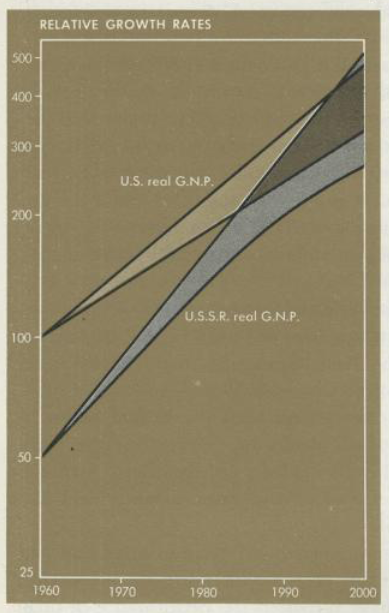
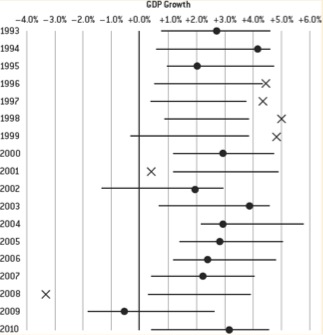
Complexity, ‘fog and moonlight’, prediction, and politics II: controlled skids and immune systems (UPDATED)

‘Politics is a job that can really only be compared with navigation in uncharted waters. One has no idea how the weather or the currents will be or what storms one is in for. In politics, there is the added fact that one is largely dependent on the decisions of others, decisions on which one was counting and which then do not materialise; one’s actions are never completely one’s own. And if the friends on whose support one is relying change their minds, which is something that one cannot vouch for, the whole plan miscarries… One’s enemies one can count on – but one’s friends!’ Otto von Bismarck.

‘Everything in war is very simple, but the simplest thing is difficult. The difficulties accumulate and end by producing a kind of friction that is inconceivable unless one has experienced war… Countless minor incidents – the kind you can never really foresee – combine to lower the general level of performance, so that one always falls short of the intended goal.  Iron will-power can overcome this friction … but of course it wears down the machine as well… Friction is the only concept that … corresponds to the factors that distinguish real war from war on paper.  The … army and everything else related to it is basically very simple and therefore seems easy to manage. But … each part is composed of individuals, every one of whom retains his potential of friction… This tremendous friction … is everywhere in contact with chance, and brings about effects that cannot be measured… Friction … is the force that makes the apparently easy so difficult… Finally … all action takes place … in a kind of twilight, which like fog or moonlight, often tends to make things seem grotesque and larger than they really are.  Whatever is hidden from full view in this feeble light has to be guessed at by talent, or simply left to chance.’ Clausewitz.

*

In July, I wrote a blog on complexity and prediction which you can read HERE.

I will summarise briefly its main propositions and add some others. All page references are to my essay, HERE. (Section 1 explores some of the maths and science issues below in more detail.)

Some people asked me after Part I – why is such abstract stuff important to practical politics? That is a big question but in a nutshell…

If you want to avoid the usual fate in politics of failure, you need to understand some basic principles about why people make mistakes and how some people, institutions, and systems cope with mistakes and thereby perform much better than most. The reason why Whitehall is full of people failing in predictable ways on an hourly basis is because, first, there is general system-wide failure and, second, everybody keeps their heads down focused on the particular and they ignore the system. Officials who speak out see their careers blow up. MPs are so cowed by the institutions and the scale of official failure that they generally just muddle along tinkering and hope to stay a step ahead of the media. Some understand the epic scale of institutional failure but they know that the real internal wiring of the system in the Cabinet Office has such a tight grip that significant improvement will be very hard without a combination of a) a personnel purge and b) a fundamental rewiring of power at the apex of the state. Many people in Westminster are now considering how this might happen. Such thoughts must, I think, be based on some general principles otherwise they are likely to miss the real causes of system failure and what to do.

In future blogs in this series, I will explore some aspects of markets and science that throw light on the question: how can humans and their institutions cope with these problems of complexity, uncertainty, and prediction in order to limit failures?

Separately, The Hollow Men II will focus on specifics of how Whitehall and Westminster work, including Number Ten and some examples from the Department for Education.

Considering the more general questions of complexity and prediction sheds light on why government is failing so badly and how it could be improved.

*

Complexity, nonlinearity, uncertainty, and prediction

Even the simplest practical problems are often very complex. If a Prime Minister wants to line up 70 colleagues in Downing Street to blame them for his woes, there are 70! ways of lining them up and 70! [70! = 70 x 69 x 68 … x 2 x 1] is roughly 10100 (a ‘googol’), which is roughly ten billion times the estimated number of atoms in the universe (1090). [See comments.]

Even the simplest practical problems, therefore, can be so complicated that searching through the vast landscape of all possible solutions is not practical.

After Newton, many hoped that perfect prediction would be possible:

‘An intellect which at a certain moment would know all the forces that animate nature, and all positions of the beings that compose it, if this intellect were vast enough to submit the data to analysis, would condense in a single formula the movements of the greatest bodies of the universe and those of the tiniest atom; for such an intellect nothing would be uncertain and the future just like the past would be present before its eyes’ (Laplace).

However, most of the most interesting systems in the world – such as brains, cultures, and conflicts – are nonlinear. That is, a small change in input has an arbitrarily large affect on output. Have you ever driven through a controlled skid then lost it? A nonlinear system is one in which you can shift from ‘it feels great on the edge’ to ‘I’m steering into the skid but I’ve lost it and might die in a few seconds’ because of one tiny input change, like your tyre catches a cat’s eye in the wet. This causes further problems for prediction. Not only is the search space so vast it cannot be searched exhaustively, however fast our computers, but in nonlinear systems one has the added problem that a tiny input change can lead to huge output changes.

Some nonlinear systems are such that no possible accuracy of measurement of the current state can eliminate this problem – there is unavoidable uncertainty about the future state. As Poincaré wrote, ‘it may happen that small differences in the initial conditions produce very great ones in the final phenomena. A small error in the former will produce an enormous error in the latter. Prediction becomes impossible, and we have the fortuitous phenomenon.’ It does not matter that the measurement error is in the 20th decimal place – the prediction will still quickly collapse.

Weather systems are like this which is why, despite the enormous progress made with predictions, we remain limited to ~10-14 days at best. To push the horizon forward by just one day requires exponential increases in the resources required. Political systems are also nonlinear. If Cohen-Blind’s aim had been very slightly different in May 1866 when he fired five bullets at Bismarck, the German states would certainly have evolved in a different way and perhaps there would have been no fearsome German army led by a General Staff into World War I, no Lenin and Hitler, and so on.  Bismarck himself appreciated this very well. ‘We are poised on the tip of a lightning conductor, and if we lose the balance I have been at pains to create we shall find ourselves on the ground,’ he wrote to his wife during the 1871 peace negotiations in Versailles. Social systems are also nonlinear. Online experiments have explored how complex social networks cannot be predicted because of initial randomness combining with the interdependence of decisions.

In short, although we understand some systems well enough to make precise or statistical predictions, most interesting systems – whether physical, mental, cultural, or virtual – are complex, nonlinear, and have properties that emerge from feedback between many interactions. Exhaustive searches of all possibilities are impossible. Unfathomable and unintended consequences dominate. Problems cascade. Complex systems are hard to understand, predict and control.

Humans evolved in this complex environment amid the sometimes violent, sometimes cooperative sexual politics of small in-groups competing with usually hostile out-groups. We evolved to sense information, process it, and act. We had to make predictions amid uncertainty and update these predictions in response to feedback from our environment – we had to adapt because we have necessarily imperfect data and at best approximate models of reality. It is no coincidence that in one of the most famous speeches in history, Pericles singled out the Athenian quality of adaptation (literally ‘well-turning’) as central to its extraordinary cultural, political and economic success.

How do we make these predictions, how do we adapt? Much of how we operate depends on relatively crude evolved heuristics (rules of thumb) such as ‘sense movement >> run/freeze’. These heuristics can help. Further, our evolved nature gives us amazing pattern recognition and problem-solving abilities. However, some heuristics lead to errors, illusions, self-deception, groupthink and so on – problems that often swamp our reasoning and lead to failure.

I will look briefly at a) the success of science and mathematical models, b) the success of decentralised coordination in nature and markets, and c) the failures of political prediction and decision-making.

*

The success of science and mathematical models

Our brains evolved to solve social and practical problems, not to solve mathematical problems. This is why translating mathematical and logical problems into social problems makes them easier for people to solve (cf. Nielsen.) Nevertheless, a byproduct of our evolution was the ability to develop maths and science. Maths gives us an abstract structure of certain knowledge that we can use to build models of the world. ‘[S]ciences do not try to explain, they hardly even try to interpret, they mainly make models. By a model is meant a mathematical construct which, with the addition of certain verbal interpretations, describes observed phenomena. The justification of such a mathematical construct is solely and precisely that it is expected … correctly to describe phenomena from a reasonably wide area’ (von Neumann).

Because the universe operates according to principles that can be approximated by these models, we can understand it approximately. ‘Why’ is a mystery. Why should ‘imaginary numbers’ based on the square root of minus 1, conceived five hundred years ago and living for hundreds of years without practical application, suddenly turn out to be necessary in the 1920s to calculate how subatomic particles behave? How could it be that in a serendipitous meeting in the IAS cafeteria in 1972, Dyson and Montgomery should realise that an equation describing the distribution of prime numbers should also describe the energy level of particles? We can see that the universe displays a lot of symmetry but we do not know why there is some connection between the universe’s operating principles and our evolved brains’ abilities to do abstract mathematics. Einstein asked, ‘How is it possible that mathematics, a product of human thought that is independent of experience, fits so excellently the objects of physical reality?’ Wigner replied to Einstein in a famous paper, ‘The Unreasonable Effectiveness of Mathematics in the Natural Sciences’ (1960) but we do not know the answer. (See ‘Is mathematics invented or discovered?’, Tim Gowers, 2011.)

The accuracy of many of our models gets better and better. In some areas such as quantum physics, the equations have been checked so delicately that, as Feynman said, ‘If you were to measure the distance from Los Angeles to New York to this accuracy, it would be exact to the thickness of a human hair’. In other areas, we have to be satisfied with statistical models. For example, many natural phenomenon, such as height and intelligence, can be modelled using ‘normal distributions’. Other phenomena, such as the network structure of cells, the web, or banks in an economy, can be modelled using ‘power laws’. [* See End] Why do statistical models work? Because ‘chance phenomena, considered collectively and on a grand scale, create a non-random regularity’ (Kolmogorov). [** See End]

Science has also built an architecture for its processes, involving meta-rules, that help correct errors and normal human failings. For example, after Newton the system of open publishing and peer review developed. This encouraged scientists to make their knowledge public, confident that they would get credit (instead of hiding things in code like Newton). Experiments must be replicated and scientists are expected to provide their data honestly so that others can test their claims, however famous, prestigious, or powerful they are. Feynman described the process in physics as involving, at its best, ‘a kind of utter honesty … [Y]ou should report everything that you think might make [your experiment or idea] invalid… [Y]ou must also put down all the facts which disagree with it, as well as those that agree with it… The easiest way to explain this idea is to contrast it … with advertising.’

The architecture of the scientific process is not perfect. Example 1. Evaluation of contributions is hard. The physicist who invented the arXiv was sacked soon afterwards because his university’s tick box evaluation system did not have a way to value his enormous contribution. Example 2. Supposedly ‘scientific’ advice to politicians can also be very overconfident. E.g. A meta-study of 63 studies of the costs of various energy technologies reveals: ‘The discrepancies between equally authoritative, peer-reviewed studies span many orders of magnitude, and the overlapping uncertainty ranges can support almost any ranking order of technologies, justifying almost any policy decision as science based’ (Stirling, Nature, 12/2010).

This architecture and its meta-rules are now going through profound changes, brilliantly described by the author of the seminal textbook on quantum computers, Michael Nielsen, in his book Reinventing Discovery – a book that has many lessons for the future of politics too. But overall the system clearly has great advantages.

The success of decentralised information processing in solving complex problems

Complex systems and emergent properties

Many of our most interesting problems can be considered as networks. Individual nodes (atoms, molecules, genes, cells, neurons, minds, organisms, organisations, computer agents) and links (biochemical signals, synapses, internet routers, trade routes) form physical, mental, and cultural networks (molecules, cells, organisms, immune systems, minds, organisations, internet, biosphere, ‘econosphere’, cultures) at different scales.

The most interesting networks involve interdependencies (feedback and feedforward) – such as chemical signals, a price collapse, neuronal firing, an infected person gets on a plane, or an assassination – and are nonlinear. Complex networks have emergent properties including self-organisation. For example, the relative strength of a knight in the centre of the chessboard is not specified in the rules but emerges from the nodes of the network (or ‘agents’) operating according to the rules.

Even in physics, ‘The behavior of large and complex aggregates of elementary particles … is not to be understood in terms of a simple extrapolation of the properties of a few particles. Instead, at each level of complexity entirely new properties appear’ (Anderson). This is more obvious in biological and social networks.

Ant colonies and immune systems: how decentralised information processing solves complex problems

Ant colonies and the immune system are good examples of complex nonlinear systems with ‘emergent properties’ and self-organisation.

The body cannot ‘know’ in advance all the threats it will face so the immune system cannot be perfectly ‘pre-designed’. How does it solve this problem?

There is a large diverse population of individual white blood cells (millions produced per day) that sense threats. If certain cells detect that a threat has passed a threshold, then they produce large numbers of daughter cells, with mutations, that are tested on captured ‘enemy’ cells. Unsuccessful daughter cells die while successful ones are despatched to fight. These daughter cells repeat the process so a rapid evolutionary process selects and reproduces the best defenders and continually improves performance. Other specialist cells roam around looking for invaders that have been tagged by antibodies. Some of the cells remain in the bloodstream, storing information about the attack, to guard against future attacks (immunity).

There is a constant evolutionary arms race against bacteria and other invaders. Bacteria take over cells’ machinery and communications. They reprogram cells to take them over or trigger self-destruction. They disable immune cells and ‘ride’ them back into lymph nodes (Trojan horse style) where they attack. They shape-change fast so that immune cells cannot recognise them. They reprogram immune cells to commit suicide. They reduce competition by tricking immune cells into destroying other bacteria that help the body fight infection (e.g. by causing diarrhoea to flush out competition).

NB. there is no ‘plan’ and no ‘central coordination’. The system experiments probabilistically, reinforces success, and discards failure. It is messy. Such a system cannot be based on trying to ‘eliminate failure’. It is based on accepting a certain amount of failure but keeping it within certain tolerances via learning.

Looking at an individual ant, it would be hard to know that an ant colony is capable of farming, slavery, and war.

‘The activity of an ant colony is totally defined by the activities and interactions of its constituent ants. Yet the colony exhibits a flexibility that goes far beyond the capabilities of its individual constituents. It is aware of and reacts to food, enemies, floods, and many other phenomena, over a large area; it reaches out over long distances to modify its surroundings in ways that benefit the colony; and it has a life-span orders of magnitude longer than that of its constituents… To understand the ant, we must understand how this persistent, adaptive organization emerges from the interactions of its numerous constituents.’ (Hofstadter)

Ant colonies face a similar problem to the immune system: they have to forage for food in an unknown environment with an effectively infinite number of possible ways to search for a solution. They send out agents looking for food; those that succeed return to the colony leaving a pheromone trail which is picked up by others and this trail strengthens. Decentralised decisions via interchange of chemical signals drive job-allocation (the division of labour) in the colony. Individual ants respond to the rate of what others are doing: if an ant finds a lot of foragers, it is more likely to start foraging.

Similarities between the immune system and ant colonies in solving complex problems

Individual white blood cells cannot access the whole picture; they sample their environment via their receptors. Individual ants cannot cannot access the whole picture; they sample their environment via their chemical processors. The molecular shape of immune cells and the chemical processing abilities of ants are affected by random mutations; the way individual cells or ants respond has a random element. The individual elements (cells / ants) are programmed to respond probabilistically to new information based on the strength of signals they receive.

Environmental exploration by many individual agents coordinated via feedback signals allows a system to probe many different probabilities, reinforce success, ‘learn’ from failure (e.g withdraw resources from unproductive strategies), and keep innovating (e.g novel cells are produced even amid a battle and ants continue to look for better options even after striking gold). ‘Redundancy’ allows local failures without breaking the system. There is a balance between exploring the immediate environment for information and exploiting that information to adapt.

In such complex networks with emergent properties, unintended consequences dominate. Effects cascade: ‘they come not single spies but in battalions’. Systems defined as ‘tightly coupled‘ – that is, they have strong interdependencies so that the behaviour of one element is closely connected to another – are not resilient in the face of nonlinear events (picture a gust of wind knocking over one domino in a chain).

Network topology

We are learning how network topology affects these dynamics. Many networks (including cells, brains, the internet, the economy) have a topology such that nodes are distributed according to a power law (not a bell curve), which means that the network looks like a set of  hubs and spokes with a few spokes connecting hubs. This network topology makes them resilient to random failure but vulnerable to the failure of critical hubs that can cause destructive cascades (such as financial crises) – an example of the problems that come with nonlinearity.

Similar topology and dynamics can be seen in networks operating at very different scales ranging from cellular networks, the brain, the financial system, the economy in general, and the internet. Disease networks often shows the same topology, with certain patients, such as those who get on a plane from West Africa to Europe with Ebola, playing the role of critical hubs connecting different parts of the network. Terrorist networks also show the same topology. All of these complex systems with emergent properties have the same network topology and are vulnerable to the failure of critical hubs.

Many networks evolve modularity. A modular system is one in which specific modules perform specific tasks, with links between them allowing broader coordination. This provides greater effectiveness and resilience to shocks. For example, Chongqing in China saw the evolution of a new ecosystem for designing and building motorbikes in which ‘assembler’ companies assemble modular parts built by competing companies, instead of relying on high quality vertically integrated companies like Yamaha. This rapidly decimated Japanese competition. Connections between network topology, power laws and fractals can be seen in work by physicist Geoffrey West both on biology and cities, for it is clear that just as statistical tools like the Central Limit Theorem demonstrate similar structure in completely different systems and scales, so similar processes occur in biology and social systems. [See Endnote.]

Markets: how decentralised information processing solves complex problems

[Coming imminently]

A summary of the progress brought by science and markets

The combination of reasoning, reliable accumulated knowledge, and a reliable institutional architecture brings steady progress, and occasional huge breakthroughs and wrong turns, in maths and science. The combination of the power of decentralised information processing to find solutions to complex problems and an institutional architecture brings steady progress, and occasional huge breakthroughs and wrong turns, in various fields that operate via markets.

Fundamental to the institutional architecture of markets and science is mechanisms that enable adaptation to errors. The self-delusion and groupthink that is normal for humans – being a side-effect of our nature as evolved beings – is partly countered by tried and tested mechanisms. These mechanisms are not based on an assumption that we can ‘eliminate failure’ (as so many in politics absurdly claim they will do). Instead, the assumption is that failure is a persistent phenomenon in a complex nonlinear world and it must be learned from and adapted to as quickly as possible. Entrepreneurs and scientists can be vain, go mad, or be prone to psychopathy – like public servants – but we usually catch it quicker and it causes less trouble. Catching errors, we inch forward ‘standing on the shoulders of giants’ as Newton put it.

Science has enabled humans to make transitions from numerology to mathematics, from astrology to astronomy, from alchemy to chemistry, from witchcraft to neuroscience, from tallies to quantum computation. Markets have been central to a partial transition in a growing fraction of the world from a) small, relatively simple, hierarchical, primitive, zero-sum hunter-gatherer tribes based on superstition (almost total ignorance of complex systems), shared aims, personal exchange and widespread violence, to b) large, relatively complex, decentralised, technological, nonzero-sum market-based cultures based on science (increasingly accurate predictions and control in some fields), diverse aims, impersonal exchange, trade, private property, and (roughly) equal protection under the law.

*

The failures of politics: wrong predictions, no reliable mechanisms for fixing obvious errors

 ‘No official estimates even mentioned that the collapse of Communism was a distinct possibility until the coup of 1989.’ National Security Agency, ‘Dealing With the Future’, declassified report. 

However, the vast progress made in so many fields is clearly not matched in standards of government. In particular, it is very rare for individuals or institutions to make reliable predictions.

The failure of prediction in politics

Those in leading positions in politics and public service have to make all sorts of predictions. Faced with such complexity, politicians and others have operated mostly on heuristics (‘political philosophy’), guesswork, willpower and tactical adaptation. My own heuristics for working in politics are: focus, ‘know yourself’ (don’t fool yourself), think operationally, work extremely hard, don’t stick to the rules, and ask yourself ‘to be or to do?’.

Partly because politics is a competitive enterprise in which explicit and implicit predictions elicit countermeasures, predictions are particularly hard. This JASON report (PDF) on the prediction of rare events explains some of the technical arguments about predicting complex nonlinear systems such as disasters. Unsurprisingly, so-called ‘political experts’ are not only bad at predictions but are far worse than they realise. There are many prominent examples. Before the 2000 election, the American Political Science Association’s members unanimously predicted a Gore victory. Beyond such examples, we have reliable general data on this problem thanks to a remarkable study by Philip Tetlock. He charted political predictions made by supposed ‘experts’ (e.g will the Soviet Union collapse, will the euro collapse) for fifteen years from 1987 and published them in 2005 (‘Expert Political Judgement’). He found that overall, ‘expert’ predictions were about as accurate as monkeys throwing darts at a board. Experts were very overconfident: ~15 percent of events that experts claimed had no chance of occurring did happen, and ~25 percent of those that they said they were sure would happen did not happen. Further, the more media interviews an expert did, the less likely they were to be right. Specific expertise in a particular field was generally of no value; experts on Canada were about as accurate on the Soviet Union as experts on the Soviet Union were.

However, some did better than others. He identified two broad categories of predictor. The first he called ‘hedgehogs’ – fans of Big Ideas like Marxism, less likely to admit errors. The second he called ‘foxes’ – not fans of Big Ideas, more likely to admit errors and change predictions because of new evidence. (‘The fox knows many little things, but the hedgehog knows one big thing,’ Archilochus.) Foxes tended to make better predictions. They are more self-critical, adaptable, cautious, empirical, and multidisciplinary. Hedgehogs get worse as they acquire more credentials while foxes get better with experience. The former distort facts to suit their theories; the latter adjust theories to account for new facts.

Tetlock believes that the media values characteristics (such as Big Ideas, aggressive confidence, tenacity in combat and so on) that are the opposite of those prized in science (updating in response to new data, admitting errors, tenacity in pursuing the truth and so on). This means that ‘hedgehog’ qualities are more in demand than ‘fox’ qualities, so the political/media market encourages qualities that make duff predictions more likely. ‘There are some academics who are quite content to be relatively anonymous. But there are other people who aspire to be public intellectuals, to be pretty bold and to attach non-negligible probabilities to fairly dramatic change. That’s much more likely to bring you attention’ (Tetlock).

Tetlock’s book ought to be much-studied in Westminster particularly given 1) he has found reliable ways of identifying a small number of people who are very good forecasters and 2)  IARPA (the intelligence community’s DARPA twin) is working with Tetlock to develop training programmes to improve forecasting skills. [See Section 6.] Tetolock says, ‘We now have a significant amount of evidence on this, and the evidence is that people can learn to become better. It’s a slow process. It requires a lot of hard work, but some of our forecasters have really risen to the challenge in a remarkable way and are generating forecasts that are far more accurate than I would have ever supposed possible from past research in this area.’ (This is part of IARPA’s ACE programme to develop aggregated forecast systems and crowdsourced prediction software. IARPA also has the SHARP programme to find ways to improve problem-solving skills for high-performing adults.)

His main advice? ‘If I had to bet on the best long-term predictor of good judgement among the observers in this book, it would be their commitment – their soul-searching Socratic commitment – to thinking about how they think’ (Tetlock). His new training programmes help people develop this ‘Socratic commitment’ and correct their mistakes in quite reliable ways.

NB. The extremely low quality of political forecasting is what allowed an outsider like Nate Silver to transform the field simply by applying some well-known basic maths.

The failure of prediction in economics

‘… the evidence from more than fifty years of research is conclusive: for a large majority of fund managers, the selection of stocks is more like rolling dice than like playing poker. Typically at least two out of every three mutual funds underperform the overall market in any given year. More important, the year-to-year correlation between the outcomes of mutual funds is very small, barely higher than zero. The successful funds in any given year are mostly lucky; they have a good roll the dice.’ Daniel Kahneman, winner of the economics ‘Nobel’ (not the same as the Nobel for physical sciences).

‘I importune students to read narrowly within economics, but widely in science…The economic literature is not the best place to find new inspiration beyond these traditional technical methods of modelling’ Vernon Smith, winner of the economics ‘Nobel’. 

I will give a few examples of problems with economic forecasting.

In the 1961 edition of his famous standard textbook used by millions of students, one of the 20th Century’s most respected economists, Paul Samuelson, predicted that respective growth rates in America and the Soviet Union meant the latter would overtake the USA between 1984-1997. By 1980, he had delayed the date to be in 2002-2012. Even in 1989, he wrote, ‘The Soviet economy is proof that, contrary to what many skeptics had earlier believed, a socialist command economy can function and even thrive.’

Chart: Samuelson’s prediction for the Soviet economy 

samuelson

The recent financial crisis also demonstrated many failed predictions. Various people, including physicists Steve Hsu and Eric Weinstein, published clear explanations of the extreme dangers in the financial markets and parallels with previous crashes such as Japan’s. However, they were almost totally ignored by politicians, officials, central banks and so on. Many of those involved were delusional. Perhaps most famously, Joe Cassano of AIG Financial said in a conference call (8/2007): ‘It’s hard for us – without being flippant – to even see a scenario within any kind of realm of reason that would see us losing one dollar in any of those transactions… We see no issues at all emerging.’

Nate Silver recently summarised some of the arguments over the crash and its aftermath. In December 2007, economists in the Wall Street Journal forecasting panel predicted only a 38 percent chance of recession in 2008. The Survey of Professional Forecasters is a survey of economists’ predictions done by the Federal Reserve Bank that includes uncertainty measurements. In November 2007, the Survey showed a net prediction by economists that the economy would grow by 2.4% in 2008, with a less than 3% chance of any recession and a 1-in-500 chance of it shrinking by more than 2%.

Chart: the 90% ‘prediction intervals’ for the Survey of Professional Forecasters net forecast of GDP growth 1993-2010

Prediction econ

If the economists’ predictions were accurate, the 90% prediction interval should be right nine years out of ten, and 18 out of 20. Instead, the actual growth was outside the 90% prediction interval six times out of 18, often by a lot. (The record back to 1968 is worse.) The data would later reveal that the economy was already in recession in the last quarter of 2007 and, of course, the ‘1-in-500’ event of the economy shrinking by more than 2% is exactly what happened.**

Although the total volume of home sales in 2007 was only ~$2 trillion, Wall Street’s total volume of trades in mortgage-backed securities was ~$80 trillion because of the creation of ‘derivative’ financial instruments. Most people did not understand 1) how likely a house price fall was, 2) how risky mortgage-backed securities were, 3) how widespread leverage could turn a US housing crash into a major financial crash, and 4) how deep the effects of a major financial crash were likely to be.  ‘The actual default rates for CDOs were more than two hundred times higher than S&P had predicted’ (Silver). In the name of ‘transparency’, S&P provided the issuers with copies of their ratings software allowing CDO issuers to experiment on how much junk they could add without losing a AAA rating. S&P even modelled a potential housing crash of 20% in 2005 and concluded its highly rated securities could ‘weather a housing downturn without suffering a credit rating downgrade.’

Unsurprisingly, Government unemployment forecasts were also wrong. Historically, the uncertainty in an unemployment rate forecast made during a recession had been about plus or minus 2 percent but Obama’s team, and economists in general, ignored this record and made much more specific predictions. In January 2009, Obama’s team argued for a large stimulus and said that, without it, unemployment, which had been 7.3% in December 2008, would peak at ~9% in early 2010, but with the stimulus it would never rise above 8% and would fall from summer 2009. However, the unemployment numbers after the stimulus was passed proved to be even worse than the ‘no stimulus’ prediction. Similarly, the UK Treasury’s forecasts about growth, debt, and unemployment from 2007 were horribly wrong but that has not stopped it making the same sort of forecasts.

Paul Krugman concluded from this episode: the stimulus was too small. Others concluded it had been a waste of money. Academic studies vary widely in predicting the ‘return’ from each $1 of stimulus. Since economists cannot even accurately predict a recession when the economy is already in recession, it seems unlikely that there will be academic consensus soon on such issues. Economics often seems like a sort of voodoo for those in power – spurious precision and delusions that there are sound mathematical foundations for the subject without a proper understanding of the conditions under which mathematics can help (cf. Von Neumann on maths and prediction in economics HERE).

Fields which do better at prediction

Daniel Kahneman, who has published some of the most important research about why humans make bad predictions, summarises the fundamental issues about when you can trust expert predictions:

‘To know whether you can trust a particular intuitive judgment, there are two questions you should ask: Is the environment in which the judgment is made sufficiently regular to enable predictions from the available evidence? The answer is yes for diagnosticians, no for stock pickers. Do the professionals have an adequate opportunity to learn the cues and the regularities? The answer here depends on the professionals’ experience and on the quality and speed with which they discover their mistakes. Anesthesiologists have a better chance to develop intuitions than radiologists do. Many of the professionals we encounter easily pass both tests, and their off-the-cuff judgments deserve to be taken seriously. In general, however, you should not take assertive and confident people at their own evaluation unless you have independent reason to believe that they know what they are talking about.’ (Emphasis added.)

It is obvious that politics fulfils neither of his two criteria – it does not even have hard data and clear criteria for success, like stock picking.

I will explore some of the fields that do well at prediction in a future blog.

*

The consequences of the failure of politicians and other senior decision-makers and their institutions

‘When superior intellect and a psychopathic temperament coalesce …, we have the best possible conditions for the kind of effective genius that gets into the biographical dictionaries’ (William James). 

‘We’re lucky [the Unabomber] was a mathematician, not a molecular biologist’ (Bill Joy, Silicon Valley legend, author of ‘Why the future doesn’t need us’).

While our ancestor chiefs understood bows, horses, and agriculture, our contemporary chiefs (and those in the media responsible for scrutiny of decisions) generally do not understand their equivalents, and are often less experienced in managing complex organisations than their predecessors.

The consequences are increasingly dangerous as markets, science and technology disrupt all existing institutions and traditions, and enhance the dangerous potential of our evolved nature to inflict huge physical destruction and to manipulate the feelings and ideas of many people (including, sometimes particularly, the best educated) through ‘information operations’. Our fragile civilisation is vulnerable to large shocks and a continuation of traditional human politics as it was during 6 million years of hominid evolution – an attempt to secure in-group cohesion, prosperity and strength in order to dominate or destroy nearby out-groups in competition for scarce resources – could kill billions. We need big changes to schools, universities, and political and other institutions for their own sake and to help us limit harm done by those who pursue dreams of military glory, ‘that attractive rainbow that rises in showers of blood’ (Lincoln).

The global population of people with an IQ four standard deviations above the average (i.e. >160) is ~250k. About 1% of the population are psychopaths so there are perhaps ~2-3,000 with IQ ≈ Nobel/Fields winner. The psychopathic +3SD IQ (>145; average science PhD ~130) population is 30 times bigger. A subset will also be practically competent. Some of them may think, ‘Flectere si nequeo superos, / Acheronta movebo’ (‘If Heav’n thou can’st not bend, Hell thou shalt move’, the Aeneid). Board et al (2005) showed that high-level business executives are more likely than inmates of Broadmoor to have one of three personality disorders (PDs): histrionic PD, narcissistic PD, and obsessive-compulsive PD. Mullins-Sweatt et al (2010) showed that successful psychopaths are more conscientious than the unsuccessful.

A brilliant essay (here) by one of the 20th Century’s best mathematicians, John von Neumann, describes these issues connecting science, technology, and how institutions make decisions.

*

Some conclusions

When we consider why institutions are failing and how to improve them, we should consider the general issues discussed above. How to adapt quickly to new information? Does the institution’s structure incentivise effective adaptation or does it incentivise ‘fooling oneself’ and others? Is it possible to enable distributed information processing to find a ‘good enough’ solution in a vast search space? If your problem is similar to that of the immune system or ant colony, why are you trying to solve it with a centralised bureaucracy?

Further, some other obvious conclusions suggest themselves.

We could change our society profoundly by dropping the assumption that less than a tenth of the population is suitable to be taught basic concepts in maths and physics that have very wide application to our culture, such as normal distributions and conditional probability. This requires improving basic maths 5-16 and it also requires new courses in schools.

One of the things that we did in the DfE to do this was work with Fields Medallist Tim Gowers on a sort of ‘Maths for Presidents’ course. Professor Gowers wrote a fascinating blog on this course which you can read HERE. The DfE funded MEI to develop the blog into a real course. This has happened and the course is now being developed in schools. Physics for Future Presidents already exists and is often voted the most popular course at UC Berkeley (Cf. HERE). School-age pupils, arts graduates, MPs, and many Whitehall decision-makers would greatly benefit from these two courses.

We also need new inter-disciplinary courses in universities. For example, Oxford could atone for PPE by offering Ancient and Modern History, Physics for Future Presidents, and How to Run a Start Up. Such courses should connect to the work of Tetlock on The Good Judgement Project, as described above (I will return to this subject).

Other countries have innovated successfully in elite education. For example, after the shock of the Yom Kippur War, Israel established the ‘Talpiot’ programme which  ‘aims to provide the IDF and the defense establishment with exceptional practitioners of research and development who have a combined understanding in the fields of security, the military, science, and technology. Its participants are taught to be mission-oriented problem-solvers. Each year, 50 qualified individuals are selected to participate in the program out of a pool of over 7,000 candidates. Criteria for acceptance include excellence in physical science and mathematics as well as an outstanding demonstration of leadership and character. The program’s training lasts three years, which count towards the soldiers’ three mandatory years of service. The educational period combines rigorous academic study in physics, computer science, and mathematics alongside intensive military training… During the breaks in the academic calendar, cadets undergo advanced military training… In addition to the three years of training, Talpiot cadets are required to serve an additional six years as a professional soldier. Throughout this period, they are placed in assorted elite technological units throughout the defense establishment and serve in central roles in the fields of research and development’ (IDF, 2012). The programme has also helped the Israeli hi-tech economy.****

If politicians had some basic training in mathematical reasoning, they could make better decisions amid complexity. If politicians had more exposure to the skills of a Bill Gates or Peter Thiel, they would be much better able to get things done.

I will explore the issue of training for politicians in a future blog.

Please leave corrections and comments below.


* It is very important to realise when the system one is examining is well approximated by a normal distribution and when by a power law. For example… When David Viniar (Goldman Sachs CFO) said of the 2008 financial crisis, ‘We were seeing things that were 25-standard-deviation events, several days in a row,’ he was discussing financial prices as if they can be accurately modelled by a normal distribution, and implying that events that should happen once every 10135 years (the Universe is only ~1.4×10¹⁰ years old) were occurring ‘several days in a row’. He was either ignorant of basic statistics (unlikely) or taking advantage of the statistical ignorance of his audience. Actually, we have known for a long time that financial prices are not well modelled using normal distributions because they greatly underestimate the likelihood of bubbles and crashes. If politicians don’t know what ‘standard deviation’ means, it is obviously impossible for them to contribute much to detailed ideas on how to improve bank regulation. It is not hard to understand standard deviation and there is no excuse for this situation to continue for another generation.

** However, there is also a danger in the use of statistical models based on ‘big data’ analysis – ‘overfitting’ models and wrongly inferring a ‘signal’ from what is actually ‘noise’. We usually a) have a noisy data set and b) an inadequate theoretical understanding of the system, so we do not know how accurately the data represents some underlying structure (if there is such a structure). We have to infer a structure despite these two problems. It is easy in these circumstances to ‘overfit’ a model – to make it twist and turn to fit more of the data than we should, but then we are fitting it not to the signal but to the noise. ‘Overfit’ models can seem to explain more of the variance in the data – but they do this by fitting noise rather than signal (Silver, op. cit).

This error is seen repeatedly in forecasting, and can afflict even famous scientists. For example, Freeman Dyson tells a short tale about how, in 1953, he trekked to Chicago to show Fermi the results of a new physics model for the strong nuclear force. Fermi dismissed his idea immediately as having neither ‘a clear physical picture of the process that you are calculating’ nor ‘a precise and self-consistent mathematical formalism’. When Dyson pointed to the success of his model, Fermi quoted von Neumann,  ‘With four parameters I can fit an elephant, and with five I can make him wiggle his trunk’, thus saving Dyson from wasting years on a wrong theory (A meeting with Enrico Fermi, by Freeman Dyson). Imagine how often people who think they have a useful model in areas not nearly as well-understood as nuclear physics lack a Fermi to examine it carefully.

There have been eleven recessions since 1945 but people track millions of statistics. Inevitably, people will ‘overfit’ many of these statistics to model historical recessions then ‘predict’ future ones.  A famous example is the Superbowl factor. For 28 years out of 31, the winner of the Superbowl correctly ‘predicted’ whether the stock exchange rose or fell. A standard statistical test ‘would have implied that there was only about a 1-in-4,700,000 possibility that the relationship had emerged from chance alone.’ Just as someone will win the lottery, some arbitrary statistics will correlate with the thing you are trying to predict just by chance (Silver)

*** Many of these wrong forecasts were because the events were ‘out of sample’. What does this mean? Imagine you’ve taken thousands of car journeys and never had a crash. You want to make a prediction about your next journey. However, in the past you have never driven drunk. This time you are drunk. Your prediction is therefore out of sample. Predictions of US housing data were based on past data but there was no example of such huge leveraged price rises in the historical data. Forecasters who looked at Japan’s experience in the 1980’s better realised the danger. (Silver)

**** The old Technical Faculty of the KGB Higher School (rebaptised after 1991) ran similar courses; one of its alumni is Yevgeny Kaspersky, whose company first publicly warned of the cyberweapons Stuxnet and Flame (and who still works closely with his old colleagues). It would be interesting to collect information on elite intelligence and special forces training programmes. E.g. Post-9/11, US special forces (acknowledged and covert) have greatly altered including adding intelligence roles that were previously others’ responsibility or regarded as illegal for DOD employees. How does what is regarded as ‘core training’ for such teams vary, how is it changing, and why are some better than others at decisions under pressure and surviving disaster?

Times op-ed: The Gove reforms

[Below is the text of an op-ed by me in The Times, 1 September 2014. There is an addition that was cut for space, inserted in square brackets.]

One evening in Whitehall, an exhausted and enraged senior official spat out at me: “You’re a mutant virus, I’m the immune system and it’s my job to expel you from the organism.” It was a typical day in the Department for Education.

When Michael Gove arrived there in 2010, he inherited a dysfunctional institution — a department spending a billion pounds every week wasted money on a vast scale. Every budget, every set of figures was wrong, every process blew up, everything leaked, while Whitehall used European law and threats of judicial review to scupper anything that it disliked.

The school system was grim. Among schools with the same proportion of poor pupils and the same funding, some struggled to get a fifth of pupils to basic levels while others managed over four fifths. This was down to bad management failing to do basic things. It was also due to disastrous micro-management by MPs and Whitehall.

The curriculum and exams had been devalued over the quarter century since MPs took control of them. The gap between sharply rising scores in those tests controlled by MPs but poor performance in international tests was one obvious sign of this. Another was that the devaluation of GCSEs had forced the devaluation of A Levels and, in turn, the devaluation of degrees. Science degrees had to be lengthened to reflect the decline in A levels. Language degrees, including elite courses such as Oxford classics, became unrecognisable and remedial classes were ubiquitous.

Almost nobody with power in the education system wanted to discuss these problems. The attitude was: the numbers are going up, they show that we’re doing a great job and deserve our large pay rises. If you go along you’ll get good press; if you don’t, woe betide you.

We didn’t go along. We changed every major pillar of the system. We cut the department’s headcount by more than a third and halved running costs. [We more than halved the press office, and cut 95 percent of the communication budget.] Senior people were replaced. Outsiders were brought in. The organisation improved, contrary to all predictions. All this happened because we operated outside Whitehall protocol, causing many battles. The results are now being felt in schools.

This week the new national curriculum starts and new exams will test it. Primary maths standards are aligned to standards in world-leading jurisdictions. Languages will again be the norm in primary school, to reverse catastrophic decline. There is more maths in secondary science. There is more essay writing — so important for further study and work. Conditional probability, vital for understanding risk, is introduced. Pupils will learn about computer coding and 3D printers. [Projects such as the British Museum’s ‘Teaching History in 100 objects’ will help pupils learn a deeper history curriculum.]

SATs at 11, GCSEs, and A levels are changing. We attacked the treadmill of modular exams, constant resits and the abuse of coursework. We returned power over A levels to universities and made it harder for MPs to regain control.

The old league-table system, based on five A*-C GCSEs, has been replaced because it had so many bad effects. First it encouraged schools to enter pupils for courses that were defined as “equivalent to GCSEs”, but which were often worse than useless. This was a disaster for millions of pupils. We scrapped this system and published data with it stripped out, so that everyone could see who was cheating. We also put out transparent data on achievement in English, maths, sciences, history, geography and languages. This led to many more pupils taking these courses: entries to physics and further maths A levels are up by a fifth.

Second, schools focused only on pupils on the C-D borderline. We brought in a points system that encourages schools to try with all pupils. Third, schools entered GCSE pupils early to “bank a C grade” so they could focus on other C grades. Now only the first entry counts in league tables and damaging early entry is plummeting.

We decentralised all main aspects of the teaching profession. We abolished national pay so schools, not MPs, control pay. We made it easier for teachers to keep order and easier to remove teachers who couldn’t. We put money into training teachers from the top third of graduates, with skills in desperately short supply, such as languages. We gave schools the power to recruit and train teachers. Teacher-training now feels an icy bath of scrutiny and evaluation.

To reduce Whitehall’s power further, we allowed state schools to convert to academy status. About two thirds of secondaries and a tenth of primaries did so. Many of the best then took over the worst schools. We encouraged schools to form chains, so knowledge about what works can be spread, saving money that can be spent where it helps learning. Chains are increasingly building their own teacher-training systems integrated with curricula and tests, such as Ark’s Maths Mastery programme. This will bring big improvements in the next decade.

Academy chains, as well as groups of parents and teachers, can now set up new schools. It used to take three to five years to open one; it now takes 18 months and the capital cost is nearly half. There will be 300 free schools open this month and another hundred should open next year, whoever wins the election. Most are in poorer areas. Failures have been swiftly dealt with, in contrast to many local authorities that won’t act year after year.

Our team broke up with the project half done. Schools are still rationed by house price and are at the mercy of a dysfunctional Ofsted. Although we tried to replace GCSEs with exams that would enable a genuinely scientific approach to learning, Nick Clegg and David Cameron stopped us, supported by almost everyone powerful in the system.

Will anyone build on what we did? [As we struggled to keep our heads above the tide,] Labour and the unions were largely irrelevant. By far our biggest problems were with the dysfunction of Whitehall and Downing Street.

Officials who see themselves as “the immune system” are about to return in a powerful role. Some whom we purged are polishing their CVs, confident that “the mutant virus” has been expelled and Downing Street will be compliant regardless of the election. Others are watching carefully. They know No 10 wants quiet interspersed with electoral gimmicks. They suspect that Tristram Hunt, the shadow education secretary, agrees with much of what we did but that Ed Miliband does not.

Nicky Morgan faces a horrid quandary: while she could — and should — be less confrontational than Michael Gove, she will find it impossible to maintain the momentum of change and simultaneously obey Downing Street’s orders. Whitehall knows this and is quietly pushing forward its betting chips.

UPDATE DOC – Open Policy Experiment 1: School Direct and Initial Teacher Training

This link is to a PDF of an update on the Open Policy experiment on teacher training and School Direct that I began with a blog on 22 July.

Please leave all comments / corrections etc in the comments on THIS blog, not the original (unless you are specifically replying to a comment on the original).

I do not mind any degree of disagreement with me provided it is explained. I will maintain the same strict policy on comments. Please think about your comment – how could someone use this to improve the document, or avoid a mistake that I can explain etc?

Thanks to all for making the effort to help and apologies for new errors I have introduced – please fix them.

I will watch comments and, if there is sufficient interest, I will update this document with additions, corrections of my mistakes etc.

Hopefully your collective efforts will yield some progress…

‘Given enough eyeballs, all bugs are shallow’.

DC

Ps.

I make a few references to ‘Cargo Cult science’. This refers to a famous speech by Nobel-winning physicist, Richard Feynman, about education research and scientific methodology. It explains the difference between a) the methods and ‘extreme honesty’ that, at its best, characterises the scientific method when applied to physics and b) ‘cargo cult science’, social science research that has the form of the scientific method without its substance, that characterises so much education research (and politicians’ use of research). It should be on the reading list for all trainee teachers. A PDF is here.

Wargame predictions from 2010 – how well did the Cameroons do?

Going through papers and emails today from my time in the DfE to write The Hollow Men Part II (hopefully tomorrow), I found this doc, link below. It’s only one page.

In autumn 2010, James Frayne organised a wargame in Westminster to consider the likely dynamics of the next five years. I was one of about 20-30 participants.

At the end, I jotted down a summary of conclusions that came out of it.

I thought it may be of interest to some of those who took part in it but I can’t remember who most of them were, so here it is… Pass it on if you were there.

Do leave comments or a scoreboard below.

Of the 17, how many did the Cameroons come out ahead on?

The PDF is HERE.


Complexity, ‘fog and moonlight’, prediction, and politics I

‘What can be avoided

Whose end is purposed by the mighty gods? 

Yet Caesar shall go forth, for these predictions 

Are to the world in general as to Caesar.’ 

Julius Caesar, II.2.

‘Ideas thus made up of several simple ones put together, I call Complex; such as are Beauty, Gratitude, a Man, an Army, the Universe.’ Locke.

‘I can calculate the motion of heavenly bodies but not the madness of people.’ Newton, after the South Sea Bubble ‘Ponzi scheme’. 

‘Everything in war is very simple, but the simplest thing is difficult. The difficulties accumulate and end by producing a kind of friction that is inconceivable unless one has experienced war… Countless minor incidents – the kind you can never really foresee – combine to lower the general level of performance, so that one always falls short of the intended goal.  Iron will-power can overcome this friction … but of course it wears down the machine as well… Friction is the only concept that … corresponds to the factors that distinguish real war from war on paper.  The … army and everything else related to it is basically very simple and therefore seems easy to manage. But … each part is composed of individuals, every one of whom retains his potential of friction… This tremendous friction … is everywhere in contact with chance, and brings about effects that cannot be measured… Friction … is the force that makes the apparently easy so difficult… Finally … all action takes place … in a kind of twilight, which like fog or moonlight, often tends to make things seem grotesque and larger than they really are.  Whatever is hidden from full view in this feeble light has to be guessed at by talent, or simply left to chance.’ Clausewitz.

‘It is a wonderful feeling to recognise the unity of complex phenomena that to direct observation appear to be quite separate things.’ Einstein to Grossman, 1901.

‘All stable processes we shall predict. All unstable processes we shall control.’  Von Neumann.

‘Imagine how much harder physics would be if electrons had feelings.’ Richard Feynman.

At the beginning of From Russia With Love (the movie not the book), Kronsteen, a Russian chess master and SPECTRE strategist, is summoned to Blofeld’s lair to discuss the plot to steal the super-secret ‘Lektor Decoder’ and kill Bond. Kronsteen outlines to Blofeld his plan to trick Bond into stealing the machine for SPECTRE.

Blofeld: Kronsteen, you are sure this plan is foolproof?

Kronsteen: Yes it is, because I have anticipated every possible variation of counter-move.

Political analysis is full of chess metaphors, reflecting an old tradition of seeing games as models of physical and social reality. (‘Time is a child moving counters in a game; the royal power is a child’s’, Heraclitus.) A game which has ten different possible moves at each turn and runs for two turns has 102 possible ways of being played; if it runs for fifty turns it has 1050 possible ways of being played, ‘a number which substantially exceeds the number of atoms in the whole of our planet earth’ (Holland); if it runs for ninety turns it has 1090 possible ways of being played, which is about the estimated number of atoms in the Universe. Chess is merely 32 pieces on an 8×8 grid with a few simple rules but the number of possible games is much greater than 1090.

Many practical problems (e.g logistics, designing new drugs) are equivalent to the Travelling Salesman Problem (TSP). For any TSP involving travelling to n cities, the number of possible tours when starting with a specific city is: (n-1)!/2. For 33 cities, the total number of possible journeys is:

32!/2 = 131,565,418,466,846,765,083,609,006,080,000,000

The IBM Roadrunner, the fastest supercomputer in the world in 2009, could perform 1,457 trillion operations per second. If we could arrange the tours such that examining each one would take only one arithmetical operation, then it would take it ~28 trillion years to examine all possible routes between 33 cities, about twice the estimated age of the Universe. As n grows linearly (add one city, add another etc), the number of possible routes grows exponentially. The way in which the number of possible options scales up exponentially as the number of agents scales up linearly, and the difficulty of finding solutions quickly in vast search landscapes, connects to one of the most important questions in maths and computer science, the famous $1 million dollar ‘P=NP?’ Clay Millennium Prize.

Kronsteen’s confidence, often seen in politics, is therefore misplaced even in chess. It is far beyond our ability to anticipate ‘every possible variation of counter-move’ yet chess is simple compared to the systems that scientists or politicians have to try to understand and predict in order to try to control. These themes of uncertainty, nonlinearity, complexity and prediction have been ubiquitous motifs of art, philosophy, and politics. We see them in Homer, where the gift of an apple causes the Trojan War; in Athenian tragedy, where a chance meeting at a crossroads settles the fate of Oedipus; in Othello’s dropped handkerchief; and in War and Peace with Nikolai Rostov, playing cards with Dolohov, praying that one little card will turn out differently, save him from ruin, and allow him to go happily home to Natasha.

 ‘I know that men are persuaded to go to war in one frame of mind and act when the time comes in another, and that their resolutions change with the changes of fortune…  The movement of events is often as wayward and incomprehensible as the course of human thought; and this is why we ascribe to chance whatever belies our calculation.’ Pericles to the Athenians.

Maths and models

Because of the ‘unreasonable effectiveness of mathematics’ in providing the ‘language of nature’ and foundations for a scientific civilization, we understand some systems very well and can make very precise predictions based on accurate quantitative models. Sometimes a mathematical model predicts phenomena which are later found (e.g. General Relativity’s field equations); sometimes an experiment reveals a phenomenon that awaits an effective mathematical model (e.g. the delay between the discovery of superconductivity and a quantum theory). The work of mathematicians on ‘pure’ problems has often yielded ideas that have waited to be rediscovered by physicists. The work of Euclid, Apollonius and Archimedes on ellipses would be used centuries later by Kepler for his theory of planetary motion. The work of Riemann on non-Euclidean four-dimensional geometry was (thanks to Grossmann) used by Einstein for General Relativity. The work of various people since the 16th Century on complex numbers would be used by Heisenberg et al for quantum mechanics in the 1920s.

The work of Cantor, Gödel, and Turing (c. 1860-1936) on the logical foundations of mathematics, perhaps the most abstract and esoteric subject, gave birth to computers. The work of Galois on ‘groups’ (motivated by problems with polynomial equations) would be used post-1945 to build the ‘Standard Model’ of particle physics using ‘symmetry groups’. In a serendipitous 1972 meeting in the Institute of Advanced Study cafeteria, it was discovered that the distribution of prime numbers has a still-mysterious connection with the energy levels of particles. G.H. Hardy famously wrote, in ‘A Mathematician’s Apology’ which influenced many future mathematicians, that the field of number theory was happily ‘useless’ and did not contribute to ‘any warlike purpose’; even as he wrote the words, it was secretly being applied to cryptography and it now forms the basis of secure electronic communications among other things. Perhaps another example will be the ‘Langlands Program’ in pure mathematics which was developed in the 1960’s and work on it is now funded by DARPA (the famous military technology developer) in the hope of practical applications.

Mathematicians invent (or discover?) concepts by abstraction and then discover connections between concepts.* Nature operates with universal laws and displays symmetry and regularity as well as irregularity and randomness.

‘What do we mean by “understanding” something? We can imagine that this complicated array of moving things which constitutes “the world” is something like a great chess game being played by the gods, and we are observers of the game. We do not know what the rules of the game are; all we are allowed to do is to watch the playing. Of course, if we watch long enough, we may eventually catch on to a few of the rules. The rules of the game are what we mean by fundamental physics. Even if we knew every rule, however, we might not be able to understand why a particular move is made in the game, merely because it is too complicated and our minds are limited. If you play chess you must know that it is easy to learn all the rules, and yet it is often very hard to select the best move or to understand why a player moves as he does. So it is in nature, only much more so; but we may be able at least to find all the rules. Actually, we do not have all the rules now. (Every once in a while something like castling is going on that we still do not understand.) Aside from not knowing all of the rules, what we really can explain in terms of those rules is very limited, because almost all situations are so enormously complicated that we cannot follow the plays of the game using the rules, much less tell what is going to happen next. We must, therefore, limit ourselves to the more basic question of the rules of the game. If we know the rules, we consider that we “understand” the world.’ Richard Feynman.

These physical laws, or rules, use mathematicians’ abstractions.**

‘It is an extraordinary feature of science that the most diverse, seemingly unrelated, phenomena can be described with the same mathematical tools. The same quadratic equation with which the ancients drew right angles to build their temples can be used today by a banker to calculate the yield to maturity of a new, two-year bond. The same techniques of calculus developed by Newton and Leibniz two centuries ago to study the orbits of Mars and Mercury can be used today by a civil engineer to calculate the maximum stress on a new bridge… But the variety of natural phenomena is boundless while, despite all appearances to the contrary, the number of really distinct mathematical concepts and tools at our disposal is surprisingly small… When we explore the vast realm of natural and human behavior, we find the most useful tools of measurement and calculation are based on surprisingly few basic ideas.’ Mandelbrot

There is an amazing connection between mathematicians’ aesthetic sense of ‘beauty’ and their success in finding solutions:

‘It is efficient to look for beautiful solutions first and settle for ugly ones only as a last resort… It is a good rule of thumb that the more beautiful the guess, the more likely it is to survive.’ Timothy Gowers.

‘[S]ciences do not try to explain, they hardly even try to interpret, they mainly make models. By a model is meant a mathematical construct which, with the addition of certain verbal interpretations, describes observed phenomena. The justification of such a mathematical construct is solely and precisely that it is expected to work – that is, correctly to describe phenomena from a reasonably wide area. Furthermore, it must satisfy certain aesthetic criteria – that is, in relation to how much it describes, it must be rather simple… If only relatively little has been explained, one will absolutely insist that it should at least be done by very simple and direct means.’ Von Neumann.

Some of these models allow relatively precise predictions about a particular physical system: for example, Newton’s equations for classical mechanics or the equations for ‘quantum electrodynamics’. Sometimes they are statistical predictions that do not say how a specific event will turn out but what can be expected over a large number of trials and with what degree of confidence: ‘the epistemological value of probability theory is based on the fact that chance phenomena, considered collectively and on a grand scale, create a non-random regularity’ (Kolmogorov). The use of statistical models has touched many fields: ‘Moneyball’ in baseball (the replacement of scouts’ hunches by statistical prediction), predicting wine vintages and ticket sales, dating, procurement decisions, legal judgements, parole decisions and so on.

For example, many natural (e.g. height, IQ) and social (e.g. polling) phenomena follow the statistical theorem called the Central Limit Theorem (CLT) and produce a ‘normal distribution’, or ‘bell curve’. Fields Medallist Terry Tao describes it:

‘Roughly speaking, this theorem asserts that if one takes a statistic that is a combination of many independent and randomly fluctuating components, with no one component having a decisive influence on the whole, then that statistic will be approximately distributed according to a law called the normal distribution (or Gaussian distribution), and more popularly known as the bell curve

‘The law is universal because it holds regardless of exactly how the individual components fluctuate, or how many components there are (although the accuracy of the law improves when the number of components increases); it can be seen in a staggeringly diverse range of statistics, from the incidence rate of accidents, to the variation of height, weight, or other vital statistics amongst a species, to the financial gains or losses caused by chance, to the velocities of the component particles of a physical system. The size, width, location, and even the units of measurement of the distribution varies from statistic to statistic, but the bell curve shape can be discerned in all cases.

‘This convergence arises not because of any “low-level” or “microscopic” connection between such diverse phenomena as car crashes, human height, trading profits, or stellar velocities, but because in all of these cases the “high-level” or “macroscopic” structure is the same, namely a compound statistic formed from a combination of the small influences of many independent factors.  This is the essence of universality: the macroscopic behaviour of a large, complex system can be almost totally independent of its microscopic structure.

‘The universal nature of the central limit theorem is tremendously useful in many industries, allowing them to manage what would otherwise be an intractably complex and chaotic system.  With this theorem, insurers can manage the risk of, say, their car insurance policies, without having to know all the complicated details of how car crashes actually occur; astronomers can measure the size and location of distant galaxies, without having to solve the complicated equations of celestial mechanics; electrical engineers can predict the effect of noise and interference on electronic communications,  without having to know exactly how this noise was generated; and so forth.’

Many other phenomena (e.g. terrorist attacks, earthquakes, stock market panics) produce a ‘power law’ and trusting to a CLT model of a phenomenon when it actually follows a power law causes trouble, as with the recent financial crisis. When examining phase transitions of materials (e.g the transition from water to ice), the patterns formed by atoms are almost always fractals which appear everywhere from charts of our heartbeats to stock prices to Bach. (Recent work (here) has made breakthroughs in understanding the statistics of phase transitions.)

However, even our best understood mathematical models can quickly become practically overwhelming. Laplace voiced a famous expression of the post-Newton Enlightenment faith in science’s potential to predict.

‘We may regard the present state of the universe as the effect of its past and the cause of its future.  An intellect which at a certain moment would know all the forces that animate nature, and all positions of the beings that compose it, if this intellect were vast enough to submit the data to analysis, would condense in a single formula the movements of the greatest bodies of the universe and those of the tiniest atom; for such an intellect nothing would be uncertain and the future just like the past would be present before its eyes… Present events are connected with preceding ones by a tie based upon the evident principle that a thing cannot occur without a cause that produces it… All events, even those which on account of their insignificance do not seem to follow the great laws of nature, are a result of it just as necessarily as the revolutions of the sun.’ Laplace

Newton himself had warned of the potential complexity of calculating more than two interacting bodies.

‘The orbit of any one planet depends on the combined motions of all the planets, not to mention the action of all these on each other. But to consider simultaneously all these causes of motion and to define these motions by exact laws allowing of convenient calculation exceeds, unless I am mistaken, the force of the human intellect.’

It turned out that Newton’s famous gravitational equation cannot be extended to just three bodies without producing ‘deterministic chaos’, so although ‘cosmologists can use universal laws of fluid mechanics to describe the motion of entire galaxies, the motion of a single satellite under the influence of just three gravitational bodies can be far more complicated’ (Tao). Deterministic chaos, a system which is ‘sensitive to initial conditions’, was first articulated by Poincaré as he struggled to solve the ‘three-body problem’, and broke Laplace’s dream of perfect understanding and prediction:

‘If one seeks to visualize the pattern formed by these two [solution] curves and their infinite number of intersections, . . .[their] intersections form a kind of lattice-work, a weave, a chain-link network of infinitely fine mesh; … One will be struck by the complexity of this figure, which I am not even attempting to draw. Nothing can give us a better idea of the intricacy of the three-body problem, and of all the problems of dynamics in general…

‘A very small cause which escapes our notice determines a considerable effect that we cannot fail to see, and then we say that that effect is due to chance. If we knew exactly the laws of nature and the situation of the universe at the initial moment, we could predict exactly the situation of that same universe at a succeeding moment.  But even if it were the case that the natural laws had no longer any secret for us, we could still only know the initial situation approximately.  If that enabled us to predict the succeeding situation with the same approximation, that is all we require, and we should say that the phenomenon had been predicted, that it is governed by laws. But it is not always so; it may happen that small differences in the initial conditions produce very great ones in the final phenomena. A small error in the former will produce an enormous error in the latter.  Prediction becomes impossible, and we have the fortuitous phenomenon.’ (Poincaré, Science and Method, 1913)

Even with systems displaying chaos because of sensitivity to initial conditions, short-term predictions are not hopeless. The best example is weather – the study of which was actually the prompt for Lorenz’s re-discovery of ‘chaos’. Weather forecasts have improved greatly over the past fifty years. For example, 25 years ago forecasts of where a hurricane would hit land in three days time missed by an average of 350 miles; now they miss by about 100 miles. We have bought ourselves an extra 48 hours to evacuate. Is a weather forecast better than it would be by simply a) looking at historical data (climatology), or b) assuming tomorrow will be similar to today (persistence)? Our forecasts are significantly better until about day 9 when forecasts become no better than looking at historical data.

However, chaos means that beyond the short-term, forecasts rapidly break down and usually greater and greater resources are needed to extend the forecasts even just a little further; for example, there has been a huge increase in computer processing applied to weather forecasts since the 1950’s, just to squeeze an accurate forecast out to Day 9. (Cf. Nate Silver’s ‘The signal and the noise‘ for more details.)

‘Even when universal laws do exist, it may still be practically impossible to use them to predict what happens next.  For instance, we have universal laws for the motion of fluids, such as the Navier-Stokes equations, and these are certainly used all the time in such tasks as weather prediction, but these equations are so complex and unstable that even with the most powerful computers, we are still unable to accurately predict the weather more than a week or two into the future.’ (Tao)

Between the precision of Newtonian mechanics (with a small number of interacting agents) and the statistics of multi-agent systems (such as thermodynamics and statistical mechanics) ‘there is a substantial middle ground of systems that are too complex for fundamental analysis, but too simple to be universal. Plenty of room, in short, for all the complexities of life as we know it’ (Tao).

Conclusion

In England, less than 10 percent per year leave school with formal training in basics such as ‘normal distributions’ and conditional probability. Less than one percent are well educated in the basics of how the ‘unreasonable effectiveness of mathematics’ provides the language of nature and a foundation for our scientific civilisation. Only a small subset of that <1% then study trans-disciplinary issues concerning complex systems. This number has approximately zero overlap with powerful decision-makers.

Generally, they are badly (or narrowly) educated and trained. Even elite universities offer courses such as PPE that are thought to prepare future political decision-makers but are clearly inadequate and in some ways damaging, giving people like Cameron and Balls false confidence in 1) the value of their acquired bluffing skills and 2) the scientific basis of modern economics’ forecasts. Powerful decision-makers also usually operate in institutions that have vastly more ambitious formal goals than the dysfunctional management could possibly achieve, and which generally select for the worst aspects of chimp politics and against those skills seen in rare successful organisations (e.g the ability to simplify, focus, and admit errors). Most politicians, officials, and advisers operate with fragments of philosophy, little knowledge of maths or science (few MPs can answer even simple probability questions yet most are confident in their judgement), and little experience in well-managed complex organisations. The skills, and approach to problems, of our best mathematicians, scientists, and entrepreneurs are almost totally shut out of vital decisions.

These issues are connected to the failure of political elites to get big decisions right since the 1860s, as I discussed in The Hollow Men. In Part II next week, I will discuss some of the issues about how Whitehall works that cause so many problems and what can be done to improve this situation. In Part II of this blog, I will explore some more of the science of prediction. But I’d prefer you to look at my essay, from which most of this is taken…

*  This happens in social sciences too. E.g. Brouwer’s fixed-point theorem in topology was first applied to ‘equilibrium’ in economics by von Neumann (1930’s), and this approach was copied by Arrow and Debreu in their 1954 paper that laid the foundation for modern ‘general equilibrium theory’ in economics.

** Einstein asked, ‘How is it possible that mathematics, a product of human thought that is independent of experience, fits so excellently the objects of physical reality?’ ‘Is mathematics invented or discovered?’, Tim Gowers (Polkinghorne, 2011). Hilbert, Cantor and Einstein thought it is invented (formalism). Gödel thought it is discovered (Platonism). For a non-specialist summary of many issues concerning maths and prediction, cf. a talk by Fields Medallist Terry Tao. Wigner answered Einstein in a famous paper, ‘The Unreasonable Effectiveness of Mathematics in the Natural Sciences’ (1960).


My report for Business for Britain on the dynamics of the debate over the EU, and a small but telling process point on the EU

[NB. An op-ed I wrote for the Times on this subject (26/6/14) is added at the bottom of this post.]

My new company, North Wood, was hired by Business for Britain to do some market research on what swing voters think about arguments over the EU. The report is here. I do not work for or speak for BfB. If you want to know their views on things, ask them, and do not interpret what I say as their view or what they say as my view.

Please note that in this report I do not analyse any policy issues concerning the EU or immigration. I have written a lot about policy aspects of the EU (e.g. p.103-33 of my essay touches on EU issues, this blog gives a long view on UK foreign policy) but this report is purely about public opinion and the dynamics of political conflict. If you don’t like the comments reported, don’t get mad with me – ask yourself why people say the same things all over the country, and why their views are different to your views.

A few points on immigration and an EU referendum that are discussed in the Conclusions (p.16ff) and are often misreported / misunderstood….

1. The official OUT campaign does not need to focus on immigration. The main thing it needs to say on immigration is ‘if you are happy with the status quo on immigration, then vote to stay IN’.

2. The OUT campaign has one essential task – to neutralise the fear that leaving may be bad for jobs and living standards. This requires a grassroots movement based on small businesses. If when voting comes on a referendum, people think ‘all the local businesses are voting IN and they say they’ll be firing people and going bust if there’s an OUT vote’, then the IN campaign will win. If people think ‘small businesses are clearly in favour of OUT’, then OUT will win easily. If people think ‘business seems divided’, then OUT should win.

Immigration is now such a powerful dynamic in public opinion that a) no existing political force can stop people being so worried about it and, contra many hacks I speak to, it wouldn’t matter if the Tories and Mail shut up about it – people’s actual experience and conversation with friends, family, and colleagues is the most important thing driving opinion, not the media; b) it is therefore not necessary for the main campaign to focus on it in a referendum (others will anyway) and focusing on it would alienate other crucial parts of the electorate.

There are some other points about immigration and the Conservative Party which are not directly relevant to the EU issue and I do not discuss in the report but which may be of interest.

A. Many Tory MPs think that if Cameron gives more speeches on immigration and stresses ‘the government’s achievements’ this would be a big help for the Party in the next election. This is deluded. Swing voters do do not think the government has achieved anything – they think the government has ‘kept the floodgates open’ and ‘made the problem worse’. (They do not blame Theresa May for it – she is never mentioned spontaneously.) Trying to persuade the public they are wrong is futile. CCHQ couldn’t do it if they spent £50m on TV ads just on this issue.

B. Much of the commentariat, in my opinion, is also wrong on this issue. The reason for the error is a widespread false model of swing voter psychology (cf. p.18) in which people think that swing voters occupy an average point equidistant between a Right pole and a Left pole. Swing voters, however, are more anti-immigration and anti-free market than the centre of gravity in Westminster.

The fundamental problem the Conservative Party has had since 1997 at least is that it is seen as ‘the party of the rich, they don’t care about public services’. This is supported by all serious market research. Another problem that all parties have is that their promises are not believed. This includes Conservative promises on immigration since 1997 which have not been credible. Now, people have four years experience of a Conservative prime minister and they can see that he has not stopped hundreds of thousands entering the country despite promising to do so.

Over the past year or so, the government has tried to project a ‘tough’ message on immigration. The polls have not moved in favour of the Tories. The commentariat then conclude ‘the public don’t like this, it’s too nasty party’ etc. This is wrong. The reason the polls do not move is that nobody believes a word they say! Why would the polls move?!

Before the 2001 and 2005 elections, immigration was less of a worry than it is now and people concluded ‘I don’t believe the Tories promises on immigration and tax and they don’t care about public services because they’re the party of the rich’. Because of the experience of the past four years, they still think the same about the party now. Promises of tax cuts and action on immigration after the next election will not be persuasive because people will think ‘it’s all talk, they’ve had five years and taxes and immigration have gone up’. This does not mean that ‘swing voters don’t really care that much about immigration and lower taxes’ as many pundits will claim. It means the Tories continue to have a disastrous brand, Cameron has confirmed its worst elements (‘party of the rich’ (50p tax) and ‘don’t care about services’ (‘they cut the wrong things because Cameron has bad priorities’)), and the public doesn’t trust promises. (NB. Swing voters do not think the Government has ‘protected’ spending on the NHS and schools.)

Many pundits write about the Tory 2001 and 2005 campaigns as if they were models of brilliant campaigning – ‘they tested X to destruction’, ‘if they didn’t work, what could?’ But the failures of 2001 and 2005 were merely proofs that the Party was led by people who did not understand the country’s priorities or effective political action and the campaigns were very poor (2001 was appalling, 2005 less so). Promises to cut immigration or taxes fail because those making them are not believed and, in 2001 and 2005, because neither issue was as important as public services which Labour led on – not because swing voters are ‘really’ happy with uncontrolled immigration and higher taxes.

A wrong model of swing voter psychology plus false logic about the 2001 and 2005 campaigns has led to false conclusions and false dichotomies about Conservative strategy. So-called ‘traditionalists’ wrongly concluded that if the Party shouts louder on the same subjects it would finally be persuasive. Some (not all) so-called ‘modernisers’ wrongly concluded that promises to cut immigration were unpopular with swing voters. Both sides in this conflict underestimated – and often still underestimate – the general anti-Westminster dynamic.

A small but telling process point about  Whitehall and Europe

A huge amount of what goes into a Cabinet Minister’s box should not be there – it is a measure of the system’s failure (not Private Office’s failure) – so I usually ignored a large amount of what went in MG’s box but now and then I would go through all of it, particularly on a Friday.

One of the things that is most striking is how much of a Cabinet Minister’s box is filled with EU papers. Here the process is simpler than for Clegg’s appalling Home Affairs Committee, where at least there can be disagreements about policy. In order to continue the pretence that Cabinet Government exists, all these EU papers are circulated in the red boxes. Nominally, these are ‘for approval’. They have a little form attached for the Secretary of State to tick. However, because they are EU papers, this ‘approval’ process is pure Potemkin village. If a Cabinet Minister replies saying – ‘I do not approve, this EU rule is stupid and will cost a fortune’ – then someone from the Cabinet Office calls their Private Office and says, ‘Did your Minister get pissed last night, he appears to have withheld approval on this EU regulation.’ If the Private Office replies saying ‘No, the minister actually thinks this is barmy and he is withholding consent’, then Llewellyn calls them to say ‘ahem, old boy, the PM would prefer it if you lie doggo on this one’. In the very rare cases where a Minister is so infuriated that he ignores Llewellyn, then Heywood calls to explain to them that they have no choice but to approve, so please tick your box and send in your form, pronto. Game over.

It’s the sort of thing you read in history books about how a capital city operated just before the regime collapsed. Like many aspects of contemporary Whitehall, if one put it in a satire, nobody would believe it. It also shows how persistent the form of constitutions can be long after the reality has changed. It seemed to me a bad tactic for officials to to do this as it is a weekly reminder of the ministers’ impotence / irrelevance, and if I were a standard official in Cabinet Office I’d probably knock it on the head – out of sight, out of mind. But as I type these words another thought occurs – perhaps they are behaviourists and they think that if they get the Cabinet into the mindset of just ticking things without reading them, then Whitehall’s interests are well served. Maybe that explains why so few ministers ever complain about it. However, I think that it has also polarised people. A few will be confirmed in their view that ‘there is no alternative to the EU, keep the mechanisms hidden’ but there are certainly others who increasingly think ‘this is a joke, we can’t go on like this’. [No, I am not implying anything about MG’s views – I am talking about an observable radicalisation of Tory ministers in general.]

Ps. Whenever you read ‘the CBI said…’, remember they also said 1997-1999 that we HAD to join the euro or else inward investment would flood out. Also, remember that many of the companies who keep the CBI afloat have vital legal interests in Brussels (e.g. BA and landing slots). Remember that many of their members do NOT agree with the leadership. When Business for Sterling polled CBI members in 1999, we discovered that the CBI leadership had been lying about the views of their own members. Within a year, the CBI had fled from the euro battle. The same can be done again…


Cameron’s hollow euroscepticism, The Times, 26 June 2014 

[The printed version was very slightly edited.]

Recently I ran focus groups in marginal seats with people who voted for Cameron in 2010 but think they’re unlikely to again in 2015.

They think Cameron ‘cut the wrong things’ and is ‘just for the rich’ (the 50p tax cut was a disaster), Miliband is ‘weak, not a proper leader’, ‘everything’s gone up except my wages’, and ‘I don’t feel a recovery’. They think ‘I’m desperate for change’ but ‘they’re all the same’.

The combination of immigration, benefits, and human rights dominates all discussion of politics and Europe. People think that immigration is ‘out of control’, puts public services under intolerable strain (‘my doctor’s appointment was delayed’), and ‘stupid benefit rules’ allow immigrants to claim ‘without contributing anything’ then ‘they send the money home’ and ‘sometimes claim for kids back home’.

The biggest change in the EU debate since the the euro battle is that people now spontaneously connect the issue of immigration and the EU. The policy that they raise and discuss most is ‘the Australian points system for immigration’ and many realise that membership of the EU makes this impossible. People also repeatedly mention ‘the guy with the hook’, Hamza, who combines immigration, benefits, Europe, and ‘human rights’ in one striking story.

The second strongest argument for leaving is that ‘we can save a fortune and spend that money on the NHS or whatever we want’. They think that the EU’s ‘costs outweigh its benefits’, ‘we stick to the rules while the others cheat them’ and on issue after issue they side with ‘let’s take back control’ over ‘we gain more by sharing power’.

While a fifth of the electorate is strongly pro-EU and a third are strongly hostile, about a third is up for grabs. While most of these people would like to leave, what holds some back is fear: ‘if we leave they’ll shaft us, businesses will close, jobs will be lost’. The Foreign Office’s belief that EU membership brings more global influence cuts no ice.

The focus of any future referendum choice will therefore be: do you fear economic disaster? If the answer is Yes, then they would reluctantly vote to stay. However, if not then the prize of controlling immigration and ‘saving all the cash’ mean that they would vote to leave.

Significantly, people no longer see the EU like the German football team – more advanced and successful than us. The post-2008 euro crisis has changed this long-term factor and provides an opportunity to argue ‘closer integration with the euro basket cases will cost you a fortune’.

Many Tories hoped that a promise of a referendum would swing the election but this is misguided as the pledge is not believed, and the greater the hostility to the EU the greater the disbelief. People believe that ‘Cameron and Miliband want to stay in’ therefore ‘they won’t risk a referendum’, and recent promises are ‘just because UKIP’s on the up and the election is coming’ – ‘just a typical lie’ because ‘nobody will do anything about immigration’. The fact that Cameron won’t threaten to leave confirms that he is ‘not serious’.

If there were to be a renegotiation, the two things they most want are ‘control of immigration’ and ‘send less money’. If the EU remains in control of immigration, renegotiation would be seen as a failure and would make people more likely to vote ‘out’, as renegotiation would raise expectations then increase anger. While the status quo in a referendum usually has a structural advantage, in an EU referendum this advantage could be lost as the ‘out’ campaign could say ‘this is your chance to change immigration policy’.

Cameron hoped that the referendum promise would push the EU issue beyond the election and he would not have to infuriate people by revealing how little he wants to change. Wrong. People have already concluded he doesn’t want to change much. Picking fights over Juncker won’t fool people.

He bungled into a promise he never liked that commits him to something he never wanted to do yet doesn’t even achieve his aim of persuading people to vote for him.

Because his policy lurches in response to pressure, it never solves his problems. His MPs do not trust him and may soon set their own red lines for a new relationship that does require major treaty changes. He rages that his party is making his position untenable. As they say in Moscow, ‘everybody’s right and everybody’s unhappy’.

If Miliband hires a proper chief of staff and campaigns on the message ‘I won’t put up your taxes and you can’t afford another five years of Cameron so vote for change’, Cameron is finished. If Miliband doesn’t, Cameron will soon face an awful dilemma: the country wants more back from Europe than he wants to ask for, or Europe wants to give.

Meanwhile, many ‘eurosceptics’ have defined their goal as winning a dicey and distant referendum. But even if people vote ‘out’, who thinks Cameron could negotiate the details, and who doubts that powerful forces that want us to remain may try to force a second vote?

It is unlikely that we will remove the supremacy of EU law and negotiate a new treaty until there is a prime minister who can articulate inspiring goals in a completely different way to the petulant and hollow euroscepticism of Cameron, who is supported by an unprecedented grassroots movement mobilising small businesses, and who can exploit what they call in Brussels ‘beneficial crises’, just as Monnet exploited them to build the EEC. We cannot conjure leaders from thin air but we can build the movement as we await the crises.


A few responses to comments, misconceptions etc about my Times interview

On Monday, I wrote a blog: The Hollow Men (Part I). I will finish Part Two shortly but in the meantime here are a few comments regarding responses to my interview.

1. The silliest error is to think MG knew about or ‘approved’ my interview. Michael’s a friend of mine but since I left I don’t work for the DfE. I make my own judgements and have my own priorities. I did not tell him what I was planning. MG is an old friend of DC. Obviously he does not agree with my views on Cameron. The issue of Cameron’s qualities is probably the thing we most disagreed about over the years.

2. The second silliest error is to think that it is connected to a plot by me to make Gove leader. I’ve said hundreds of times off and on the record – MG would be a bad leader, he knows it, and so do his best friends. People in Westminster are (understandably given the extreme vanity everywhere) so hardwired to think of everything through the prism of leadership struggles that if I published photos of Gove in bed with a live boy or a dead girl, someone would write ‘Cummings launches pre-emptive strike to lower expectations as part of secret Gove leadership plot…’

3. A misconception. ‘Cummings has gone mad dog and he’ll keep going until the election.’ Wrong. My motives are in my essay. I told MG I was leaving in September 2013 and I left in January 2014 partly because I did not want to be involved with the election. I dislike gangs and I am not a club joiner (‘nobody would have you!’ I hear echoing across Westminster). I make judgements about people and ideas individually – for me parties are just a vehicle of convenience, not something that define my choices, likes, and ideas. I’m not saying this is better than being a committed party member, I’m just explaining motives.

I want people to understand the barriers to serious government in order that more people take action. I also want to discourage No10 from their habit (growing since summer 2013 as Clegg sank more and more rapidly) of seeing the DfE as a piggy bank from which they can buy off Clegg. If No10 gets serious and stops trying to force DfE to do stupid things, I’ll go back to my history books and rocking chair.

As I explained in my essay, I think the answer to Dean Acheson’s famous challenge is to make our national goal: to be the best place in the world for education and science. Obviously, I do not expect Cameron to think deeply about such a subject. But he will think hard about his own survival. And he may think: ‘NHS – got to keep quiet, bloody Lansley. Universal Credit –  not happening, bloody IDS. Schools. Mmm. Only thing that the Right is happy about. Only thing I can claim to be a mega big bang public service reform. Sort of fits with the long-term economic plan gizmo from Lynton. Fed up of people saying Tories don’t care about poor people, need something for the election. Mmm. Promising a load more cuts for schools won’t go down too well Lynton says. Ok, well I’ve got to make some cuts somewhere but I won’t force the DfE to make more cuts to the wrong things [e.g. 16-19] because of Cleggy’s dopey priorities.’

The most worrying words in the DfE were ‘No10 is interested in doing something on schools’. Without exception, this meant trouble – never progress. All I ever wanted from No10 was for Cameron to say to Heywood ‘I agree with Gove’ and keep his trap shut. Sadly, he wouldn’t do it. But one can hope…

4. The Macmillan issue. In the Times interview there are little dots after my Macmillan reference because my original quote was something like ‘… picture of Macmillan on the wall and he gave that Keith Joseph speech in 2004, that’s all you need to know’. My point was the combination, not just Macmillan. (I’m not blaming The Times, they had to make some cuts and that was an obvious cut.) A few people such as Tim Bale have suggested Macmillan was quite a good prime minister. While I don’t think he was ‘good’, I do think he was a more serious character than Cameron – he was actually a prime minster whereas as far as one can tell Cameron seems to regard his role as the nation’s uber-pundit. (This is particularly odd since Osborne brought in Crosby to provide a focus for Cameron that Cameron cannot provide for himself and Cameron agreed to this, yet he continues with his uber-pundit role anyway.) Anyway, I can see why some people think ‘just saying Macmillan doesn’t mean he’s terrible’ and I agree, but read the 2004 speech too – when read in the context of how he mismanages No10, what I mean will be clearer. (The CPS do not have it on their website so I can’t quote from it but my memory is it was awful.)

5. My job. Understandably, the media story about spads is that they are ‘spin doctors’. However, my role in DfE was not this. Less than one percent of my time was spent dealing with journalists. The vast majority of my time was spent a) thinking about how to operationalise our core goals (reversing the devaluation of exams, simplifying funding, stripping bureaucracy, improving teacher training, building Academy chains, getting a functioning Free School process etc), b) managing officials and processes by hour, week, month, and quarter to achieve these priorities, and c) reducing local entropy (e.g. every financial model being wrong) and squeezing time scales (no this won’t start in 2014 it will start in September 2011, here’s how etc). I focused on priorities, keeping a weather eye on the umpteen mini-disasters per day, trying to stop them becoming big problems, while spending most of my time on (b). (NB. Zoete was the media spad yet he also spent a huge amount of time doing a similar role.)

Formally, spads are not supposed to manage processes and operations. In practice, if you do not do this you may as well be on the beach because government departments are so dysfunctional that even the great officials who could manage things properly are seldom allowed to by the system. At the start of 2011 there was massive resistance to this. By September 2012, it was normal. (Also, we were greatly helped by exponential improvements in the Private Office – the unsung heroes, often women 25-35 working in the early hours to fix errors made by middle-aged men (on 2-3 times PO salaries) who left at 4 not caring if something works or doesn’t.)

Part of the reason No10 does not work is that senior people issue airy instructions (usually in response to a column rather than as part of a serious plan) but, not understanding management, they do not know how to follow through and ensure things are done. (Some of the junior people do do this and helped us.) By the time it realises its instructions have been ignored, months can pass. (I remember one very senior No10 person saying to MG and me one day ‘good job I fixed the planning law changes for you’. In fact, they had told their officials to do that, then forgot about it, their officials did nothing except say ‘the ECHR makes everything impossible’, and to the extent we made progress with DCLG it was despite No10 and because of help from Sheridan. But – thanks to Olive on TUPE!) Given Campbell and McBride et al it is a convenient media stereotype to assume I am some sort of crazy figure who spent all his time on the phone arguing with hacks – but it is not true. The media naturally focus on the media but the important lessons about the DfE for people who want to change things are about project managing priorities in dysfunctional bureaucracies.

Nothing I did from a management perspective would be regarded as special or interesting by anyone who really understands management. The only interesting thing about it is that it needed to be done, is unusual in Whitehall, and nobody senior does it in No10. (There are other aspects of ‘how we got things done in the DfE’ that were not conventional but they do not fall into the ‘management’ category and are for another day.)

6. Gaby Hinsliff and pragmatists v kamikazes. For Gaby, MG and I are ‘the Westminster kamikaze tendency, those so passionately convinced of their own rightness that they are willing to go down in flames for it, and if necessary to take others down with them… For the kamikaze tendency, there’s always something bigger at stake; always a burning reason to blow stuff up… People who don’t need to see the evidence to know they’re right… It’s just that occasionally, when considering the alternatives, you wonder if a little woolly pragmatism isn’t the main thing keeping politics sane.’

A few points…

A) After reading the physicist Richard Feynman’s famous speech on education research as ‘cargo cult science’, I got Ben Goldacre into the DfE to do a report a) to spark a debate about evidence-based policy, and b) revamp the DfE’s analysis division. All the people who write endlessly ‘Gove’s an ideologue who ignores evidence’ never mention or refer to this. It was attacked by many (inside and outside DfE) including the unions. Many are cross about it because the thought of randomised control trials proving that their pet theory is rubbish is not appealing. (Many of the social science academics who write letters attacking Gove – often Marxist economists still in the pre-1989 jungle, ‘literary theorists’, and others from the lowest ranks of academia – are appalled at the idea of techniques from the hard sciences invading their domains and exposing their frauds. For them ‘cargo cult science’ is a lucrative business.)

It is fashionable to say that we ‘ignored evidence’ but it is false. As Tim Oates, head of research for Cambridge Assessment said, ‘Michael Gove has been vilified for ignoring evidence, but I have never worked with a politician who listens to evidence as much as he does’. When I arrived, the DfE did not even subscribe to either Science or Nature – the two most prestigious scientific journals. It took me six months of fighting but that changed. The idea that we dislike ‘evidence’ while the pure civil service or our opponents love it is a comical caricature. We often invited into DfE people who disagreed – often random bloggers or twitterers who had made interesting arguments or pointed out mistakes. In a large bureaucracy, it is vital to keep eyes on the grassroots as they almost always will give you warning of problems faster than official signals (which says a lot about official signals). Large scale RCTs of Sure Start or the Pupil Premium would be excellent. Who do you think oppose them? Not me – bring them on! I wish we had gone further on the Goldacre stuff but like everything else it was a victim of our limited bandwidth in the face of determined resistance. Only a huge restructuring of the DfE – inconceivable on any plausible current trajectory – would enable genuine evidence-led policy to become the norm. Lots of people internally would like it to happen but the obstacles are too high and the incentives won’t push things that way. But at least Goldacre was a start…

B) My objection is not to pragmatism. Our team was pragmatic daily as one must be to get things done. Action requires focus and priorities and these inherently require compromises and pragmatism. It is a tendency of political columnists to polarise every column so Gaby polarises to ‘pragmatists’ and ‘kamikazes’ but I would suggest that if one wants to over-simplify it would be more accurate to label the two sides ‘focused planners’ and ‘unfocused pundits’, with Cameron being self-evidently in the latter category.

C) We were not just wondering around ‘blowing stuff up’. We have been trying to deal with a terrible system and helping many new institutions to grow. E.g. Teaching Schools and School Direct, to give good schools more control over training. Obviously the bureaucracy / Labour / unions hate this as it disrupts DfE central planning (which itself is based on data that is massively and consistently wrong, but who cares about that!). You can disagree with the policy but it is not just ‘blowing stuff up’ – it is an attempt to build healthier institutions bottom-up.

D) Other pundits, encouraged by Clegg, have taken a similar line to Gaby – Gove has turned school reform into ‘an ideological battle’ etc. Let’s leave aside the word ‘ideological’ which often just means ‘different ideas to mine’. We have tried – within the severe constraints of Cameron’s nature, the Coalition, Whitehall dynamics – to take power out of Whitehall on the basis that nothing is worse than the dysfunctional central bureaucracy controlling things (a feeling strengthened exponentially by experience). E.g. When we gave power over A Levels back to Universities, everybody screamed (some Labour MPs were so confused by the sight of us giving power away they simply claimed we were lying – e.g. Barry Sheerman just said ‘I don’t believe it!’). When we tried to remove GCSEs from the accountability system in 2012 we were stopped by Cameron. (We did not try to bin GCSEs themselves – an important distinction.) Interestingly, all the people I have seen who complain about us being ‘ideological’ also opposed this move, as they like Whitehall controlling exams because they hope to capture control of Whitehall. When we got rid of ‘levels’ from the Curriculum – because great teachers told us they were rubbish and were used by Ofsted to enforce bad practices on schools – everybody with power in the school system complained. Why? Because few of those who are powerful in education really believes in decentralising power because they think that will lead to ‘a mess, chaos’.

The people who call us ‘ideological’ seem to me generally to have their own ideology – Whitehall knows best, keep power in the hands of the select few not the dopey parents or voters, aim to capture Whitehall to enforce your prejudices on schools.

E) One of the biggest misconceptions about Gove is ‘he doesn’t listen to argument’. His team argues with him non-stop. We say ‘you’re wrong’, ‘you cocked that up’ when we think it. I told every new person ‘in this team we are honest about our mistakes with each other and Michael’. In all the time I’ve known him, Michael has never said to me or anybody else in our team ‘don’t criticise me / you are wrong to argue with me’. Never. MG has various failings, as we all do, but being closed to criticism is not one of them.

F) Fundamentally, our message is an uncomfortable one. It is: ‘the exam system has been cheated, loads of schools that think they’re good aren’t, massive change is needed, Cameron won’t prioritise extra money.’ Even Reagan’s comms people would find this a challenge. Given Cameron’s team, it was obvious from the start that any sort of serious communication was impossible, which is one of the reasons the media was my bottom priority. (I never listened to the Today programme in my entire time in the DfE, other than occasionally in cars when someone had it on or specific interviews online. Its self-satisfied smugness is nauseating and ministers who change tune because of a bad morning on Today are idiots – it is a paper tiger that you can safely ignore as we did. Few things would do more to improve the quality of government than a mass switch-off of the Today programme and for MPs to spend the time on the Good Judgement Project instead.)

To avoid any confusion: the problem with Cameron is not that he is ‘pragmatic’, it is that he does not know how to get anything difficult done and his judgement of people is such that he cannot hire people to do this for him, so is at the mercy of the media and civil service.

7. Seldon. Seldon said something like – people like Cummings become advisers without ever having had proper jobs or having done anything then they criticise Cameron… Other defenders of DC have said similar things. This is ironic as I did have ‘proper jobs’ between Oxford and getting into the anti-euro campaign at the end of 1998. I’m not claiming I was good at anything but working in nightclubs and starting businesses in Russia counts as ‘the real world’. I also think that this experience was very useful in politics as I had an understanding of how large complex organisations work, both badly and well – something that Cameron has never had, his experience being limited to working in badly managed political organisations. This is one of the reasons he is genuinely baffled by criticism he gets. For Cameron, he’s dealing with an incredibly complex environment (true), in which some things are bound to go wrong (true), as well as could be expected (wrong!).

8. The Economist. It gets my job wrong (see above). Like quite a few pieces it wrongly says I’m a ‘libertarian’. As I make clear in my essay, I am not. (I don’t think libertarianism is consistent with evolutionary biology, for starters.) They think that because I think that a voucherised school system would be better, therefore I wanted Cameron to do this and am infuriated he did not. No no no! I very much opposed any talk in No10 of profits. Given my views of the competence of Cameron and his team, do you really think I wanted them to try to voucherise the school system and allow profits?! No way Jose. I think that if Cameron were to promise that his next government would allow profit-making schools (doubtless as an unthought out move to keep ‘the Right’ happy), it would be a disaster both for the Conservative Party and the idea of for-profit schools. The Economist also seems to think MG and I are ‘sound and fury’ while No10 is marked by ‘doggedness’!? Well, if they mean ‘dogged determination to switch course every time DC reads the papers’, we agree…

[Update. Clegg’s advisers, Reeves and Astle, did argue for profits. Clegg’s ‘I stopped Gove from doing profits’ speech was pure invention, dreamed up by Reeves in summer 2011, and was even more dishonest than a straight lie given his own and his advisers’ views.]

9. The two pieces I thought most interesting were by Janan Ganesh (FT) and Alex Massie (Spectator). The former is close to Osborne’s team (which is significantly better than Cameron’s). I think I’ve answered most of the latter’s points here.

10. Cameron. At the PolEx party (18/6), Cameron said that I am a ‘career psychopath’.

A) No10’s first reaction was to decide not to react to my interview, then one of his friends pleaded with me to ‘leave him alone because Miliband would be even worse’ and another threatened me (incompetently). The fact that Cameron then blurts out an insult reviving the story four days later is an example of my point about the lack of focus in No10. If they can’t decide a consistent line on me, what chance on ISIS?!

B) For Cameron, someone who focuses on priorities and gets stuff done every day according to a long-term plan stretching over years, while ignoring orders from Heywood, doubtless looks like a psycho! I’m not sure which of us would come out ahead on the Hare test, but I know who is better at getting stuff done and it ain’t the guy in No10 watching Netflix with a glass of red in his paw…

Although I’ve been critical of Cameron, I also think he need not be so rubbish – he’s cleverer and tougher than most in Parliament (admittedly a low bar). If his judgement about people were not so bad and he hired a deadly serious chief of staff and did what they told him instead of being the nation’s uber-pundit, then he could beat Miliband easily as Miliband seems to have an even worse operation than No10 and is failing to take advantage of the extremely favourable landscape. But of course Cameron won’t do this because he really does not understand all the criticism of his operation. He doesn’t listen to billionaires who have run things very successfully because he thinks ‘they don’t understand politics’ and because his only experience in life is working in dysfunctional entities – he doesn’t know what he doesn’t know…

So we beat on, boats against the current, towards an election that will be defined by a single question: are swing voters more scared of Miliband’s tax policies than they are of another five years of Cameron? And whoever wins, we’ll have five more years of Hollow Men stumbling from cockup to cockup. Unless those with power and money get behind my essay, of course!

The Hollow Men Part II next week…

Gesture without motion from the hollow men in the bubble, and a free simple idea to improve things a lot which could be implemented in one day (Part I)

Mistah Kurtz—he dead.


A penny for the Old Guy

I
We are the hollow men


We are the stuffed men


Leaning together


Headpiece filled with straw. Alas!


Our dried voices, when


We whisper together


Are quiet and meaningless


As wind in dry grass


Or rats’ feet over broken glass


In our dry cellar


Shape without form, shade without colour,


Paralysed force, gesture without motion…

… Between the idea


And the reality


Between the motion


And the act


Falls the Shadow…’

The Hollow Men, T.S. Elliot.

In the past few months, between days of wading in concrete (where I am today – no interviews I’m afraid) I’ve been pottering around the country talking to people about politics and our education reforms. The contrast between watching the commentariat and MPs discussing ‘what the euro election means’ while spending hours per day talking to the people who had voted – two very different worlds – prompted me to jot some thoughts as I drove around. Somewhere around Birmingham, listening to a radio discussion of the election and the three leaders’ responses then listening to the news about the black flags racing south while Hague posed with Angelina, a line from the poem above popped into my head and I thought, hollow, hollow, hollow.

The Times interview today prompts me to put those jottings on my blog to explain a bit better what I mean. I don’t have time to do all in one go so I’ll break them up. Part II shortly. It’s written in haste and please send corrections, comments etc to dmc2.cummings@gmail.com

The long view

In the summer of 1862, as he awaited the summons to become prime minister of Prussia, Otto von Bismarck had a wonderful summer flirting with a beautiful Russian princess in the south of France and travelling to London. There, he had dinner with many of the leading British politicians of the day. After one dinner, he wrote to his wife about how little our leaders understood of European politics: ‘[Palmerston] and, to an only slightly lesser degree, Lord Russell too were in a state of complete ignorance… The British ministers know less about Prussia than about Japan and Mongolia.’ Soon after this party, the fateful telegram arrived – ‘Periculum in mora. Depechez vouz‘ – and a profound nonlinearity hit world politics.

For the next 150 years, those at the apex of British politics made colossal error after error.

By 1870, eight years after that dinner party, Bismarck had isolated France and the revolutionary Prussian army (a force decentralised to an unprecedented degree, contra British stereotypes) prepared to smash Napoleon III. The records show Whitehall in chaos over what to do about our guarantees of Belgian neutrality and it watched in bewilderment as Bismarck changed the course of world history with the unification of Germany.

Forty-four years later in 1914, the confusion over guarantees to Belgium, often expressed in almost identical language to 1870, resurfaced. Whitehall was overwhelmed by the crisis, the leading politicians had ignored the hard questions of exactly what we would and would not do in particular circumstances such as a German invasion of Belgium, and we tottered into a war which Asquith had confidently said to his mistress, only days earlier, that we would avoid. Despite 44 years to think about the crisis of 1870, we screwed up very similar questions. ‘Judge of the Nations, spare us yet / Lest we forget – lest we forget’, warned Kipling at the Diamond Jubilee in 1897, but Whitehall forgot 1870 and we were barely spared.

A quarter of a century later, for the third time our leadership was intellectually, psychologically, and institutionally unprepared to deal with the question of deterring Germany and we tottered into another world war for which we were unprepared.

Before both wars, our machinery for military and political planning was an abject failure. After August 1911, the Committee on Imperial Defence failed to have a single serious discussion with the prime minister about the main issues until the war broke out – an appalling failure by Asquith and others. During both wars, the tactical and operational superiority of German forces was eventually outweighed by their political leaders making more big mistakes than ours did, and, thankfully, Hitler would not appoint someone like von Manstein as supreme commander.

After 1945, the ‘Rolls Royce’ Foreign Office made a historic misjudgement about the formation of the European Coal and Steel Community and arrogantly dismissed Monnet who understood better than them how to change the world.

Our economy stuttered, the empire shrank. We failed to formulate a new national policy – an answer to Acheson’s famous jibe that we had lost an empire but failed to find a new role. In area after area, we either consciously abandoned trying to be a serious player (e.g. satellites and space) or cocked it up and frittered away big advantages (e.g. aerospace, computing). (My essay is an attempt to answer Acheson’s challenge.)

After our next disaster – Suez – the Conservative Party made another grand historical error – it begged to join the European Community, seeking in membership a way to avoid thinking about hard problems. After botching the attempts to join, we gave France whatever it wanted as an entry fee then spent the next thirty years handing over more and more power because those in charge could not think of anything else to do. Thatcher too failed here and when she woke up she was chopped.

Having run the world’s monetary system pre-1914, we spent 1945-1992 botching monetary policy (unlike Germany and Switzerland), we lurched from crisis to crisis, and eventually threw ourselves into the ERM only to be ejected in ignominy shortly afterwards. Then we were told that we had to join the euro or we would be ruined.

Thatcher dealt with some of the worst excesses of accumulated errors and weakness. But she failed on monetary policy, Europe, health, education, and welfare. John Hoskyns’ book Just In Time is a brilliant explanation of why she failed, analysing the interconnected issues of MPs’ qualities and Whitehall’s dynamics. (It is telling how little discussed this book is in Westminster.) If she had taken his advice and gone for all-out civil service reform with a proper PM’s department and different people running it, as Hoskyns pressed her to do – i.e. if she had been much more revolutionary – then much more could have been done (though such a move would obviously be an all-or-nothing gamble for any prime minister who really tried it and one can see why she shied away). She thought Hoskyns’ plan was too radical and, trying to muddle through, she fell. Her successors have struggled with the same issues of pulling what appear to be ‘levers’ in No.10 only to find that they are connected to the wrong thing, or not connected to anything at all (see below).

Whatever one’s view of the right response to 9/11 and international terrorism, it is obvious that our leaders and institutions coped badly yet again and have not learned the lessons of recent failures. Our approach to the EU now – whining, rude, dishonest, unpleasant, childishly belligerent in public while pathetically craven in private, and overall hollow – fits the pattern and the supposed ‘renegotiation’ will be the next bullet point on this list (if it’s tried), together with the next so-called National Security Strategy and the next Defence Review. Now, as the black flags of ISIS fly and Putin seeks to break NATO, Hague poses for the cameras with Angelina and Cameron’s closest two advisors stick with the only thing they know – a ten day planning horizon (at best) of feeding the lobby (badly) and changing tack to fit the babbling commentariat (while blaming juniors for their own failings).

Hollow, hollow, hollow…

The consequences of our inability to develop political institutions able to think wisely about the biggest problems in order to pre-empt some crises – ‘to win without fighting’ as Sun Tzu put it – are ever greater because scientific progress also brings ever greater destructive possibilities. Does anybody think our current system is thinking wisely about possible equivalents to the rise of Germany post-1870, such as autonomous robotics, synthetic biology, the rise of China, or the collision of Islam with modernity?

Markets and science show that some fields of human endeavour work much better than political decision-making. I think we could do much much better if we will face our problems honestly…

Coming soon, Part II – what does work, why Whitehall doesn’t work, and how we could do things better…

Babble in the Bubble: UFSM, Clegg’s lies, and the general dysfunction of the British state

I’m going to blog more on recent events later but for now, a rushed response for various people interested in Clegg on WATO just now… (Please post errors in comments and I’ll fix later. Updates at the end… UPDATED again 15/5.)

Backstory

In September 2013, Clegg announced the UFSM gimmick at LibDem conference with no proper preparation or costing, and giving the DfE only hours notice. Absolutely typical of modern Westminster and a small example of broader dysfunction (HS2 and aircraft carriers are bigger examples of the broader dysfunction).

On 29 November, Gove wrote to HMT pointing out the DfE was already 400m overspent on capital.

On 3 December 2013, Clegg’s office told DfE that it would announce the next day new capital funding for kitchens. (Clegg’s office had forgotten about kitchens when they made the original announcement.)

DfE said (paraphrase)… Don’t announce stuff on this yet again on the back of a fag packet or it will go even more wrong. The numbers you want to announce are junk. 150m is not enough. You’re claiming 80m of it comes from ‘underspends’ – ‘it’s untrue’ (direct quote), we are 400m OVERspent on capital, what on earth are you talking about. You do not have clearance to announce this. (Clegg’s office: the media bids are booked, all systems are go, the DPM thinks you’re just jealous of his ace announcement.)

The next day on 4 December 2013, Clegg announced it all anyway without changing anything. Officials in the DfE press office refused to endorse Clegg’s figures because they knew they were lies. Clegg’s spin doctors went mad and told the BBC that the DfE had ‘gone rogue’. (They’ve got a partial point there but not in the way they mean.)

http://www.bbc.co.uk/news/uk-politics-25220037

In January 2014, Laws then did a deal with HMT. 80m of unspent revenue was ‘converted’ to capital as part of an obscure HMT process called ‘budget exchange’. This 80m of newly created ‘capital’ was then dropped into the UFSM pot. This meant that technically the DfE could say that this was both ‘unspent money’ and ‘new’. Hey presto, Clegg hadn’t lied at all! It was ‘unspent’ and ‘new’ money! (Ps. I doubt Osborne was aware of this – I think it was signed off by Alexander.)

(Although I did have some very big disagreements with some officials, DfE officials behaved properly on this. The faults here cannot be blamed on them.)

In March 2014 I revealed some of this to WATO in the hope it would prompt some reflection in Downing Street about the way they let Clegg rampage around using his HA Committee as a blackmail weapon to extort money for his speeches / gimmicks.

Clegg and Laws said I was talking ‘utter balls’, I’m a ‘fantasist’ etc.

Some public spirited person leaked a load of emails to WATO showing that all my specific claims were true and Clegg and Laws were talking ‘utter balls’.

Instead of re-evaluating, Clegg went further off the deep end. Bad move. By yesterday, people in the Cabinet Office were wrapping cold towels around his head and pointing out this was a disaster for him. He then ran to Cameron begging him to ‘make Cummings stop’. In Downing Street, people sucked their teeth and said that might be tricky. Might Gove be able to? No, he doesn’t listen to anybody, he’s obsessed with his bloody essay… Mmm, Cleggy – best pipe down on this for a while…

WATO Today

Today Clegg goes on WATO. Is ambushed. Another public spirited person has tipped off WATO that the DfE Performance Committee has just moved UFSM to ‘red rated’ meaning there are serious chances of big problems. (Schools have a huge amount of change to cope with in September. Think of all the effort now being wasted that could have been spent on implementing the National Curriculum, or improving Ofsted. Gove warned Clegg and No10 of this happening and now he has to waste huge amounts of his time trying to sort out the mess, along with a load of officials who should be dealing with priorities.)

Clegg’s WATO response – this happens all the time in Whitehall [unintentionally this is both true and black comedy], everything will be fine, no it doesn’t mean Cummings was right about anything… He then uses the dodge Laws worked out in January – but botches it. ‘It’s unspent capital’ he said. Somewhere on the 7th floor of the DfE, the Permanent Secretary put his head in his hands and said to himself, can anybody make Clegg shut up about this, please, anybody…

When James McGrory tells the lobby ‘it’s all new capital, no story, nothing to see hear’ this afternoon, the answer is – This ‘new capital’ is funny money created out of thin air by budget exchange, and the DfE remains hundreds of millions overspent on capital because Danny Alexander (and others in government to be fair) never took Basic Need and maintenance seriously enough. And the programme has gone ‘red rated’ because too many people have no idea about a model for government other than government by gimmick and rubbish media grid…

Quick conclusion

A few people have asked why I am bothering. It obviously makes Gove’s life harder in some ways. UFSM is hardly the biggest issue around. True. But it is a good case study of general political dysfunction. In a small way it shows why we live in a constant series of gimmicks, cockups, and waste. It shows the daily routines of Westminster that operate against having serious people in charge of things – people who know how to set priorities, focus, and manage complex processes. It is a case study for my essay.

My point is: we need a serious change in how we are governed. My essay is an attempt at sketching some features of such a new approach that could bring people into politics with real talents, instead of just those who climb to the top of party hierarchies, and how we could build new institutions. Why do we have to be governed by Cleggs while our finest minds, entrepreneurs, and so on are shut out of government? Project management is not hard in the same way that theoretical physics is hard – there are tried and trusted methods that a lot of people without exceptional talents can use – yet we can’t embed it in government. Surgeons and pilots create ‘checklists’ to avoid repeated errors but we have… UFSM, aircraft carriers, HS2…

My essay also suggests that we should put education and science at the heart of our national policy instead of treating it as a piggybank for Cleggs to use when they need to fill a hole in their media grid.

Read a summary here:

https://dominiccummings.wordpress.com/the-odyssean-project-2/

Clegg now is asking Cameron for ‘a truce’. It’s the wrong question. This is not about personal grudges or party politics – it’s about whether we can do better than the system we’re stuck with. I don’t care whether powerful people are cross – if I cared about that, we’d never have done anything in the DfE. He’d be better off if someone puts a copy of my essay  in his weekend box and (as he gazes out the window, closes his eyes, and takes a deep breath) he spends 20 minutes reflecting on the question: ‘am I bending the truth too much, is it possible that this prick has at least a bit of a point?‘ (Don’t think ‘the rest of the Cabinet does the same’, Nick, focus on yourself.)

Ps. 1. I don’t care about this myself but there’s a depressing irony for Clegg. Clegg is so rubbish at communications that even if the public is happy with UFSM in September, nobody will know it was Clegg’s idea: Cameron will get the credit with the public and Gove will get the credit in Westminster for sorting out the mess.

2. Clegg thinks he can overcome the strategic disaster of tuition fees by picking fights with his own government on page 10 of the papers. If he or his staff understood strategy and communications, they’d know he has been on a doomed mission for the past two years. 1000 page 10 stories of babble in the bubble won’t undo one big mistake…

***

[Added later as things occur to me…]

Ps. 3. To hacks looking for follow-up angles tomorrow, it’s been mentioned before but has not got proper attention… The nonlinear effects of  ‘Clegging’ an announcement… Clegg and Laws forgot that by bringing in UFSM, they accidentally knackered the mechanism for distributing the Pupil Premium. The PP is based on eligibility for FSM – but if you make FSM universal, there is no ‘qualification’ for FSM. So because they did not think through one gimmick, they accidentally blew a hole in a multi-billion pound project that they had planned to make a centrepiece of their ‘achievements’ at the next election. When I left on 31 January there was no solution for this. Is there one yet? The UFSM gimmick removed the focus of FSM from the poorest and instead extended middle-class welfare. It would be particularly black irony if the manner of its introduction hit the poorest hardest by undermining the PP. Fingers crossed some brilliant DfE officials have managed to find a way to get everybody out of this hole…

Ps. 4. I said yesterday that in his rage Clegg had accidentally repositioned himself against Free Schools and he would execute a clumsy double reverse ferret. On C4 now, he’s pursuing both lines – he’s back to ‘Cummings is an unknown loopy’ (having told Cameron and Heywood yesterday he was going to shut up about me) and is claiming ‘I’m really pro-Free Schools’. ‘Loopy’ doesn’t work with the lobby. (If he’d said ‘eccentric’ he’d get more traction.) But he’s also boxed himself in on another front. Like Labour, he can’t decide whether to attack Free Schools to win votes from one subsection of the public, or to support Free Schools to win votes from a different subsection. And by making it obvious to everybody that everything he says is motivated by self-preservation, he lacks any moral credibility – the most vital commodity in politics.  

http://www.channel4.com/news/nick-clegg-dominic-cummings-free-schools-michael-gove

Ps. 5. A few have emailed saying what should No10 do? The most obvious thing that is also just faintly imaginable, depending on the psychological state of No10 at the time, is: a) After the euro elections when Clegg’s eyes are straining at the TV watching for signs of a coup, DC calls in Heywood and tell him the HA Committee system is changing, Cameron will chair HA from now, no more blackmail from Clegg; b) shunt Clegg into a corner with a fig leaf for his ego, something grand-sounding but fundamentally trivial (Heywood is very good at this); c) DC tells Llewellyn ‘we are going to stop using the DfE as a piggybank to buy off Clegg, he’s finished, we don’t need to, that phase is over’; d) Osborne has a friendly chat with Danny – ‘Danny you’ve done SUCH a good job, I now need you to have a crack at X, so-and-so will be taking over these other trivial duties from you from now, time you moved up in the world…’ Won’t solve everything but it would be a start (and it would give Gove’s team space to embed reforms and think about explaining them without constant stupid Whitehall battles over trivia). Odds of Clegg walking out on Coalition (which is what Llewellyn has nightmares about)? <5%.  There’s a decentralised ‘what Tory Cabinet Ministers could do themselves if they don’t mind a cross call from Llewellyn’ version of this idea but I’ll keep that to myself for now while I try to persuade someone (not Gove) to do it. Have a crack in comments if you want…

Ps. 6. UPDATE: Clegg, a Manchurian Candidate…

I’ve explained my goals and why prolonging the story suits me, and how Clegg can’t win. I’ve posted it on a blog for Clegg’s staff and No10 to read. And the BBC has printed a string of emails proving that I am telling the truth and Clegg is lying. And Clegg is trying to fight an election yet steps on his own story every time he does an interview because he won’t stop talking about me and food.

Yet, and yet… Does Clegg decide to pipe down? No! Does anybody in Downing Street lock him in his study? No – they send him out this morning like a balloon that they’ve let go of, to whizz around the broadcast studios making himself even more of a laughing stock and advancing my goals again.

Clegg has become a Manchurian Candidate…

A mole has filled me in…

Yesterday, Clegg storms along that funny little corridor from his office to Cameron’s office, an increasingly frequent event. ‘Gove’s making me look a fool, I demand that you make him sign a joint op-ed with Laws.’

DC wearily, with that bored pained expression he gets: ‘Yeahsss, ok, Ed will call him if you reeaally want Nick. You did say on Monday that it’d be best to pipe down though, are you suuuuure this is wise…?’

‘Yes, if Gove signs up then the media will change the story, they’ll see Cummings is lying.’

‘Mmmm, ok, Ed, call Gove, he’ll play ball, Nick, don’t worry. Jeremy, have we got anywhere with…’

Yes, this is how the people in charge of dealing with nuclear weapons, the EU, ‘flash crashes’, and terrorism are spending their time these days.

Gove being Gove says, ‘Yes no problem Ed [Llewellyn]’, before giving the piece a few little twists. Laws, himself now deranged on the subject and searching under his desk hourly for my moles (he won’t take them alive), signs it off not realising that the piece is a Gove joke.

Gove is very happy – the PM, happy. Henry Dimbleby, happy. Cleggy and Laws, happy. And Dom… VERY HAPPY! (Droll, Michael, very droll, I would have said ‘take out the Bruce Willis bit, Laws will never wear that’ but you got away with it.)

Then, it gets worse. Clegg tells his spin doctors ‘make sure the Times realise I got Cameron to order Gove to do it’. Yes!

And nobody in No10 said, ‘Errrr, but Nick I thought we were trying to convince everybody that Gove really does love this policy, if we brief that we forced him to do it, then we make our own story incredible, maybe we should shut up and stop talking about food since that prick wants us to keep going and his bloody moles keep leaking on us…’ (It’s a bit like that scene in Dr Strangelove where the guy screams – what’s the point of having a doomsday weapon if you forget to tell anyone about it… What’s the point of forcing someone to say ‘I really do agree’ if you tell everybody you had a gun to his head?!)

Clegg, let me explain a few things to you, I am telling you the truth if only you would believe that.

A. My motives are what I’ve put on my blog. You think I’m trying to help the Conservative Party. No no no!

B. This op-ed helps me. It does not help you. You see, I want this story to keep running. I want people in Whitehall to think, ‘I don’t want to be the next school food story.’ You, if you had sense, would be trying to make it stop. The more you push back, the worse it will get. Every time you rant in another interview that I’m loopy, it helps me. It just means more people read my blog, read the leaked emails, and conclude you’re a liar – and it makes it more likely that people will do what I want.

C. You cannot turn the story around now. Nobody with an IQ >75 is going to believe you when the leaked emails show I was telling the truth.

D. Not only do you not understand what my goal is, you don’t know what your own goal is. If you walk into your private office right now and say ‘Lucy, everyone, what the hell are we trying to do in this row on UFSM?’, everyone will have different answers. And someone will be thinking ‘you don’t know yourself Nick, you keep screwing your own interviews by engaging with that prick Cummings’ (but they won’t say it because you, like most people at the top of the greasy pole, don’t encourage criticism, hence constant errors.) You have a vague hope this nightmare can be turned around, but you don’t know how to do it. It can’t. Because your organisation, strategy, and message are hopeless and you don’t even have clarity about your own goal.

E. I blew this up because I want people in No10 to realise that every time between now and next May that they interfere in the DfE with some stupid gimmick, the story might go badly wrong because someone will leak something. I want Cameron to grit his teeth and say ‘Cleggy, I know you need your gimmicks, and you can have them, but why don’t you go and play somewhere else, if you go near the DfE again, it will probably just go tits up. Now, look Cleggy, Transport, trains, they’re shiny Cleggy, men in overalls and hardhats Cleggy, very good for TV Cleggy, aren’t they Dre-ster?’

The Dre-ster: ‘Very good PM, MUCH better territory than schools, you are so clever PM, you always get it right.’

‘Quiet, Dre, Nick’s thinking…’

Of course, maybe you’ll all just plough on. But you see – I haven’t lost anything. At least I’ve tried to keep your incompetent noses out of schools.

Back in 2004 I helped with the campaign that won the referendum on the North East Regional Assembly. Thanks to the talents (not of me but) of James Frayne and my uncle Phil, a 70:30 Yes turned into a 80:20 No, with a few thousand quid against an entirely hostile North East establishment. One of the things I remember from that campaign is that a moment arrived after which every time our opponents did anything, they lost and we gained. It didn’t matter what it was. It didn’t even matter if it was a good idea. The media turned it into a disaster. They were screwed, their internal cohesion imploded. Colonel Boyd used to call it ‘being inside your opponent’s decision-cycle’. In communication campaigns, this happens because your organisation works and your strategy and message are right. It doesn’t happen often. (NB. Frayne became director of communications in the DfE in 2011. No coincidence things turned around.)

Clegg – it looks to me like you are in this position now. Of course, I could be over-optimistic and maybe something will turn up for you. But it seems to me that, now, whatever you do advances my goals. Your credibility is zero. Everything you try will go wrong. You have become a Manchurian Candidate – you force people to read my essay and think about my critique of the system. As they say in Moscow, ‘thank God for fools.’